12 Ft Alumacraft Jon Boat Specs & Rigging Guide
When you need a durable, lightweight craft for shallow creeks, farm ponds, or backwater marshes, few vessels match the simplicity of a classic aluminum utility craft. If you are shopping the secondary market or ordering new, reviewing the official 12 ft alumacraft jon boat specs is the first step toward determining whether this compact flat-bottom skiff matches your fishing, hunting, and trailering needs.

Alumacraft’s premier 12-foot platform—historically designated as the 1236 Jon (and in select production runs, the narrower 1232)—is engineered to deliver maximum rigidity at a weight low enough for two adults to load into a standard pickup bed. Below is a comprehensive breakdown of dimensions, capacities, hull construction, and real-world performance considerations.
Core 12 Ft Alumacraft Jon Boat Specs at a Glance
While specifications can vary slightly across vintage model years, the modern Alumacraft 1236 represents the benchmark for the manufacturer's 12-foot riveted aluminum utility lineup. Here are the core factory specifications:
- Overall Length: 12 feet 0 inches (3.66 m)
- Beam (Overall Width): 55 inches (1.40 m)
- Bottom Width: 36 inches (0.91 m)
- Transom Height: 15 inches (designed for short-shaft outboards)
- Transom Width: 45 inches
- Hull Gauge (Thickness): 0.053 inches (standard) to 0.065 inches (heavy-duty variants), 5052 marine-grade aluminum alloy
- Dry Hull Weight: Approximately 120 to 130 lbs (54 to 59 kg)
- Maximum Horsepower: 6 HP to 10 HP (varies by production year and Coast Guard plate; most modern 1236 hulls are rated at 10 HP max)
- Maximum Persons Capacity: 2 to 3 persons (typically capped at 350–385 lbs for passengers)
- Total Maximum Weight Capacity: 540 to 570 lbs (combined passengers, motor, and gear)
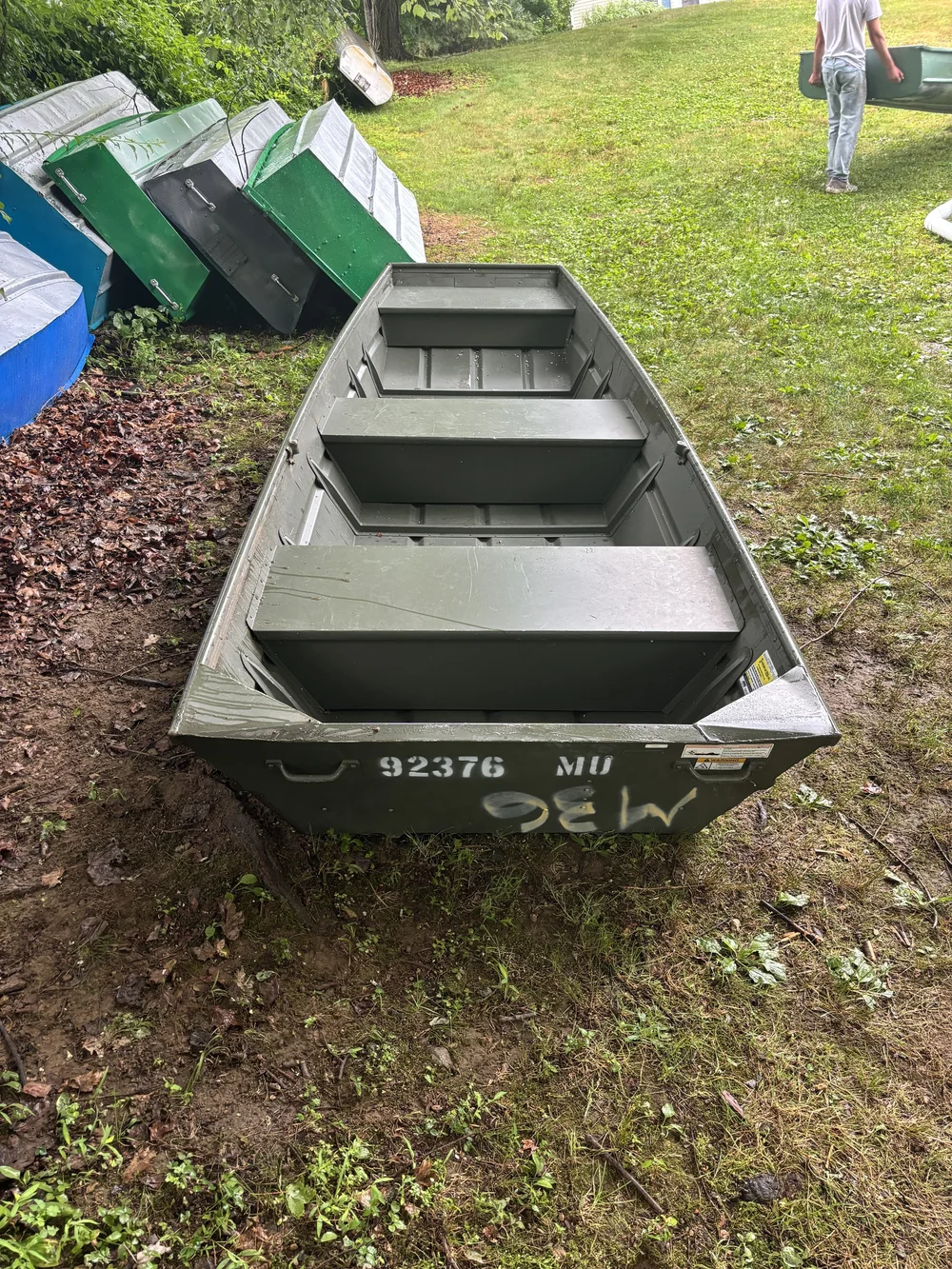
- Seating: 3 formed bench seats with internal closed-cell foam flotation
Understanding the Model Code (1236 vs. 1232)
Alumacraft models use standard industry naming conventions. The first two digits denote length (12 feet), while the last two digits denote the width of the flat bottom in inches. A 1236 has a 36-inch bottom width paired with a flared 55-inch beam, making it noticeably more stable than the lighter, narrower 1232 (32-inch bottom, 48-inch beam). For modern anglers, the 1236 is widely preferred due to its superior lateral stability when casting or netting fish.
Hull Construction and Durability
Alumacraft builds its small jon boats using riveted 5052 marine-grade aluminum alloy. This alloy provides exceptional resistance to corrosion in freshwater and brackish environments, as well as the structural ductility needed to withstand occasional bumps against submerged stumps, gravel bars, and boat ramps.
Key structural details include:
- Pressed Ribs: Transverse structural ribs are stamped directly into the bottom and sidewalls to eliminate oil-canning (hull flex) under load.
- Formed Transom Bracing: The 15-inch transom features structural aluminum corner brackets and motor mount pads designed to absorb vibration and torque from small portable outboards.
- Level Flotation: In compliance with U.S. Coast Guard safety regulations, the three bench seats contain expanded closed-cell polystyrene foam. This ensures the boat stays afloat and upright even if swamped by an unexpected wake.
Payload, Weight Distribution, and Safety Limits
With an official maximum weight capacity hovering around 550 to 570 lbs, understanding your payload math is critical for safety on the water. A 12-foot jon boat has low gunwales (around 15 to 16 inches of side depth), meaning heavy loads reduce freeboard rapidly.
Calculating Your Practical Payload
Consider a typical outing with a friend:
- Two Anglers: 380 lbs combined.
- Outboard Engine (6 HP 4-stroke): ~55 to 60 lbs.
- Portable 3-Gallon Fuel Tank: ~25 lbs.
- Group 24 Marine Battery & Trolling Motor: ~60 lbs.
- Tackle, Anchor, and Safety Gear: ~25 lbs.
This load brings your total to roughly 550 lbs—right at the Coast Guard limit. While the boat will handle this configuration in calm conditions, it leaves minimal margin for rough water or sudden wakes. For solo operations or one adult with a child, the 12 ft Alumacraft provides ample freeboard, quick acceleration, and stable maneuvering.
Outboard and Trolling Motor Selection

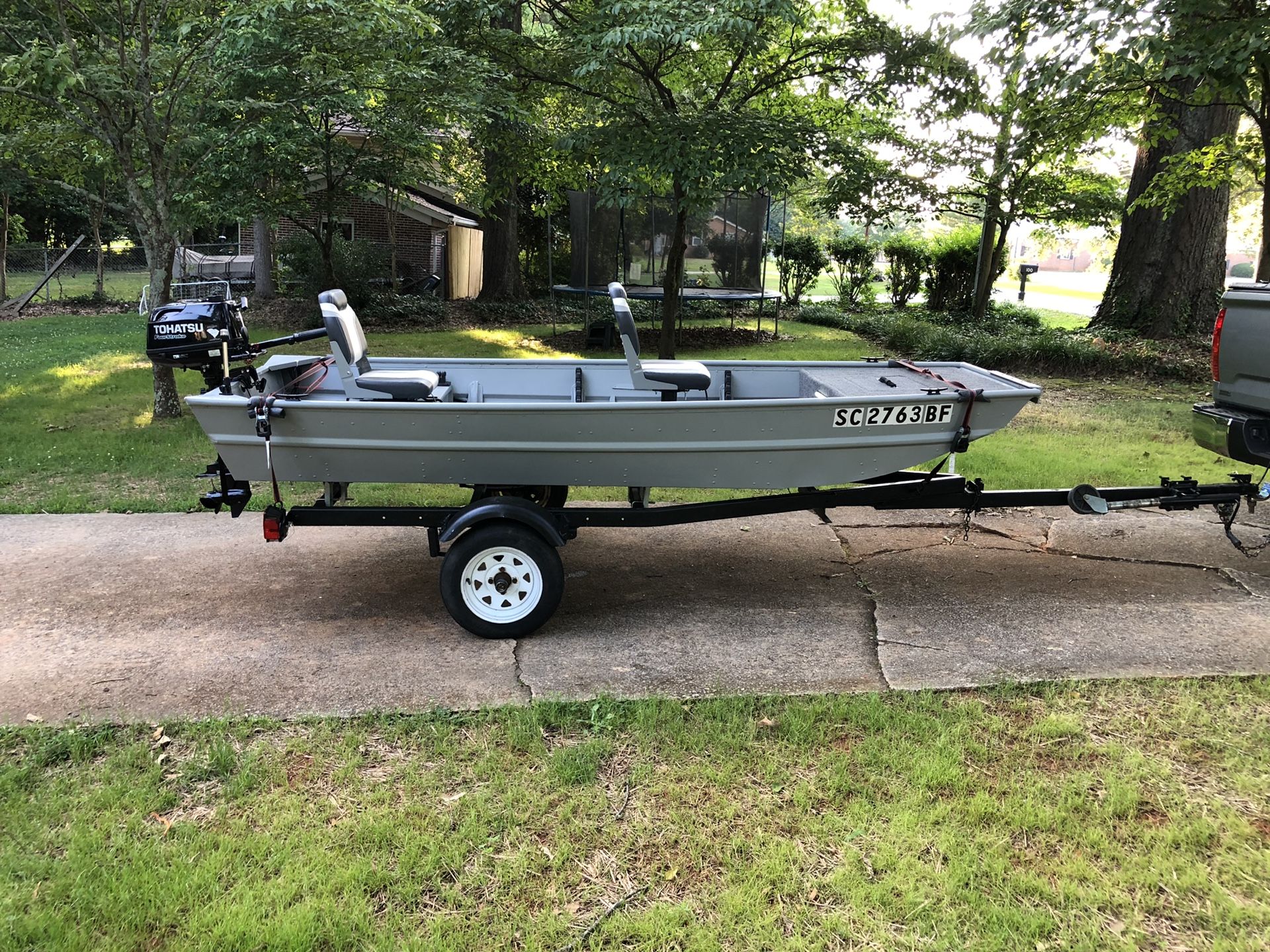
The 15-inch transom on the Alumacraft 12-foot jon is specifically built for short-shaft (15-inch) motors. Mounting a long-shaft (20-inch) outboard will cause severe drag, excessive bow lift, and cavitation.
Gasoline Outboard Recommendations
- 2.5 HP to 3.5 HP: Weighing under 40 lbs, these motors are perfect for solo fishermen who want simple, self-contained fuel tanks and an easy setup without batteries or heavy lifting. Expect speeds between 5 and 7 mph.
- 5 HP to 6 HP: The sweet spot for weight and performance. A 6 HP four-stroke weighs roughly 55 to 60 lbs and can push an Alumacraft 1236 on plane with a single rider and moderate gear, achieving speeds of 12 to 15 mph.
- 9.9 HP to 10 HP: If your hull capacity plate lists a 10 HP rating, this motor turns the boat into a nimble commuter on protected waterways. However, modern four-stroke 9.9 HP engines often weigh between 80 and 95 lbs. Be cautious of rear-end squatting when idling or drifting.
Electric Propulsion
Because the bare hull weighs roughly 125 lbs, a 12-volt bow- or transom-mount electric trolling motor with 30 to 45 lbs of thrust will push the craft effortlessly across electric-only reservoirs and farm ponds. If you opt for electric propulsion, position the battery toward the middle or bow bench to optimize static trim.
Transporting the Alumacraft 12-Foot Jon
One of the primary selling points highlighted in the 12 ft Alumacraft jon boat specs is overall transport flexibility. You do not strictly require a dedicated boat trailer to own and operate this vessel.
Truck Bed Hauling
With an overall beam of 55 inches, the hull will fit flat between the wheel wells of most full-size pickup trucks (which typically measure around 50 to 52 inches between wheel wells only if set at an angle, or fully flat on top of wheel arches or in standard 6.5- to 8-foot beds with the tailgate down). A bed extender inserted into a 2-inch receiver hitch provides rock-solid support for highway transit.
Trailer Options
If you prefer drive-on convenience, a standard small-bunk trailer rated for 800 to 1,200 lbs pairs seamlessly. The light weight allows you to launch in primitive, unimproved dirt or shallow sand launches where larger bass boats cannot tread.
Maintenance and Care Best Practices
Because these boats are fabricated with riveted seams rather than continuous welds, proper care preserves their watertight integrity over decades:
- Avoid Dragging on Concrete: Although aluminum is tough, dragging a loaded boat across concrete boat ramps or jagged rocks will abrade rivet heads, eventually causing weeping leaks.
- Inspect Rivets Annually: If a rivet begins to weep, it can be tightened using a manual bucking bar and hammer, or sealed using marine-grade polyurethane sealant or epoxy sticks formulated for aluminum.
- Prevent Galvanic Corrosion: Always use stainless steel or aluminum hardware when mounting rod holders, cleats, or transducer brackets. Never mount bare copper, brass, or untreated steel directly to the hull.
The Verdict: Who Is the 12 Ft Alumacraft Best For?
The 12-foot Alumacraft jon boat remains a gold standard in the utility segment for good reason. Its combination of a 36-inch bottom, 55-inch beam, and durable 5052 aluminum creates a remarkably reliable, low-maintenance platform. While it is not designed for open bays, deep reservoirs on windy days, or crews of three grown adults, it stands out as an exceptional, economical choice for solo expeditions, small-water bass fishing, and easy access to remote fisheries.