158F to C: Quick Conversion & Temperature Guide
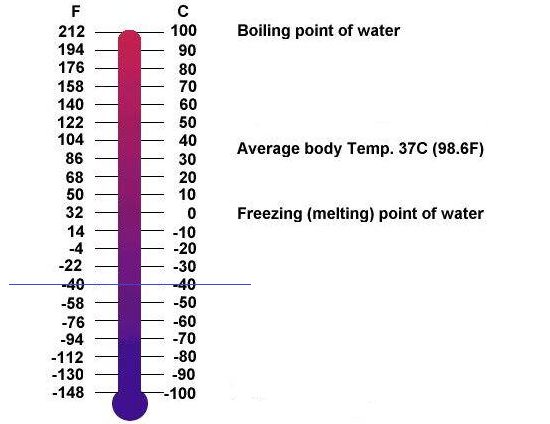
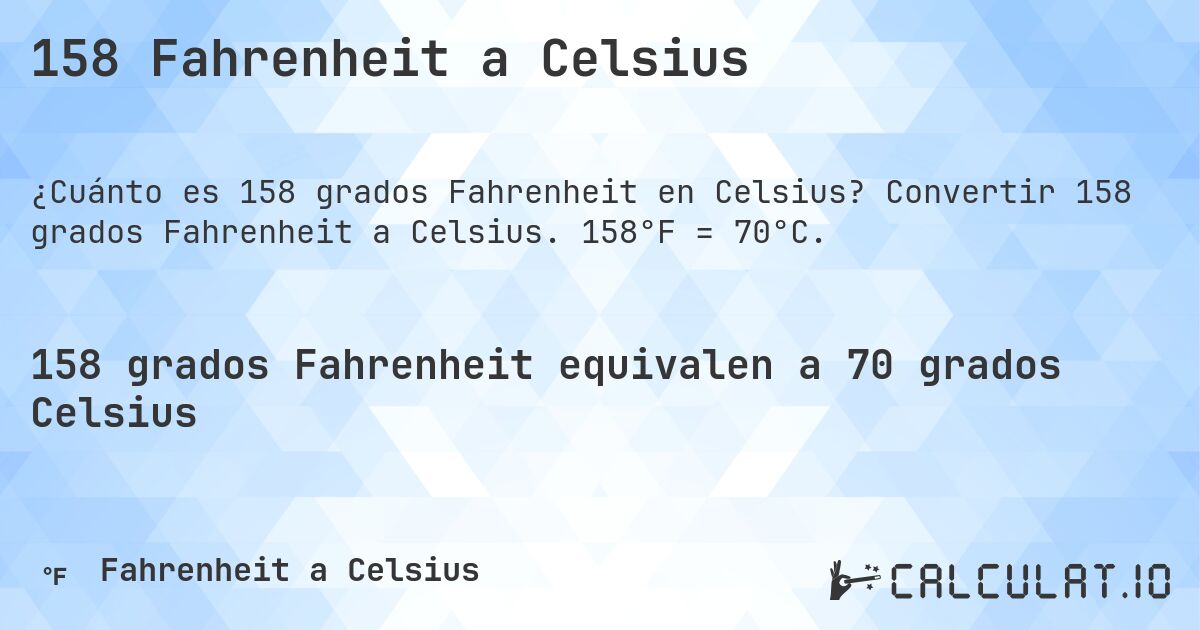
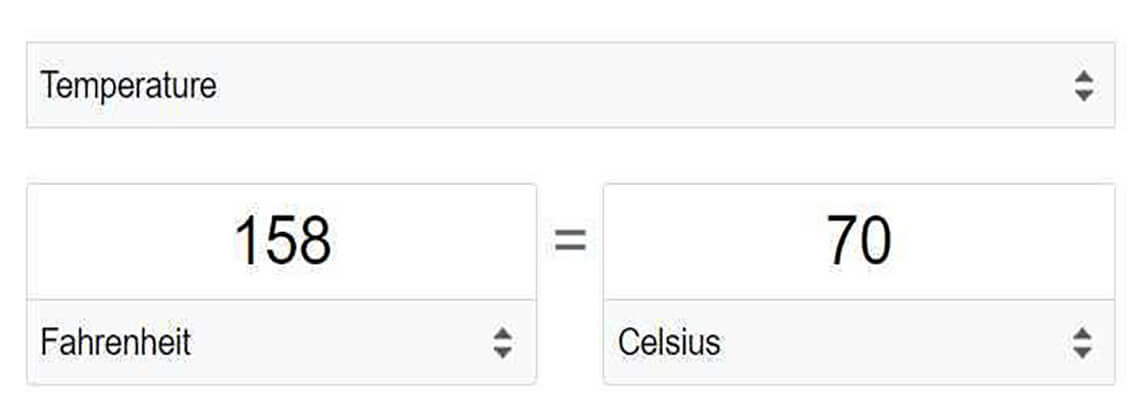
Converting 158F to C gives an exact result of 70°C. Unlike many fractional temperature conversions that leave you dealing with trailing repeating decimals, 158 degrees Fahrenheit resolves cleanly to an integer in degrees Celsius.
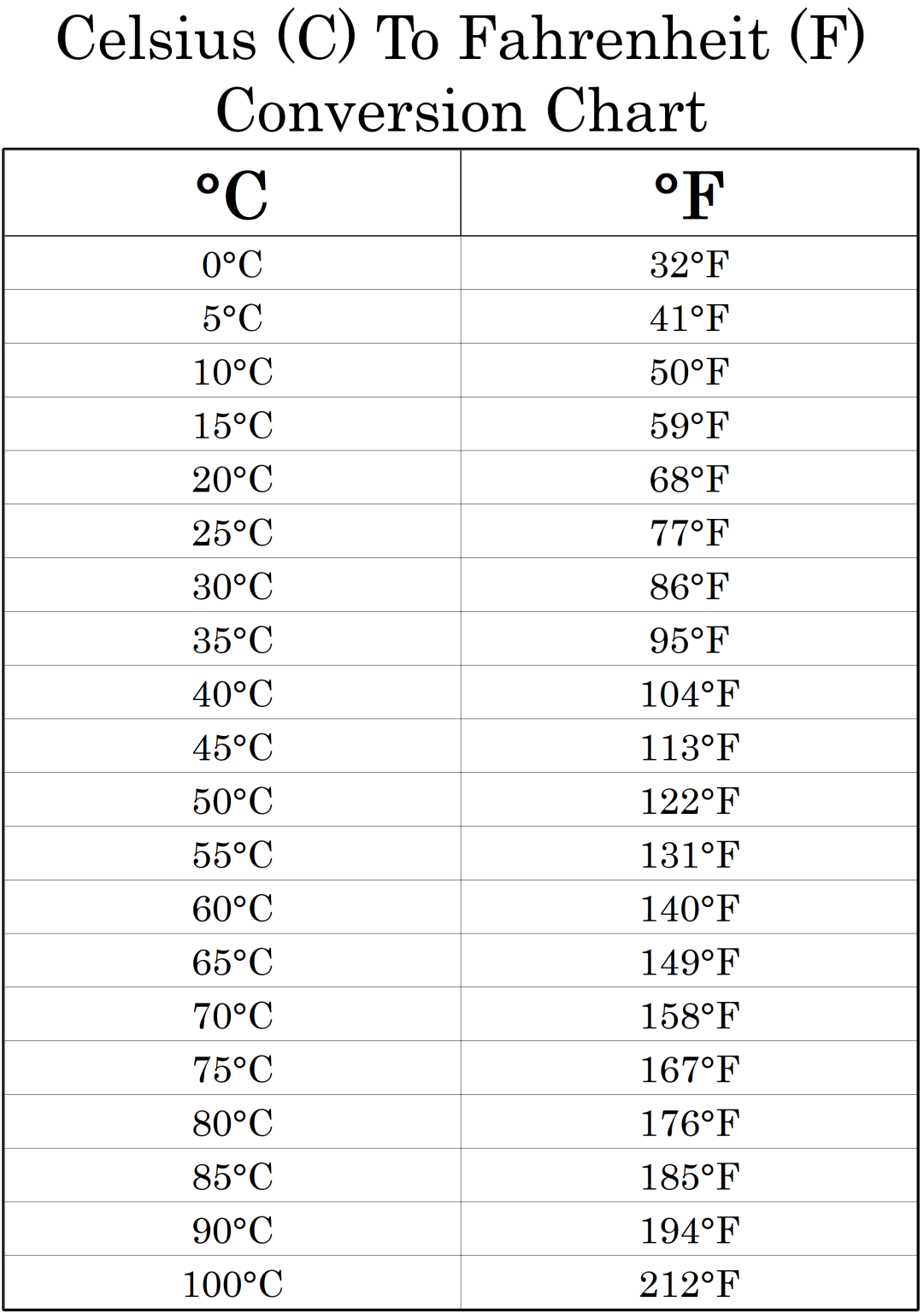
Whether you are calibrating a sous vide cooker, monitoring computer hardware thermals, brewing beer, or following an international recipe, knowing both the conversion math and the practical context of 70°C can save you time and prevent costly mistakes.
The Math: Converting 158F to C Step by Step
The standard equation to change any temperature from Fahrenheit ($F$) to Celsius ($C$) is:
C = (F - 32) × 5/9
Plugging 158 into the formula breaks down neatly:
- Subtract 32 from the Fahrenheit value:
158 - 32 = 126 - Multiply the intermediate figure by 5:
126 × 5 = 630 - Divide the result by 9:
630 / 9 = 70
Thus, 158°F is equal to exactly 70°C.
The Reverse Formula: 70°C to Fahrenheit
If you ever need to verify your calculation in reverse, use the inverse equation:
F = (C × 9/5) + 32
Multiply 70 by 9 (630), divide by 5 (126), and add 32 to land back at 158°F.
Quick Mental Math Shortcuts for Fahrenheit to Celsius
When you are in the kitchen or workshop without a calculator, you can estimate conversions between Fahrenheit and Celsius using two popular mental math approximations.
Method 1: The "Minus 30, Half It" Approximation
For quick everyday estimation:
- Subtract 30:
158 - 30 = 128 - Divide by 2:
128 / 2 = 64°C
This rough method gives you a baseline within 6°C of the actual figure. To refine it further, add roughly 10% of your rough answer back to the total: 64 + 6.4 ≈ 70.4°C, which gets you within a fraction of a degree of the true 70°C result.

Method 2: Multiplying by 0.555
Because the ratio 5/9 equals roughly 0.5556, subtract 32 from your Fahrenheit temperature (126) and multiply it by 0.556. While harder to execute strictly in your head, this decimal approach is ideal if you are using a standard four-function desktop calculator.
Why 158°F (70°C) Matters in Real-World Applications
A reading of 158°F / 70°C is a critical benchmark across multiple industries and hobbies. Here is why you commonly encounter this specific temperature.
1. Food Safety, Pasteurization, and Culinary Arts
In professional culinary environments, 158°F is a common operational target:
- Poultry Safety: The United States Department of Agriculture (USDA) recommends reaching an internal temperature of 165°F (73.9°C) for instant microbial lethality in poultry. However, food safety guidelines show that holding poultry at 158°F (70°C) for just under one second achieves the exact same 7-log reduction of Salmonella bacteria.
- Sous Vide Cooking: At 158°F, collagen in tough cuts of meat like pork belly, beef ribs, and brisket begins breaking down rapidly into succulent gelatin. Many 24- to 48-hour sous vide recipes call for this temperature.
- Egg Pasteurization: Shell eggs can be pasteurized without fully coagulating the whites when maintained precisely between 135°F and 140°F, but yolk emulsions and custards begin thickening firmly once they cross the 158°F threshold.
2. Craft Brewing and Mashing
In all-grain beer brewing, the mashing process relies on enzymes to convert grain starches into fermentable sugars:
- Alpha-amylase enzymes remain highly active around 158°F (70°C).
- Mashing at this higher ceiling produces longer-chain, unfermentable dextrins.
- This results in full-bodied, sweeter beers (such as rich stouts and Scottish ales) with lower overall alcohol yield compared to dry, crisp beers mashed at 148°F–152°F (64°C–67°C).
3. PC Hardware and Electronics
If you are monitoring system diagnostics using tools like HWMonitor or Core Temp, 70°C (158°F) is a familiar milestone:
- CPUs: Under sustained gaming or rendering loads, modern Intel and AMD processors frequently run between 65°C and 75°C. At 70°C, your cooling setup is working properly.
- GPUs: Modern graphics cards usually ramp up cooling fans between 60°C and 70°C. Operating at 158°F is well within standard thermal throttling margins.
4. Domestic Water Heating and Burn Hazards
Water temperature safety requires careful management:
- Water at 120°F (48.9°C) takes approximately five minutes of continuous contact to cause a serious third-degree burn.
- At 158°F (70°C), water causes a severe third-degree burn in less than one second.
- Because of this scalding danger, residential water heaters are typically capped at 120°F to 140°F, with thermostatic mixing valves installed to prevent household taps from hitting dangerous levels.
Temperature Comparison Table: Fahrenheit to Celsius Range
Here is how temperatures near 158°F translate to Celsius:
| Fahrenheit (°F) | Celsius (°C) | Common Context |
|---|---|---|
| 150°F | 65.6°C | Standard beef sous vide / medium-well |
| 155°F | 68.3°C | Brewing upper mash boundary |
| 158°F | 70.0°C | Exact integer conversion benchmark |
| 160°F | 71.1°C | USDA ground beef safety target |
| 165°F | 73.9°C | USDA instant poultry safety standard |
| 170°F | 76.7°C | Mash-out temperature in brewing |
Summary
Converting 158°F to Celsius leaves no room for confusion: it is precisely 70°C. Remember the primary conversion rule—subtract 32, then multiply by 5/9—or apply the quick mental shortcut when you are working on the fly.