1998 Ford Ranger Bolt Pattern & Fitment Guide
When upgrading wheels or performing maintenance, knowing the exact ford ranger bolt pattern 1998 models require saves you from costly fitment mistakes. Whether you drive a stripped-down base regular cab or a fully optioned 4x4 XLT, the factory wheel pattern remains consistent across the entire 1998 production run.

The 1998 Ford Ranger uses a 5x4.5 inch wheel bolt pattern, which converts to 5x114.3 mm in metric notation. This five-lug layout is one of the most widely used patterns in light truck and passenger vehicle history. However, getting new rims to seat safely takes more than just matching lug holes.
Official Ford Ranger Bolt Pattern 1998 Specifications
While the lug spacing is the primary measurement, several complementary dimensions dictate whether a wheel fits over the hub, clears the brake calipers, and maintains safe steering geometry.
- Bolt Pattern (Standard): 5x4.5 inches
- Bolt Pattern (Metric): 5x114.3 mm
- Center Bore Diameter: 70.6 mm (2.78 inches)
- Lug Stud Size / Thread Pitch: 1/2 inch x 20 RH (Standard 1/2-20)
- Lug Nut Seat Type: 60-degree conical (cone/tapered seat)
- Factory Lug Nut Torque: 100 lb-ft (135 Nm)
- Stock Wheel Diameters: 14x6 inches or 15x7 inches (trim dependent)
- Stock Offset Range: +12 mm to +20 mm
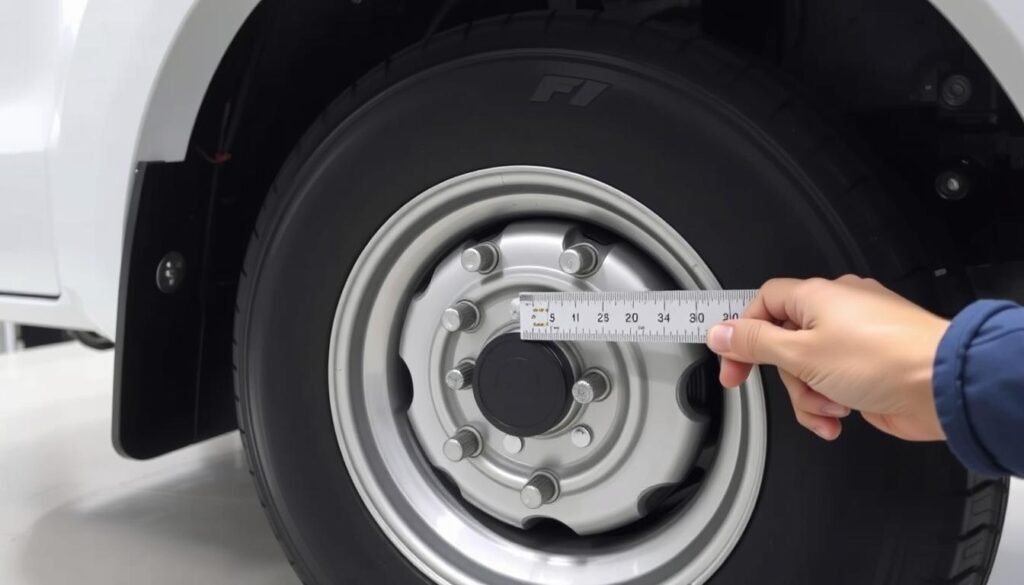
How to Measure a 5-Lug Bolt Pattern
Measuring a 4-lug or 6-lug wheel is straightforward: measure directly across the center from the middle of one stud to the middle of the opposite stud. A 5-lug pattern requires a different technique because no two studs sit directly across from one another.
- Select any wheel stud as your starting point.
- Measure from the center of that initial stud to the outside edge of the stud second-farthest away from it (skip one lug in between).
- On a 1998 Ranger, this measurement will read exactly 4.5 inches (or roughly 114 mm).
If you are measuring bare wheels dismounted from the truck, measure from the center of one lug hole to the far outside edge of the alternating lug hole. This confirms whether an unmarked salvage wheel or aftermarket rim shares the Ranger's configuration.
2WD vs. 4WD Fitment Differences
While the bolt circle does not change between rear-wheel drive (2WD) and four-wheel drive (4WD) 1998 Rangers, wheel interchangeability is not completely universal between the two drivetrains.
Front Hub Clearance
The 1998 model year marked the introduction of the third-generation Ranger, which brought an updated front suspension. Two-wheel-drive models feature traditional front wheel bearings integrated into the rotor assembly, accompanied by a protruding grease cap. Four-wheel-drive models feature vacuum-operated front hubs or live-spindle setups.
Wheels with flat center caps or shallow backspacing designed for modern front-wheel-drive cars will not clear the 1998 Ranger's front bearing hubs, even if the 5x4.5 pattern aligns correctly.
Offset and Backspacing
Factory 1998 Ranger wheels run a moderate positive offset. If you install wheels with high positive offset (such as +40 mm to +50 mm from modern passenger cars), the inner rim lip and tire sidewall will rub the upper control arm, front sway bar, or rear leaf springs. A backspacing of 3.75 to 4.5 inches is typically the sweet spot for aftermarket fitments on this truck.

Compatible Vehicles and Factory Wheel Swaps
Because the 5x4.5 inch pattern is extremely common, you can source wheels from several other vehicles. If you are browsing junkyards or online classifieds, consider these popular donors:
- Ford Explorer (1991–2001): Shares identical hub bores, offsets, and bolt patterns. Explorer 15-inch and 16-inch alloy teardrop or five-spoke wheels bolt directly onto the 1998 Ranger without modification.
- Jeep Wrangler (YJ, TJ) and Cherokee (XJ): These platforms use 5x4.5 bolt patterns. However, Jeep center bores measure 71.5 mm, which is larger than the Ranger's 70.6 mm. While they clear the Ranger hub, you should verify lug seating to ensure the wheel centers properly.
- Ford Mustang (pre-2005): Many Fox-body 5-lug conversions, SN95 (1994–2004), and New Edge Mustang wheels match the bolt pattern. Take note of offset: Mustang wheels are wider (often 8 to 9 inches) and may stick out or rub when turning at full lock.
- Ford Crown Victoria / Grand Marquis: Steel "cop wheels" and standard alloys share the bolt circle and center bore, but check backspacing to ensure clearance around front suspension components.
Key Factors When Choosing Aftermarket Wheels
If you are moving away from factory wheels to an aftermarket setup, prioritize these three critical specifications:
1. Center Bore: Hub-Centric vs. Lug-Centric
The factory 1998 Ranger setup relies on a 70.6 mm hub-centric design, meaning the lip on the wheel hub carries the weight of the truck and centers the wheel. Most aftermarket wheels feature oversized center bores (such as 73 mm or 83 mm) to fit multiple vehicle makes.
When running aftermarket wheels with a larger bore, install hub-centric centering rings. These inexpensive aluminum or plastic rings fill the gap between the 70.6 mm Ranger hub and the wheel's center opening, preventing high-speed vibrations and uneven stress on the wheel studs.
2. Lug Nut Style
Factory 1998 Ranger steel and alloy wheels use standard 60-degree conical lug nuts with 1/2-20 threads. Never use flat-face (mag-style) or radius/ball-seat lug nuts unless the aftermarket rim specifically calls for them. Using the wrong lug seat profile prevents the wheel from clamping securely against the brake drum or rotor surface, which can cause lug failure while driving.
3. Brake Caliper Clearance
Although 14-inch wheels came standard on base 1998 Rangers, select trim packages equipped with larger front brake rotors require at least a 15-inch wheel to clear the caliper body. If your truck originally came equipped with 15-inch wheels, down-sizing to 14-inch rims will likely cause the inner wheel barrel to contact the front calipers.
Summary: 1998 Ranger Wheel Data
When shopping for wheels, keep the target specs straightforward: aim for 5x4.5" (5x114.3 mm), a center bore of 70.6 mm or larger, 1/2-20 conical lug nuts, and backspacing close to 4.0 inches. Matching these figures ensures a direct, safe fit without vibration, rubbing, or clearance complications.