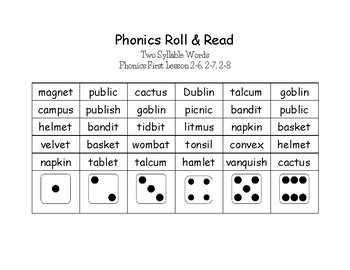
2 Syllable Words with Short Vowel Sounds: A Guide
Mastering English phonics often comes down to understanding how vowels behave in multi-syllable words. If you are teaching a child to read, designing a spelling curriculum, or improving your own linguistic grasp, studying 2 syllable words with short vowel sounds is a crucial step. When a vowel is "short," it makes its fundamental sound—like the 'a' in *cat*, the 'e' in *bed*, or the 'i' in *sit*—rather than saying its long letter name.

Understanding Short Vowels in Multi-Syllable Words
In single-syllable words, a short vowel is usually easy to spot: it sits inside a closed syllable, meaning it is "closed in" by one or more consonants at the end. For example, in the word "cat," the ending consonant 't' traps the vowel, keeping it short.
The same logic applies when we expand to longer words. When we look at 2 syllable words with short vowel sounds, we are typically dealing with words divided into closed syllables or syllables governed by specific doubling rules. Breaking these words down into manageable chunks makes decoding much simpler for developing readers.
Common Patterns and Examples
English features several distinct structural patterns for two-syllable words containing short vowels. Recognizing these patterns helps readers tackle unfamiliar vocabulary with confidence.
VC/CV Pattern (Vowel-Consonant-Consonant-Vowel)
One of the most reliable patterns in English orthography is the VC/CV structure. When two consonants stand between two vowels, we usually divide the syllables right between those two consonants. Most of the time, both syllables remain closed, resulting in two short vowel sounds.
Here are some common examples of VC/CV words:
- Rabbit (rab-bit): Short 'a' in the first syllable, short 'i' in the second.
- Napkin (nap-kin): Short 'a' followed by a short 'i'.
- Muffin (muf-fin): Short 'u' followed by a short 'i'.
- Basket (bas-ket): Short 'a' and short 'e'.
- Picnic (pic-nic): Short 'i' in both syllables.
V/CCV and Compound Words
Sometimes, compound words or words with blends create a slightly different split, but they still maintain short vowel sounds because the syllables end in consonants.
- Catnip (cat-nip): Two distinct short-vowel syllables combined.
- Sunset (sun-set): Short 'u' paired with a short 'e'.
- Cobweb (cob-web): Short 'o' and short 'e'.
Categorizing by Vowel Sound
To make practice sessions more targeted, it helps to organize these words by their specific vowel sounds. Below are lists divided by the five primary vowels.
Short A Words

The short 'a' sound /æ/ appears frequently in the first syllable of everyday nouns and verbs.
- Atlantic (at-lan-tic - note: three syllables, but check out two-syllable variants like atlas)
- Atlas (at-las)
- Cactus (cac-tus)
- Fabric (fab-ric)
- Magnet (mag-net)
Short E Words
The short 'e' sound /ɛ/ provides a crisp, punchy middle to many common descriptive words and nouns.
- Emblem (em-blem)
- Enamel (e-nam-el - note: mixed, but focus on closed variants like empty)
- Empty (emp-ty)
- Insect (in-sect - mixed, but excellent for 'e')
- Melting (melt-ing)
- Necklace (neck-lace)
Short I Words
Short 'i' /ɪ/ words are extremely common in early elementary reading lists because they are phonetically regular and straightforward.
- Cabin (cab-in)
- Distict (dis-tinct)
- Limit (lim-it)
- Public (pub-lic - wait, that's u, let's use: sys-tem)
- System (sys-tem)
- Velvet (vel-vet - short e, but let's stick to short i: sit-ting)
- Ingot (in-got)
Short O Words
The short 'o' sound /ɒ/ or /ɑ/ adds weight and punch to two-syllable vocabulary.
- Common (com-mon)
- Doctor (doc-tor)
- Fossil (fos-sil)
- Goblin (gob-lin)
- Problem (prob-lem)
Short U Words
Short 'u' /ʌ/ words are wonderfully reliable when teaching closed syllables.
- Button (but-ton)
- Cactus (cac-tus)
- Humbug (hum-bug)
- Nutmeg (nut-meg)
- Public (pub-lic)
Teaching Strategies for Readers and Spellers
If you are working with a student who is learning to decode these words, a multi-sensory approach yields the best results. Here are three effective ways to practice:
- Syllable Chunking: Teach students to look for the two consonants in the middle of the word. Draw a line between them (e.g., mas-cot), read each closed syllable individually, and then blend them together.
- Tap and Say: Use finger-tapping for each phoneme, or hand-claps for each syllable, to anchor the rhythm of the word in physical memory.
- Sorting Activities: Give students a mix of word cards and ask them to sort them by their middle vowel sounds or by whether the first syllable contains a short 'a', 'e', 'i', 'o', or 'u'.
Conclusion
Working with 2 syllable words with short vowel sounds bridges the gap between simple CVC (consonant-vowel-consonant) words and advanced multi-syllable reading. By identifying closed syllable patterns—especially the VC/CV rule—readers can unlock thousands of new English words with ease and accuracy.