401k Net Worth Role: From Contributions to Retirement
When people calculate their personal net worth, they often tally up home equity, savings accounts, and vehicle values while overlooking their employer-sponsored retirement plans. Yet, for millions of workers, the journey From Monthly Contributions to Retirement Readiness: 401k’s Net Worth Role Revealed! forms the absolute backbone of long-term financial security. Understanding how these workplace accounts function as wealth-building engines can completely change how you view your monthly paycheck deductions.

A 401(k) is far more than a simple piggy bank for your older years. It is a dynamic asset that directly fuels your net worth statement month after month. By examining how small, consistent payroll deductions blossom into substantial portfolios, you can unlock a clearer path toward financial independence.
The Mechanics of Accumulation: How Monthly Contributions Build Wealth
Net worth is calculated simply: your total assets minus your total liabilities. When you set up a recurring 401(k) contribution, a percentage of your salary moves directly from your gross income into a selection of investments before you even have a chance to spend it. This "pay yourself first" strategy systematically converts earned income into owned assets.
Consider an employee earning $75,000 a year who contributes 6% of their salary to a traditional 401(k). That equals $4,500 annually, or $375 per month. Over a single year, that individual adds $4,500 directly to their asset column. While that might not dramatically shift a net worth statement overnight, the real magic happens when time and compounding enter the equation.
The Power of Compound Growth
Cash sitting in a traditional savings account loses purchasing power to inflation. Conversely, the money inside your 401(k) is typically invested in mutual funds, exchange-traded funds (ETFs), or target-date funds designed to grow. As these investments generate dividends, capital gains, and interest, those returns are reinvested to buy more shares.
- Year 1: You contribute $4,500, plus a potential employer match. Your investments experience market fluctuations.
- Year 10: Through steady contributions and compounding, your balance surpasses initial cash inputs significantly.
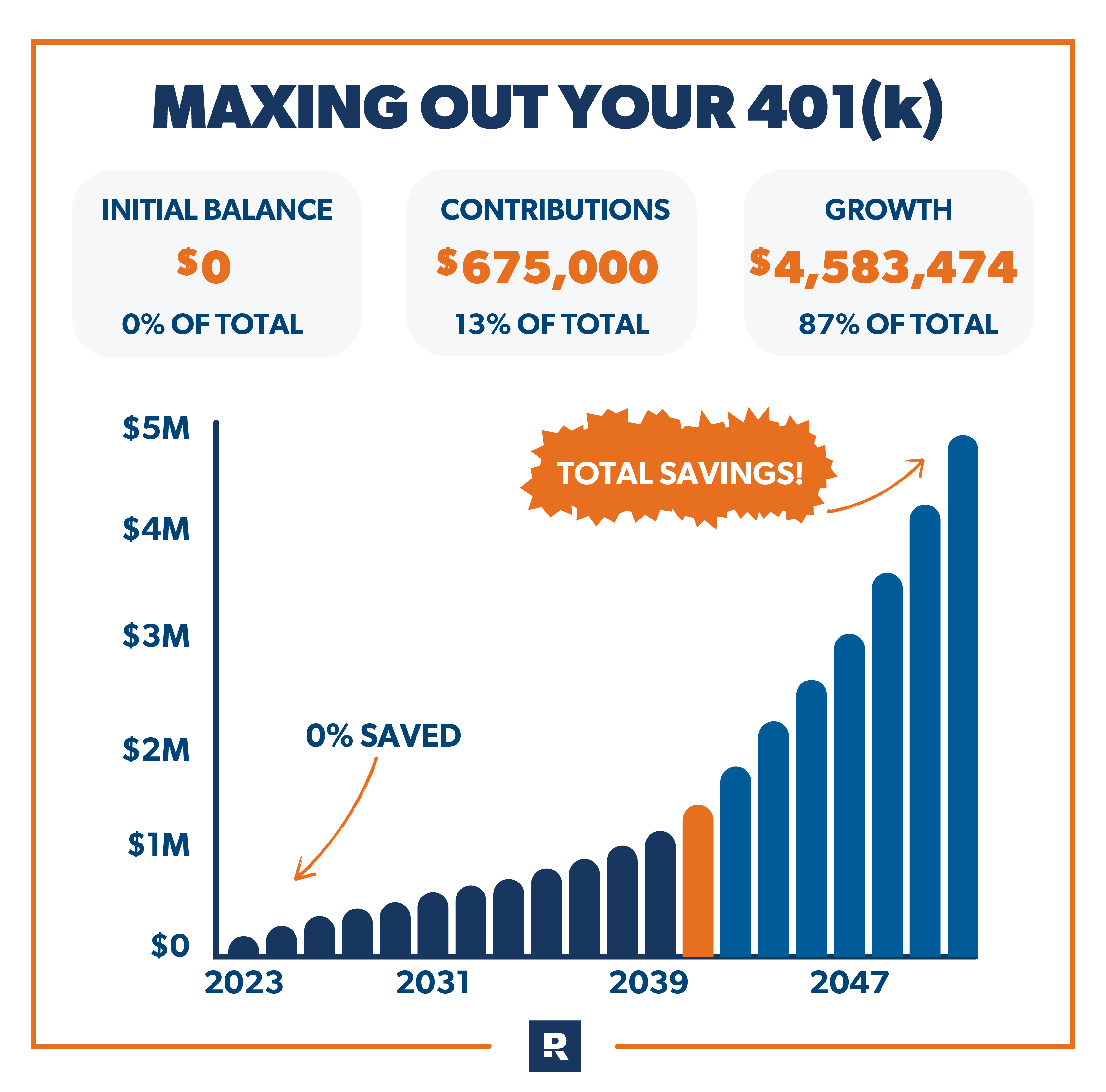
- Year 30: Decades of compounding turn those modest monthly chunks into a six- or seven-figure asset, drastically elevating your net worth.
This compounding effect turns linear saving into exponential wealth growth, making the 401(k) one of the most powerful tools available to everyday workers.
Employer Matching: The Ultimate Wealth Accelerator
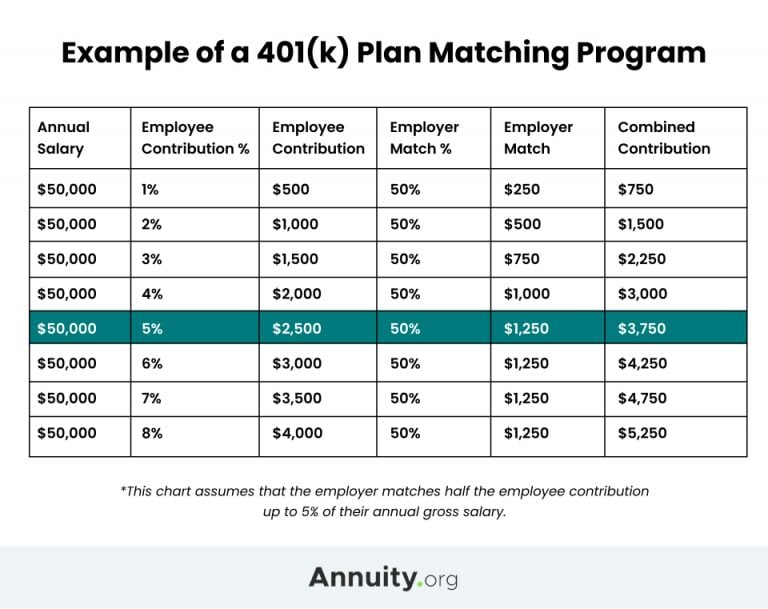
If you are not contributing enough to your 401(k) to capture the full employer match, you are quite literally leaving free money on the table. Employers often match anywhere from 3% to 6% of your salary if you contribute at least that much.
From a net worth perspective, an employer match functions as an instant, guaranteed return on investment. If your employer matches your $375 monthly contribution dollar-for-dollar, your asset growth doubles immediately to $750 a month. Over a 30-year career, that matched portion—and the compounding returns it generates—can easily account for hundreds of thousands of dollars of your total net worth at retirement.
Understanding the 401(k) Tax Advantage

Traditional and Roth 401(k) accounts offer unique tax structures that impact your wealth in different ways. Traditional 401(k) contributions are made with pre-tax dollars, lowering your current taxable income. This means you keep more of your hard-earned money today to invest for tomorrow, even though you will pay ordinary income tax upon withdrawal in retirement.
Roth 401(k)s, on the other hand, use after-tax dollars. While you do not get an immediate tax break today, your investments grow entirely tax-free, and qualified withdrawals in retirement are also tax-free. When calculating your true net worth, it is wise to account for future tax liabilities on traditional pre-tax balances, ensuring you have a realistic picture of your spendable wealth.
From Accumulation to Decumulation: Measuring Retirement Readiness
Building a high net worth through a 401(k) is only half the battle. True retirement readiness means transitioning successfully from the accumulation phase to the decumulation phase—turning your accumulated assets into a reliable income stream that will last for the rest of your life.
The 4% Rule and Sustainable Withdrawal Rates
Financial planners often use the "4% rule" as a baseline for retirement readiness. This guideline suggests that you can safely withdraw 4% of your total retirement portfolio in your first year of retirement, and adjust that amount for inflation in subsequent years, without running out of money over a 30-year horizon.
For example, if your 401(k) and other investments bring your net worth to $1,000,000 by retirement age:
- Calculate 4% of $1,000,000, which equals $40,000.
- Combine this withdrawal amount with other expected income sources, such as Social Security or a pension.
- Compare this total annual income to your projected retirement expenses to confirm whether you are truly ready to stop working.
If your projected expenses exceed your sustainable income, you may need to increase your monthly savings rate, extend your career by a few years, or adjust your lifestyle expectations.
Actionable Steps to Maximize Your 401(k) Impact
To ensure your 401(k) plays its maximum possible role in your net worth and retirement journey, take these proactive steps today:
- Automate annual increases: Use your plan's auto-escalation feature to bump up your contribution rate by 1% every year until you reach your target savings percentage.
- Capture the full match: Review your company's policy and adjust your payroll deduction immediately if you are falling short of the maximum match limit.
- Review your investment allocation: Ensure your portfolio aligns with your risk tolerance and timeline, avoiding overly conservative funds when you are decades away from retirement.
- Minimize fees: Check the expense ratios of the funds inside your 401(k) to ensure high management fees are not silently eroding your compound growth.
By treating your 401(k) as a cornerstone of your personal balance sheet rather than a distant abstraction, you can bridge the gap between monthly budgeting and absolute retirement readiness.