4500 Yen in USD: Conversion & Value Guide
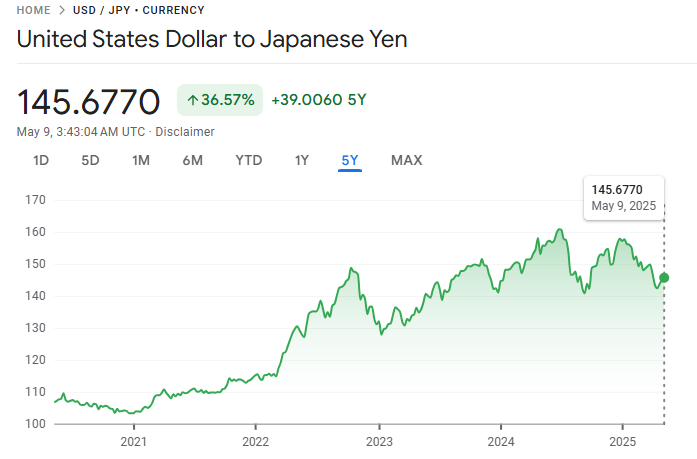
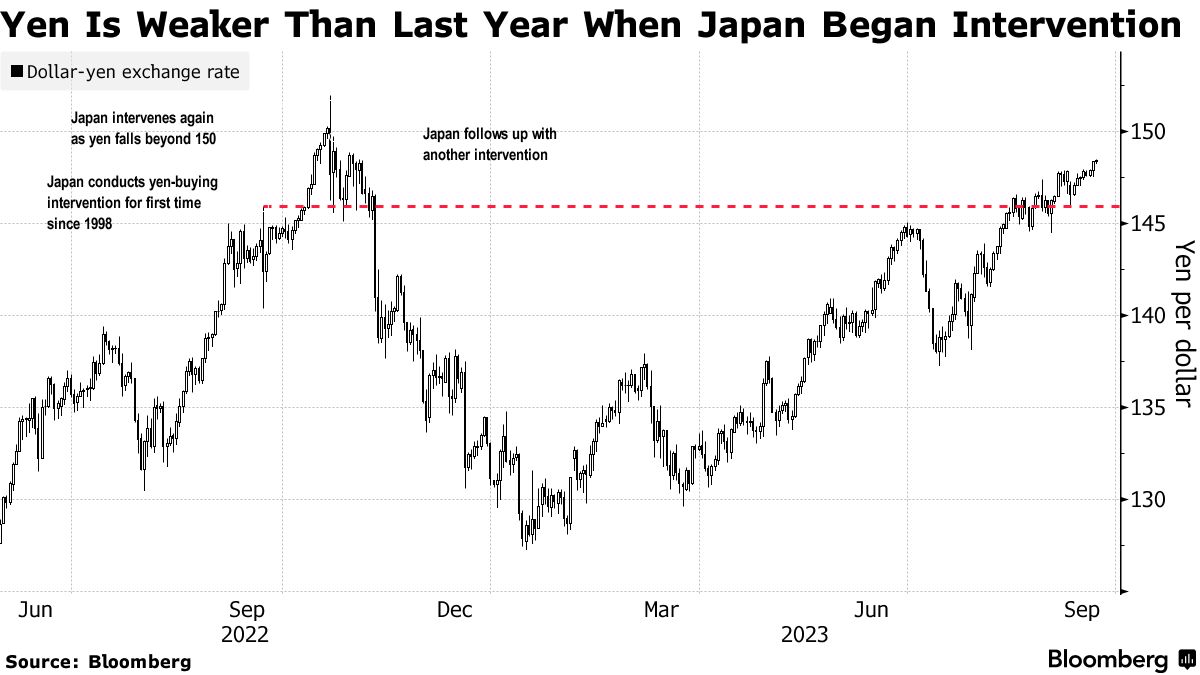
If you are shopping online from a Japanese retailer, planning a vacation, or reviewing a credit card statement, you might be asking: what is 4500 yen in usd? At recent exchange rates (ranging between 140 and 155 Japanese yen per U.S. dollar), 4,500 Japanese yen (JPY) equals approximately $29.00 to $32.00 USD. When the exchange rate sits at roughly 150 JPY per 1 USD, 4,500 yen converts to exactly $30.00 USD.

Because foreign exchange rates fluctuate constantly throughout the trading week, the exact dollar amount changes daily. Beyond the raw mathematical conversion, understanding real-world purchasing power, transaction fees, and checkout markups will help you know exactly what you are paying.
Converting 4500 Yen in USD: The Quick Math
Currency pairs are expressed by showing how many units of the foreign currency equal one base unit. For the US Dollar to Japanese Yen pair (USD/JPY), the rate tells you how many yen buy one dollar.
To convert any yen amount to dollars, you divide the yen figure by the current exchange rate:
USD = JPY / Exchange Rate
Here is how 4,500 JPY translates across several common market scenarios:
- At 140 JPY per USD: 4,500 / 140 = $32.14 USD (Stronger Yen)
- At 145 JPY per USD: 4,500 / 145 = $31.03 USD
- At 150 JPY per USD: 4,500 / 150 = $30.00 USD (Mid-range average)
- At 155 JPY per USD: 4,500 / 155 = $29.03 USD
- At 160 JPY per USD: 4,500 / 160 = $28.13 USD (Weaker Yen)
If you are looking for a reliable estimate on the fly, dividing the yen amount by 150 provides a practical rule of thumb in the current macroeconomic climate.
Why Does the JPY to USD Rate Change?
Exchange rates are driven by global macroeconomic conditions, international trade balances, and monetary policies set by central banks—specifically the Federal Reserve in the United States and the Bank of Japan (BOJ).
Interest Rate Differentials
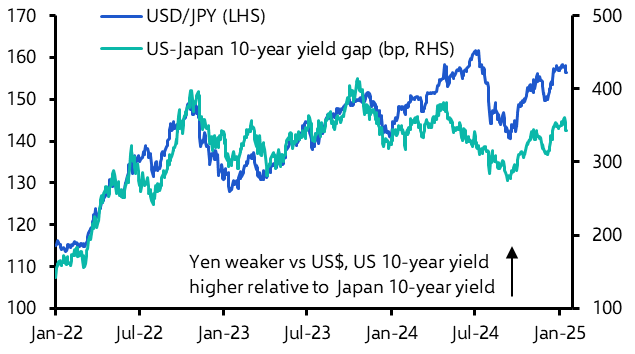
Historically, the biggest driver of the USD/JPY rate is the gap between U.S. interest rates and Japanese interest rates. When the Federal Reserve raises rates to combat inflation while the Bank of Japan keeps rates near zero, global investors move capital into dollar-denominated assets. This strengthens the dollar and weakens the yen, giving U.S. buyers significantly more purchasing power.
Market Volatility and Safe-Haven Status
Both the U.S. dollar and the Japanese yen are traditionally regarded as global "safe-haven" currencies. During periods of geopolitical uncertainty or financial turbulence, investor flows can swing rapidly between the two, altering the conversion rate by several percentage points in a matter of hours.
What Does 4,500 Yen Actually Buy in Japan?
Converting a currency only tells half the story. To understand value, you have to look at purchasing power parity (PPP). Due to differences in domestic pricing, $30 USD in a major American city often buys noticeably less than 4,500 JPY buys in Tokyo or Osaka.
Here is a concrete look at what 4,500 yen will get you in Japan:

- A casual dinner for two: You can enjoy a hearty dinner at a casual izakaya (pub), including draft beer, grilled chicken skewers (yakitori), and side dishes for two people for around 4,000 to 5,000 yen.
- Four to five bowls of ramen: A standard bowl of authentic tonkotsu or shoyu ramen at a local counter shop costs between 800 and 1,100 yen. 4,500 yen easily covers meals for a small group.
- A regional transit day: A full day of unlimited subway travel in Tokyo via the Tokyo Subway 24-Hour Ticket costs just 800 yen for adults. 4,500 yen can fund nearly a full week of local train transit inside the metro area.
- Major museum or attraction admissions: Admission to top-tier attractions, such as teamLab borderless or historical temples in Kyoto, usually ranges between 1,000 and 4,000 yen per adult ticket.
- Convenience store feast: At 7-Eleven, Lawson, or FamilyMart, 4,500 yen will purchase an extravagant assortment of onigiri, bento boxes, fried chicken, premium desserts, and beverages.
Paying 4,500 Yen Online: Beware of Hidden Fees
If you are buying video games, anime goods, or clothing from Japanese platforms like Buyee, AmiAmi, CDJapan, or Amazon Japan, you rarely pay the pure mid-market exchange rate. Financial intermediaries add surcharges that change what 4500 yen costs you in dollars.
1. Foreign Transaction Fees (FX Fees)
Many basic debit and credit cards charge a foreign transaction fee of 1% to 3% on purchases denominated in foreign currencies. On a 4,500 yen purchase (~$30), a 3% fee adds roughly $0.90 to your total. While small on a single order, these charges accumulate quickly on larger shopping trips.
2. Dynamic Currency Conversion (DCC)
When checking out on international websites or using an ATM overseas, you may be presented with a prompt asking: "Pay in USD or JPY?"
Always choose JPY. If you select USD, the merchant's payment terminal applies Dynamic Currency Conversion (DCC). DCC allows the local processor to set their own conversion rate, which frequently carries an unfavorable markup of 4% to 8% above the official market rate.
3. PayPal's Internal Conversion Spread
If you pay with PayPal, the platform defaults to using its proprietary currency converter rather than your bank's rate. PayPal typically charges an internal spread of 3% to 4.5% above interbank rates. To avoid this, change your checkout settings to bill your credit card directly in JPY, allowing your card issuer to handle the conversion at wholesale network rates.
Tips to Get the Best Rate on Japanese Yen
- Use a card with zero foreign transaction fees: Travel credit cards from issuers like Capital One, Chase (Sapphire series), and various credit unions waive international fees entirely.
- Rely on mid-market benchmark tools: Before making a major purchase, check live rates on platforms like XE, Google Finance, or Reuters to know the baseline.
- Avoid airport exchange kiosks: If you are traveling to Japan, never convert cash at physical airport exchange counters unless strictly necessary. Withdrawing yen directly from a local 7-Bank ATM using a low-fee debit card offers far superior rates.
Frequently Asked Questions
Is 4,500 yen a lot of money in Japan?
No, 4,500 yen is not considered a large sum, but it has solid purchasing power. It is roughly equivalent to a modest night out, a grocery run for a few days, or a midrange souvenir. It sits comfortably in the category of everyday pocket money.
How do I write 4,500 yen in Japanese currency symbols?
In international commerce, it is written as ¥4,500 or 4,500 JPY. In Japanese kanji, it is represented as 4,500円 (where 円 signifies yen).
Will 4,500 yen cover a taxi ride in Tokyo?
Taxis in Japan are relatively expensive compared to public transit. A standard base fare starts around 500 yen for the first kilometer, with rates climbing based on distance and traffic time. A budget of 4,500 yen will cover a short-to-medium city ride of about 8 to 12 kilometers (5 to 7 miles), but it will not get you to or from Narita Airport, which typically costs well over 20,000 yen.