5 Key Details From Jodi Arias Autopsy Photos
When the trial of Jodi Arias unfolded in an Arizona courtroom in 2013, millions of viewers watched what became one of the most televised legal battles in modern American history. Central to the state's first-degree murder case against Arias was the stark, undeniable testimony of Maricopa County Medical Examiner Dr. Kevin Horn. While public discourse often focused on the sensational relationship dynamics and bizarre courtroom demeanor, the physical evidence told an objective story. A careful examination reveals at least 5 key details from the Jodi Arias autopsy photos you missed during the media storm, each providing vital insight into the final moments of Travis Alexander.

Autopsy photographs are not merely documentation of fatal injuries; they are forensic blueprints. In Alexander’s case, the photographs dismantled Arias's claims of self-defense, settled debates regarding the timeline of events, and illustrated the sheer intensity of the assault inside the Mesa, Arizona home on June 4, 2008.
5 Key Details From the Jodi Arias Autopsy Photos You Missed
During trial proceedings, graphic autopsy slides were shown to the jury, illustrating the 27 to 29 distinct stab wounds, an incised throat wound, and a gunshot wound to the forehead. Beyond the sheer volume of trauma, specific forensic characteristics carried deep legal significance.
1. The Depth of the Neck Wound and the Nicked Cervical Spine
The incised wound across Travis Alexander’s neck was not a superficial cut. Pathological records and post-mortem imaging confirmed that the blade sliced entirely through the soft tissue from left to right, severing the trachea, esophagus, both internal and external jugular veins, and the carotid arteries. Crucially, the autopsy photos revealed microscopic and gross scoring marks directly on the sixth cervical vertebra (C6).
For a knife blade to score bone in the cervical spine through the front of the neck, an immense amount of deliberate physical leverage must be applied. Dr. Horn testified that this wound would have rendered the victim unconscious within seconds due to immediate drops in blood pressure and catastrophic oxygen deprivation. This physical detail dismantled the defense’s theory that Alexander was actively standing, speaking, or continuing to attack Arias after this cut was delivered.
2. Classical Palmar Defensive Wounds
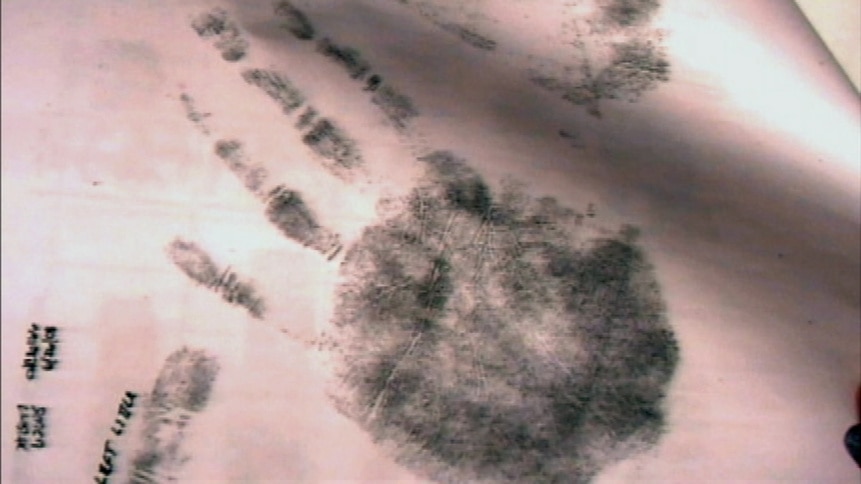
One of the strongest indicators of an ambush versus a mutual fight lies in defensive posturing. The photographic evidence of Alexander's hands showed deep lacerations across his palms, particularly along the palmar creases and the flesh of the fingers. Key observations included:
- Active Grasping Wounds: Linear cuts consistent with attempting to grab or deflect the blade edge away from his face and chest.
- Dorsal Forearm Bruising and Cuts: Abrasions on the back of the forearms indicating he shielded his torso while falling or backing away.
- Preservation of Offense Surfaces: An absence of broken knuckles, scuffed wrists, or blunt offensive trauma on Alexander's hands, debunking the claim that he engaged in an aggressive physical assault against Arias prior to the attack.
3. The Angle and Mechanics of the Back Injuries
Multiple stab wounds were clustered across Alexander’s back, predominantly located between the shoulder blades and extending toward the lumbar region. Forensic photography demonstrated that these wounds entered downward and obliquely.
This entry angle supported the prosecution's reconstruction: Alexander was either collapsed on the floor, curled in a fetal position, or leaning over toward the bathroom sink when these specific wounds were inflicted. Rather than facing an opponent face-to-face in mutual combat, the photographs captured an individual taking blows from behind while trying to evade his attacker.

4. Downward Trajectory of the Gunshot Wound
Alexander sustained a gunshot wound to the forehead from a .25 caliber round. Autopsy photos documented the entrance wound roughly two inches above the right eyebrow, with the bullet lodging in the left cheek (maxilla) after shattering facial bones without exiting the skull.
The forensic path of the projectile was distinctly downward, front-to-back, and right-to-left. A notable detail was the absence of dense soot or thermal burning (charring) on the outer skin, although some stippling suggested an intermediate-range discharge. This trajectory matched a scenario where Alexander was already low to the ground or slumped over when the firearm was discharged, directly contradicting initial defense narratives that suggested an instantaneous face-to-face shooting while both individuals stood upright in the hallway.
5. Blood Aspiration and Vital Reaction in the Airways
Autopsy photographs of the internal thoracic cavity confirmed signs of blood aspiration within the bronchi and lungs. In forensic pathology, a vital reaction indicates that physiological processes—such as breathing and cardiac pumping—were actively occurring when a specific wound was sustained.
The presence of aspirated blood proved that Alexander took several breaths while his airways were filling with blood from the thoracic and neck trauma. This ruled out the defense argument that the head gunshot instantly killed him before any stabbing occurred. It demonstrated that he remained alive, breathing, and struggling through a substantial portion of the knife attack before losing consciousness.
The Impact of Autopsy Findings on the Verdict
Forensic photography does not lie, nor can it be influenced by memory lapses or personal bias. In the trial of State of Arizona v. Jodi Ann Arias, the physical record established by the medical examiner provided an unshakeable timeline that countered Arias’s changing narratives.
- Disproving Sudden Death by Firearm: The forensic evidence proved Alexander survived long enough to experience severe blood aspiration and sustain dozens of wounds, meaning the small-caliber gunshot did not instantly incapacitate his physiological functions.
- Eliminating the Self-Defense Argument: The severity of the neck incision, the depth of the back wounds, and the defensive injuries to Alexander's hands convinced the jury that the attack constituted excessive, intentional cruelty rather than necessary protective force.
- Establishing Premeditation and Malice: The time required to deliver nearly thirty knife strikes and a firearm discharge across different areas of the bathroom demonstrated prolonged, conscious intent.
Understanding Forensic Pathology in True Crime
High-profile criminal cases frequently become distorted by online speculation and dramatic courtroom moments. However, reviewing the specific details documented in autopsy records highlights the discipline of forensic pathology: measuring wound dimensions, mapping trajectory angles, and noting vital cellular reactions.
In the tragic death of Travis Alexander, these subtle details recovered from post-mortem photographs served as the primary anchor for the truth, allowing the physical facts of the crime scene to speak louder than any courtroom testimony.