AARP 10x10 Game: Complete Guide & Strategies
Block puzzle games have captivated players for decades, but few strike the balance between relaxation and mental exercise quite like the aarp 10x10 game. Hosted on the popular AARP Games portal, this free browser-based title takes the familiar joy of grid-based spatial puzzles and strips away stressful countdown clocks, giving players of all ages a thoughtful, satisfying challenge.
Whether you are a casual player looking to unwind during an afternoon break or an AARP Rewards member seeking to maximize your daily points, understanding how the game works—and how to plan your moves—will dramatically improve your performance. This guide covers everything you need to know, from basic mechanics to advanced spatial strategies.
What Is the AARP 10x10 Game and How Does It Work?
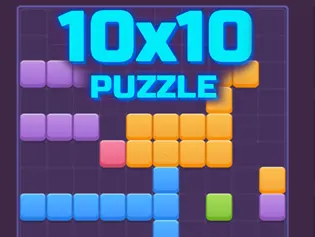
At its core, 10x10 is a grid puzzle that borrows conceptual elements from classic block-stacking titles like Tetris, but with a major twist: gravity does not exist, and blocks do not fall from the sky. Instead, you have total control over where each piece goes within an empty 10-by-10 square grid.
The rules are straightforward, making it easy to pick up in seconds:
- Piece Generation: At the bottom of the screen, the game gives you three puzzle pieces at a time. These pieces come in various shapes, including single blocks, multi-block lines, L-shapes, and solid squares.
- Placement: You drag and drop each of the three pieces onto any open spot on the 10x10 grid. You must place all three pieces before the game serves a fresh set.
- Clearing Lines: Whenever you fill an entire row (horizontal) or column (vertical) of 10 squares, that line clears from the board, freeing up valuable space.
- Game Over Condition: The game ends when you receive a piece that cannot fit anywhere on the remaining open tiles of the board.
Crucially, pieces cannot be rotated. You must place them exactly as they appear in your queue, which adds an essential layer of foresight to every move you make.
How to Access and Play on AARP
One of the best aspects of the AARP Games platform is accessibility. You do not need an active AARP membership or paid subscription to enjoy 10x10. It runs seamlessly on desktop browsers, tablets, and smartphones without requiring software downloads.
To get started:
- Navigate to the AARP Games section (games.aarp.org) and search for "10x10."
- Click the game title to load the interface in your browser.
- If you hold an AARP membership or free web account, log in before playing to log your scores and earn AARP Rewards points.
- Tap or click and drag your first block from the bottom tray onto the board to begin.
Proven Strategies to Maximize Your High Score
Reaching a modest score in 10x10 is relatively easy, but climbing into five-figure totals requires discipline. Because the game ends abruptly when a piece cannot fit, high-level play is less about aggressive scoring and more about risk prevention.
1. Always Save Space for the 3x3 Block
The single most dangerous piece in the entire game is the solid 3x3 square. It requires a massive nine-tile footprint, and it appears frequently enough to ruin an otherwise promising run. If your board becomes fragmented with small clusters of empty space, an unexpected 3x3 piece will instantly trigger a game over.
Always maintain at least one clear 3x3 zone—preferably near a corner or along an edge—where this behemoth can sit without obstruction.
Video: 10x10 Puzzle Game Gameplay
2. Analyze All Three Pieces Before Moving One

Novice players often make the mistake of placing the easiest piece first without inspecting the other two options in the tray. Because you must clear the tray before receiving new pieces, you must treat all three available shapes as a single combined move.
Before touching the board, ask yourself: Where will Piece A, Piece B, and Piece C go? If placing Piece A leaves no room for Piece C, you need to rethink your placement or use Piece A to clear a line that opens up space for Piece C.
3. Build From the Edges Inward
Placing large shapes dead in the center of the board divides your open area into disconnected pockets. Once the board is cut in half or quarters, fitting long 4-block or 5-block lines becomes nearly impossible.
Anchor your larger shapes along the borders and corners. By keeping the center relatively fluid, you preserve long pathways in both horizontal and vertical directions, giving you multiple ways to clear lines when the board gets tight.
4. Avoid Creating Single-Tile Gaps
Isolated empty tiles are the enemy of board longevity. While 1x1 pieces do appear, you cannot rely on getting one exactly when you need it. Stacking odd-angled pieces together in a way that leaves a hollow single tile inside a cluster permanently wastes space until an adjacent line clears. Keep your placements flush against each other.
5. Target Multi-Line Clears Carefully
Clearing two or three lines simultaneously awards significantly higher points than clearing single lines one at a time. Setting up double clears (such as intersecting horizontal and vertical rows) is the fastest way to run up the scoreboard. However, do not get so greedy waiting for a multi-line combo that you allow the board to fill to dangerous levels. If space is tight, take the single line clear immediately to stay alive.
Cognitive Benefits of Playing 10x10
AARP curates its game catalog with brain health in mind, and 10x10 delivers several distinct cognitive perks:
- Spatial Reasoning: Mentally rotating non-rotatable shapes to fit into available grid slots exercises visual-spatial processing.
- Working Memory: Tracking the dimensions of three active pieces while scanning a 100-tile board keeps working memory engaged.
- Stress-Free Focus: Because there is no timer, 10x10 promotes a relaxed flow state. Players can pause, think through alternatives, and make calculated decisions without adrenaline spikes or visual clutter.
Common Pitfalls to Avoid
Even seasoned puzzle enthusiasts fall into habits that cut their games short. Keep an eye out for these frequent mistakes:
- Tunnel Vision on One Axis: Focusing entirely on horizontal rows causes you to miss obvious vertical column clears that could save your run. Scan both directions before committing to a tile.
- Playing Too Quickly: 10x10 does not reward speed. Rushing through placements leads to misclicks and accidental board clutter. Take your time with every turn.
- Ignoring Board Asymmetry: Pay attention to which side of the board is denser. If the left side is congested, direct flexible pieces to the right side to prevent total gridlock.
Final Thoughts
The beauty of the AARP 10x10 game lies in its deceptive simplicity. Anyone can learn the controls in thirty seconds, but surviving long enough to post an elite score demands patience, spatial discipline, and sharp board management. Apply these strategies during your next session, protect your open spaces, and watch your high score climb.