Abrasions Right Foot ICD 10 Coding Tips
Accurate medical documentation and coding are essential for patient care continuity and seamless insurance reimbursement. When dealing with superficial skin injuries, coders must capture granular clinical details to meet regulatory standards. Mastering Abrasions Right Foot ICD 10 coding tips helps healthcare professionals avoid common claim rejections, reduce audit risks, and ensure patient records accurately reflect the nature and etiology of the injury.
Unlike deep lacerations or puncture wounds, an abrasion is characterized by the scraping away of the skin's surface layers. However, simply coding a generic skin scrape falls short of modern specificity requirements. Coders need to evaluate laterality, the exact anatomical location on the foot, the underlying cause, and whether the visit is an initial or subsequent encounter.
Understanding the ICD-10-CM Structure for Foot Abrasions
In the ICD-10-CM classification system, superficial injuries like abrasions are primarily grouped under category S00-T88 (Injury, poisoning and certain other consequences of external causes), specifically within the S90 block for superficial injuries of the ankle and foot.
To build a complete, valid code for a right foot abrasion, you generally need a minimum of six to seven characters. The structure typically follows this path:
- Category: S90 (Superficial injury of ankle and foot)
- Subcategory: S90.4 (Superficial injury of toe) or S90.8 (Other superficial injuries of ankle and foot)
- Laterality: Right vs. Left (represented by specific character values)
- Encounter: Initial, subsequent, or sequela
Key ICD-10 Coding Tips for Right Foot Abrasions
Applying best practices in clinical documentation and code selection prevents costly denials. Here are actionable tips to streamline your workflow when coding abrasions on the right foot.
1. Always Verify Laterality
ICD-10-CM requires specificity regarding the side of the body affected. For lower extremity injuries, coders must distinguish between the right and left sides. In the S90 category, the digit assigned to laterality is crucial. Failing to specify whether the injury occurred on the right foot or left foot will result in an immediate claim rejection or a request for more information from the payer.
Always cross-reference the clinical provider's notes with the physical examination section. If the physician documents a scrape on the dorsum of the right foot, ensure the selected code explicitly designates the right side.
2. Specify the Exact Anatomical Site
The foot is a complex structure containing multiple bones, joints, and regions. An abrasion on the heel requires a different level of diagnostic tracking than an abrasion on the top of the foot or the toes. Within the ICD-10 framework, you must differentiate between:
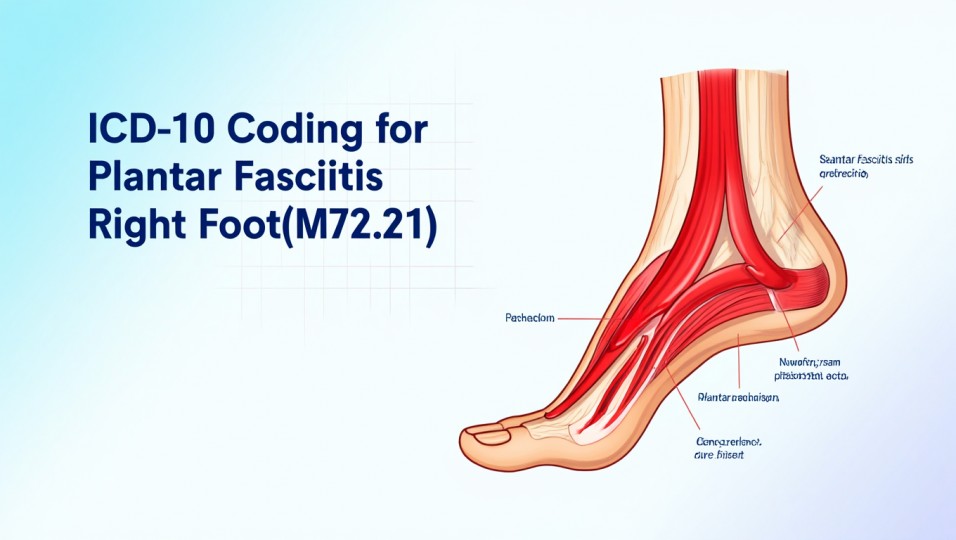
- Superficial injuries of the ankle
- Other superficial injuries of the foot (dorsum, sole)
- Superficial injuries of the toes (with or without nail damage)
Review the provider's documentation carefully. If the chart simply says "foot abrasion," query the clinician for clarification to ensure you apply the most precise code available in the S90 family.
3. Identify the Encounter Type (7th Character)
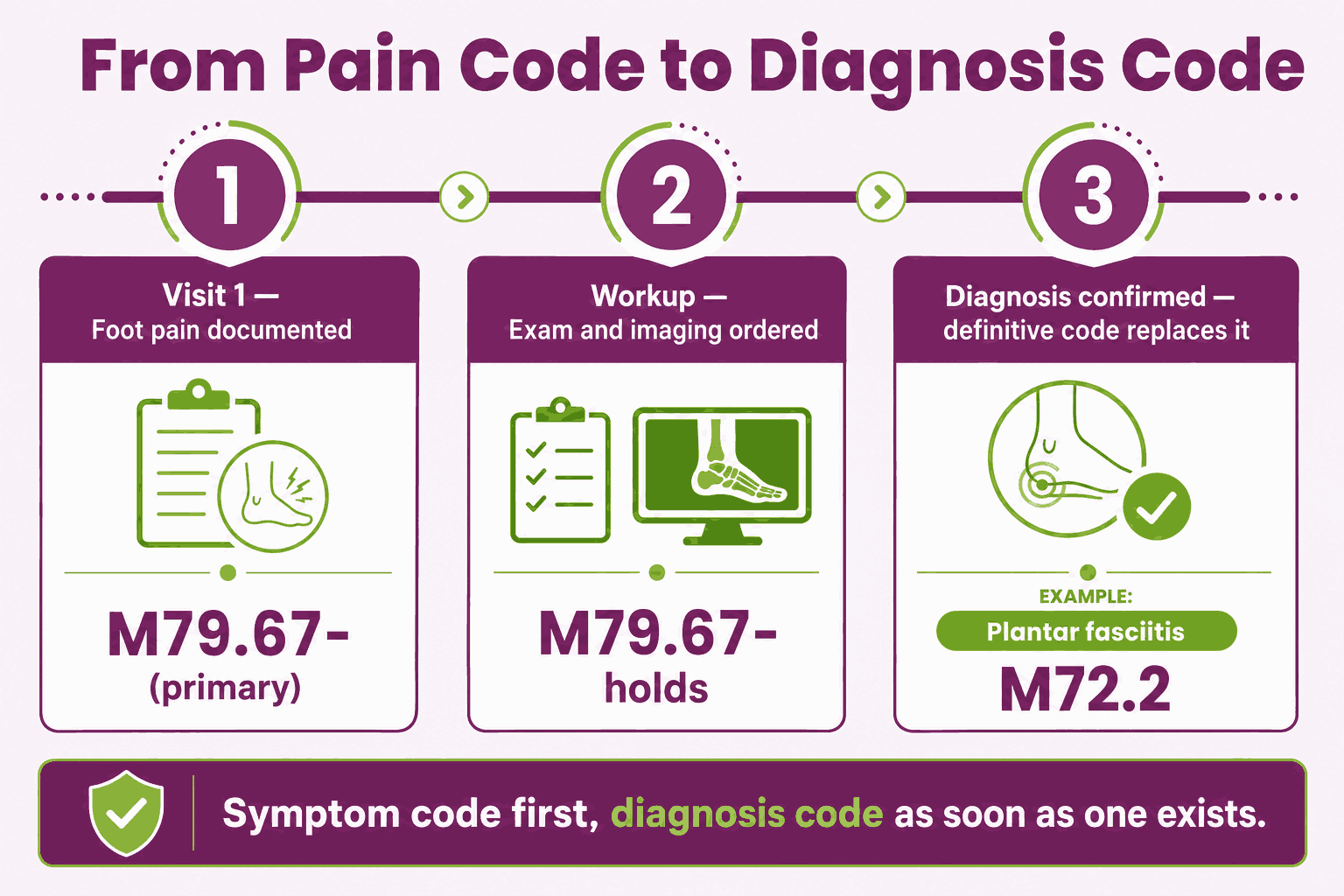
One of the most frequent areas of error in injury coding is the misuse or omission of the seventh character. ICD-10 requires a 7th character extension on injury codes to designate the phase of treatment:
- A - Initial encounter: Used while the patient is actively receiving active treatment for the condition (e.g., emergency room visit, initial surgical debridement, or first clinic evaluation).
- D - Subsequent encounter: Used for encounters after the active phase of treatment, during the healing or recovery phase (e.g., routine check-ups, dressing changes, suture or staple removal).
- S - Sequela: Used for complications or conditions that arise as a direct result of a previous injury (e.g., chronic scarring or infection secondary to an old abrasion).
Do not confuse the sequence of visits with the provider seen. A patient visiting a primary care physician two weeks after an ER visit for ongoing dressing changes is still in a subsequent encounter phase.
4. Incorporate External Cause Codes (V, W, X, Y Codes)
While abrasions are often minor, insurance payers and public health registries frequently require external cause codes to explain how the injury happened. Was the patient tripped at work? Did they scrape their foot on a piece of furniture at home?
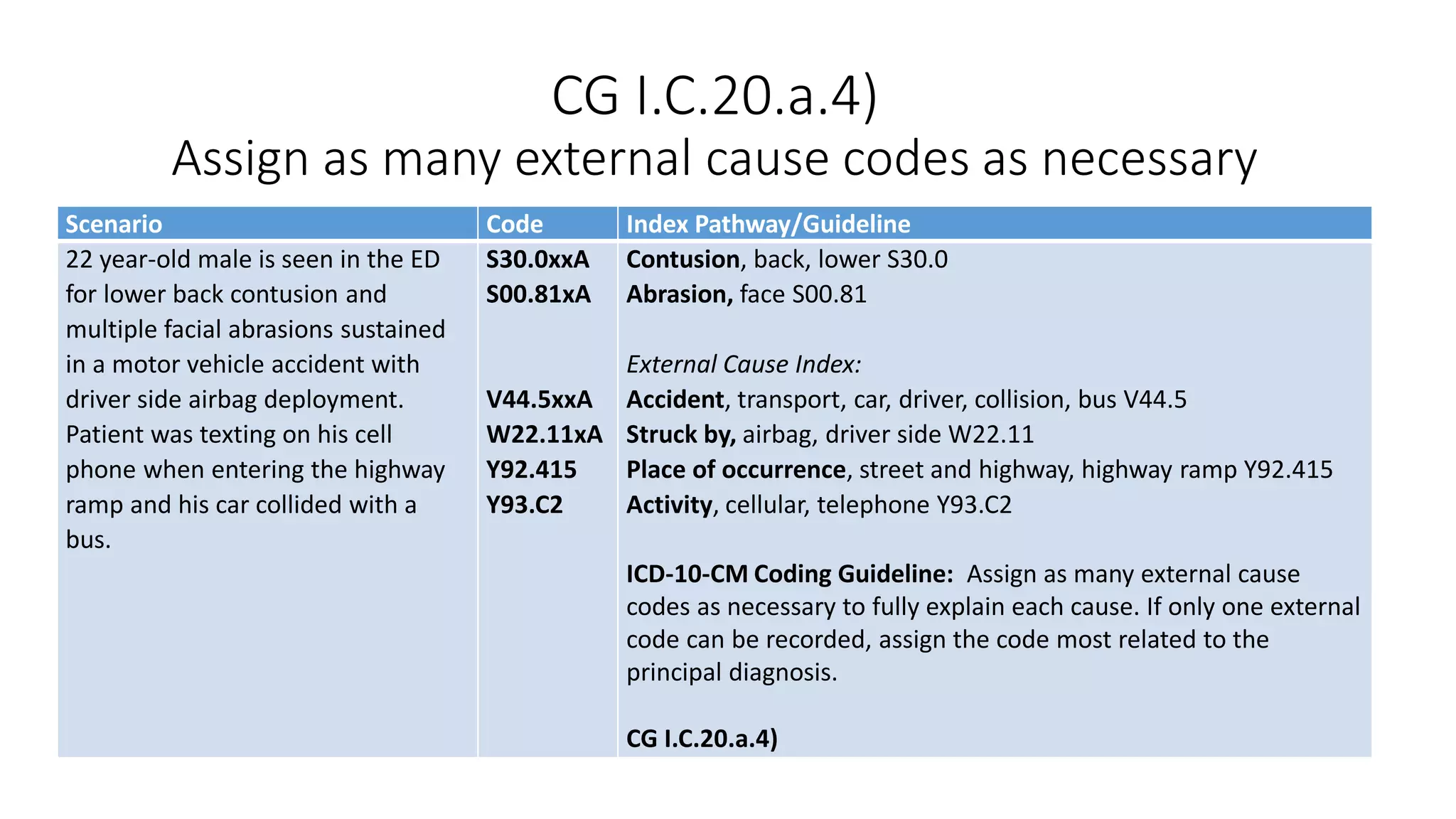
Adding a secondary code from the V00–Y99 range provides critical context. For example, if a patient scraped their right foot by tripping over a rug at home, capturing the mechanism of injury adds clinical depth and satisfies payer requirements for liability and accident tracking.
Common Pitfalls to Avoid
Even experienced medical coders can stumble when handling superficial lower extremity injuries. Keep these common traps in mind:
- Assuming all foot scrapes are the same: Treating a simple top-of-foot abrasion the same as a subungual toe abrasion leads to inaccurate reporting.
- Forgetting the 7th character: Submitting a 6-character injury code will cause automated clearinghouse rejections.
- Overlooking secondary infections: If an abrasion becomes infected, the primary focus may shift. Ensure you code both the localized trauma and the secondary manifestation if treatment protocols change.
Conclusion
Properly executing Abrasions Right Foot ICD 10 coding tips relies on a combination of rigorous chart review, attention to anatomical detail, and strict adherence to ICD-10-CM guidelines. By accurately capturing laterality, precise foot location, the correct encounter seventh character, and relevant external cause data, your practice will ensure clean claims, faster reimbursements, and pristine compliance records.