Accurate Dog Gestation Calculator for Expecting Dog Moms
Welcoming a litter of puppies is an exciting time, but the waiting period can test any pet parent's patience. Whether an accidental breeding occurred or you planned a litter with care, knowing the exact due date helps you prepare your home, monitor the mother's health, and schedule vital veterinary check-ups. Finding the most accurate gestation period calculator for expecting dog moms is the first step in managing your dog's pregnancy with confidence.

While standard canine pregnancy typically lasts between 58 and 68 days, every dog is unique. In this guide, we will break down how canine gestation works, how to calculate the estimated whelping date, and what you need to know week by week.
Understanding Canine Gestation Basics
Before plugging numbers into a due-date calculator, it helps to understand the biology behind canine pregnancy. Unlike humans, dogs do not track gestation from their last heat cycle or the first day of mating. Instead, gestation is calculated based on ovulation and fertilization.
Dogs ovulate a specific type of egg that requires a few days to mature in the fallopian tubes before it can be fertilized. Because sperm can live inside the female reproductive tract for up to seven days, the actual act of mating does not always pinpoint the exact day of conception. This biological nuance is why standard calendar-based guessing can sometimes miss the mark by several days.
Standard Gestation Timeline
On average, a dog's pregnancy lasts:
- Calendar Days: 63 days from the date of ovulation or conception.
- Weeks: Exactly 9 weeks, though a normal whelping window spans from day 58 to day 68.
If your dog delivers healthy puppies on day 59 or day 66, both are considered completely normal within the canine world.
How to Use a Dog Gestation Calculator
An accurate gestation calculator typically relies on one of three key dates provided by you or your veterinarian. Depending on how much you know about the breeding history, you can input specific milestones to get a reliable estimated due date (EDD).
1. The Mating Date
If you witnessed a specific mating session, you can use that date as your baseline. However, keep in mind that viable sperm can live inside the female for nearly a week. If you only know the date of a single mating, your due date calculator will typically project 63 days from that specific calendar day, though actual delivery could happen a few days earlier or later depending on when fertilization actually occurred.
2. The Ovulation Date (Most Accurate)
If you worked with a reproductive veterinarian who performed progesterone testing or vaginal cytology to pinpoint ovulation, you have the gold standard of pregnancy data. Progesterone tests measure hormone surges, telling breeders the exact day ovulation occurred. Counting 63 days from the precise date of ovulation is the most accurate method for predicting a dog's whelping day.
3. Veterinary Ultrasound or X-Ray Estimates
If the breeding date is completely unknown, a veterinarian can estimate the gestational age through diagnostic imaging. An ultrasound around day 25 to 30 can measure the embryos or fetal heartbeats, while a late-term X-ray (after day 45) can confirm skeletal development and puppy count, helping to narrow down the timeline based on fetal size.
Week-by-Week Pregnancy Stages for Expecting Dog Moms
Tracking the calendar is only part of being a prepared dog mom. Understanding what happens inside your dog's body week by week helps you adjust her diet, exercise routine, and environment.
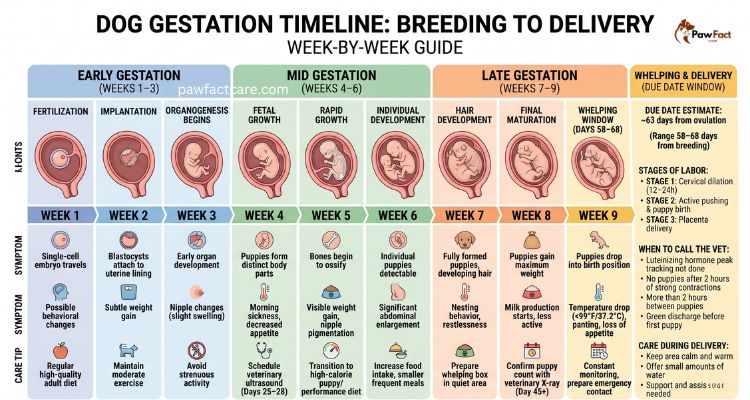
Weeks 1 to 3: Conception and Implantation
During the first three weeks, fertilization takes place as the embryos travel to the uterus and implant into the uterine lining. Outwardly, your dog will likely show very few physical changes. Some dogs experience mild lethargy or a slight decrease in appetite, much like human morning sickness, but many act completely normal.
Weeks 4 to 6: Development and Growth
This is where things start happening rapidly. By week four, veterinarians can often detect heartbeats via ultrasound. The embryos develop organs, skeletons, and distinct features. Around week five, you may notice your dog gaining weight, developing slightly larger pink nipples, and showing an increased appetite. This is the time to transition her to a high-quality puppy food to support the nutritional demands of growing fetuses.
Weeks 7 to 9: Preparation and Whelping
In the final stretch, the puppies grow rapidly, crowding the abdominal cavity. Your dog may become uncomfortable, tire easily, and look noticeably round or pear-shaped. Around day 58, you should set up a quiet, safe whelping box in a low-traffic area of your home so she can grow accustomed to it before labor begins.
Signs That Labor Is Imminent
As your dog approaches the end of her gestation period, monitoring her physical signs becomes critical. Keep a close eye out for these final indicators that labor is hours away:
- Temperature Drop: A dog's normal rectal temperature ranges between 100.5°F and 102.5°F. Within 24 hours of labor starting, her temperature will routinely drop below 99°F or 98°F.
- Nesting Behavior: She may start digging at blankets, pacing, panting, or seeking a secluded, quiet corner.
- Loss of Appetite: Most expecting mothers completely refuse food 12 to 24 hours before active contractions begin.
- Restlessness and Shivering: Hormonal shifts cause visible anxiety, heavy panting, and shivering as stage one labor commences.
When to Call Your Veterinarian
While most dogs whelp naturally without human intervention, expecting dog moms should always maintain an open line of communication with their veterinarian. Contact your vet immediately if:
- Your dog's gestation passes 68 days from ovulation without any signs of labor.
- She experiences strong, continuous contractions for more than 30 minutes without producing a puppy.
- More than two hours pass between the delivery of individual puppies while she is still actively straining.
- You observe dark green or foul-smelling vaginal discharge before the first puppy is born.
By combining a reliable due-date calculation with attentive daily care, you can ensure a smooth, healthy pregnancy journey for your beloved dog and her upcoming litter of puppies.