Acura Tires and Rims: Complete Fitment & Buyer Guide
When upgrading or replacing your acura tires and rims, selecting the correct components involves far more than simply matching visual aesthetics. Acura vehicles—known for balancing athletic handling with refined ride quality—rely heavily on precise wheel fitment, unsprung weight management, and specific tire compounds to deliver their intended driving dynamics. Whether you drive a spirited Integra, a highway-cruising TLX, or a family-hauling MDX equipped with Super Handling All-Wheel Drive (SH-AWD), getting your wheel and tire package right preserves safety, fuel economy, and mechanical longevity.

Understanding Acura Factory Wheel Specifications
Before purchasing new wheels, you need to know the baseline engineering parameters of your vehicle. Installing rims with the incorrect offset or bolt pattern can cause brake caliper interference, suspension rubbing, and premature wheel bearing failure.
1. Bolt Patterns (PCD)
Acura generally uses two primary bolt patterns across its lineup:
- 5x114.3mm (5x4.5 inches): The historical standard found on models such as the ILX, Integra (non-Type S), first-generation TLX (2015–2020), and older RDX models.
- 5x120mm: Typically used on heavier, higher-torque platforms such as the fourth-generation MDX (2022+), the second-generation TLX (2021+), and the Integra Type S.
2. Center Bore and Hub-Centricity
Most modern Acura models feature a 64.1mm center bore. Acura hubs are hub-centric, meaning the center bore of the rim supports the vehicle's weight and aligns the wheel perfectly on the spindle. If you install aftermarket wheels with a larger universal center bore (such as 73.1mm), you must use high-grade aluminum or composite hub-centric rings to prevent high-speed vibrations.
3. Wheel Offset (ET)
Factory Acura offsets typically range between +35mm and +55mm, depending on wheel width and body style. A positive offset positions the mounting surface closer to the wheel's face, pulling the rim inward toward the suspension. Modest adjustments (a decrease of 5mm to 10mm) can give your vehicle a flush, aggressive stance without causing rubbing or scrub radius issues.
OEM vs. Aftermarket Acura Tires and Rims
Owners looking to replace damaged parts or customize their vehicle's look usually weigh factory equipment against aftermarket assemblies.
Factory OEM Wheels
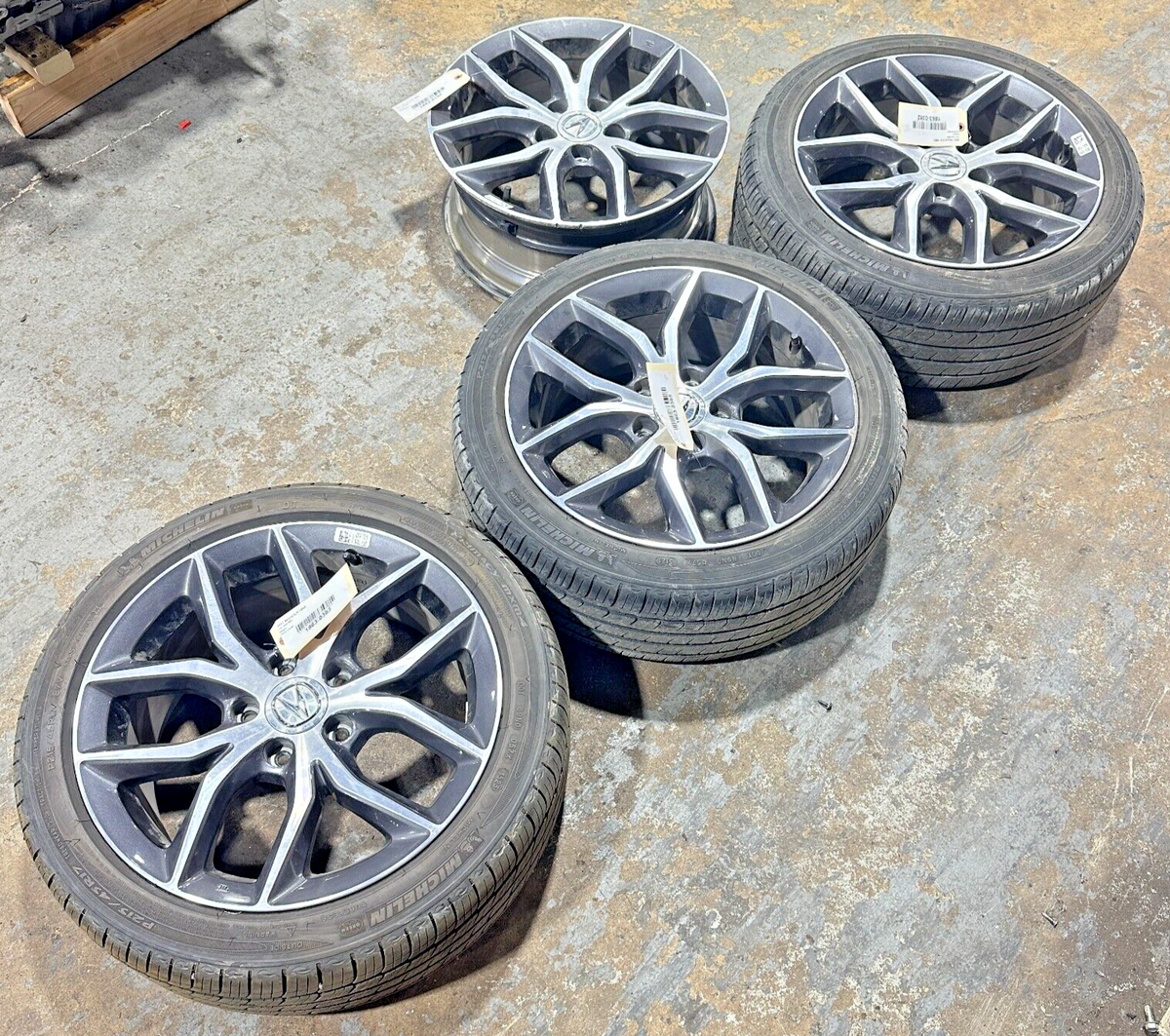
Acura's OEM wheels—often finished in signature Shark Gray, Berlina Black, or machined silver for A-Spec and Type S trims—undergo rigorous structural stress and corrosion testing. They guarantee exact fitment with original brake hardware and lug seat profiles (Acura factory wheels typically utilize ball-seat lugs, while most aftermarket rims require conical/tapered lugs).
Aftermarket Wheels
Aftermarket brands give you access to flow-formed or forged designs that can shed between 3 to 8 pounds per corner compared to cast factory wheels. Reducing rotational, unsprung mass sharpens steering response and reduces suspension fatigue. However, aftermarket setups require careful verification of offset, clearance for Brembo calipers (on Type S variants), and lug nut seating types.
Pairing the Right Tires with Acura's SH-AWD
Acura’s Super Handling All-Wheel Drive is an active torque-vectoring platform that continuously distributes power front-to-rear and side-to-side across the rear axle. This sensitivity demands strict attention to tire specifications.
- Uniform Rolling Circumference: Never mix tire brands, models, or significantly mismatched tread depths on an SH-AWD model. A tread depth difference greater than 2/32 to 3/32 of an inch between tires can lead the drivetrain computer to interpret mechanical roll variance as wheel slip, causing unwanted differential engagement and excessive heat buildup.
- Replacing in Sets of Four: If one tire suffers unrepairable damage on an AWD model, best practice dictates replacing all four tires—or having the new tire shaved down to match the tread depth of the remaining three.
- Load and Speed Ratings: Mid-size crossovers like the MDX require high load index tires (often 105 or higher) due to curb weight and towing limits. Never fit a tire with lower load or speed capabilities than specified on the driver's door jamb placard.
Tire Categories for Acura Drivers
Matching tire performance to your regional weather and driving habits allows your Acura chassis to perform at its peak.
Ultra-High-Performance All-Season (UHP A/S)
The standard choice for owners who want responsive dry handling, confident wet braking, and light winter capability. Tires like the Continental ExtremeContact DWS06 Plus or Michelin Pilot Sport All Season 4 pair naturally with the Integra, TLX A-Spec, and RDX.
Grand Touring All-Season
Ideal for drivers prioritizing cabin quietness, low rolling resistance, and high tread life over aggressive cornering. Suitable for standard MDX and TLX trims that spend most of their service life on highway commutes.
Dedicated Winter/Snow Tires
While SH-AWD provides traction under acceleration, it does not assist lateral grip or braking on icy surfaces. Dedicated winter tires (such as the Bridgestone Blizzak or Michelin X-Ice series) leverage pliable cold-weather rubber compounds and deep sipes to dramatically shorten stopping distances in freezing climates.
Practical Tips for Wheel and Tire Maintenance
Maintaining your setup ensures balanced handling and prevents expensive structural repairs down the road.
- Lug Nut Torque: Always torque Acura lug nuts using a calibrated torque wrench. Factory specifications are typically 80 lb-ft (108 Nm) for passenger cars and 94 lb-ft (127 Nm) for larger platforms like the MDX. Over-tightening can warp brake rotors, while under-tightening risks wheel separation.
- TPMS Sensors: Acura vehicles use direct Tire Pressure Monitoring Systems. When purchasing a separate winter or aftermarket wheel set, purchase OEM or pre-programmed aftermarket TPMS sensors operating on the vehicle-specific frequency (typically 315MHz or 433MHz depending on model year) to retain real-time pressure readouts on your gauge cluster.
- Rotation Intervals: Rotate your tires every 5,000 to 7,500 miles—or alongside every engine oil change. For front-wheel-drive models (like base Integras), use a modified cross rotation; for directional performance tires, rotate front-to-back on the same side.
Summary
Upgrading your Acura tires and rims transforms both the aesthetic presence and the road-holding capability of your vehicle. By adhering to factory bolt patterns, selecting proper wheel offsets, and mounting tires matched to the engineering tolerances of systems like SH-AWD, you maintain the safety, performance, and reliability engineered into your vehicle from the factory.


