Aesthetic Coloring Books Without AI Offer the Perfect Escape
In an era dominated by algorithmic feeds, automated writing tools, and computer-generated imagery, many of us are craving something undeniably real. We spend our workdays staring at screens, scrolling through polished digital spaces that often leave us feeling more drained than inspired. That digital fatigue is precisely why analog hobbies are making a massive comeback. Among them, coloring has evolved from a childhood pastime into a powerful ritual for adult mental health.

However, the mindfulness market has not been immune to technological shortcuts. A quick search for supplies online reveals an influx of cheap, mass-produced titles pumped out by algorithms. These machine-made pages often feature weirdly warped hands, nonsensical background architecture, and sterile lines that lack emotional depth. To truly unplug and reset, you need a different kind of creative sanctuary. Aesthetic coloring books without AI offer the perfect escape, reconnecting us with authentic human creativity, intentional design, and tactile joy.
The Problem with Algorithmic Art in Mindfulness Spaces
Coloring is fundamentally an exercise in presence and mental hygiene. When you sit down with a book and a box of pencils, your goal is to quiet your nervous system and engage in repetitive, soothing motion. Generative artificial intelligence undermines this entire goal through its inherent flaws and lack of intent.
When an algorithm generates a coloring page, it doesn't understand composition, mood, or the physical act of coloring. The resulting images frequently suffer from distinct issues:
- Unnatural symmetry and weird geometry: Mandalas and patterns often shift awkwardly off-center, creating subconscious visual irritation rather than calm.
- Meaningless details: Instead of intentional line work that guides your shading, AI art often dumps random floating shapes and chaotic textures that are frustrating to color.
- The uncanny valley effect: Character illustrations often feature lifeless eyes or impossible anatomy that feels eerie rather than aesthetic.
Engaging with machine-made art keeps your brain subtly tethered to the digital world. Buying from independent illustrators who put genuine thought into their line work ensures your relaxation time stays pure, ethical, and grounded.
Why Human-Made Aesthetic Coloring Books Hit Different
When an actual artist designs a page, every line serves a purpose. Human illustrators understand line weight, negative space, and storytelling. They know how a gentle curve guides the eye or how dense hatching creates shadow. This intentionality translates directly to the coloring experience.
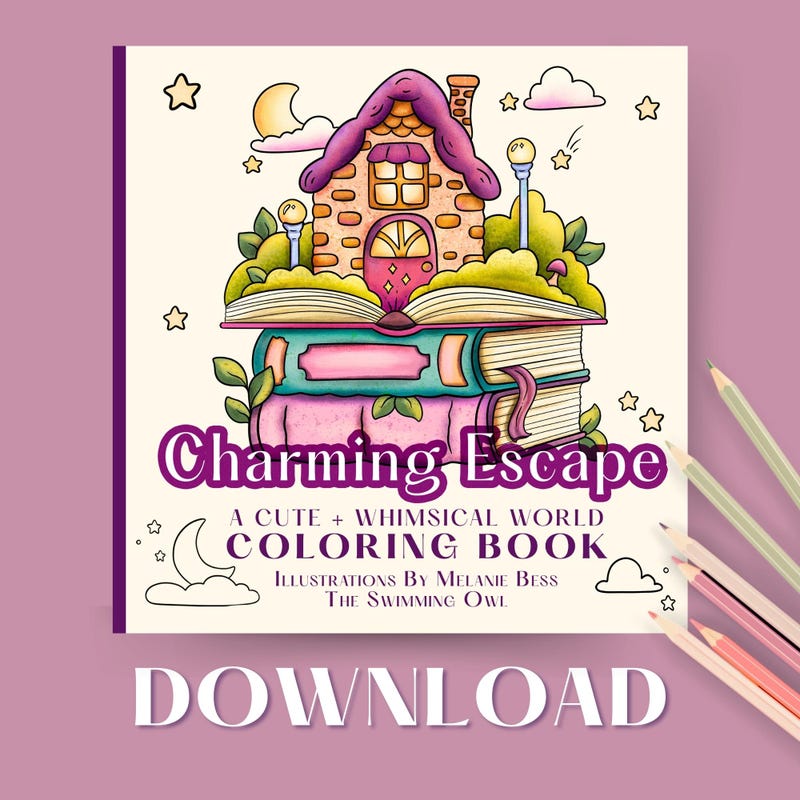
Aesthetic coloring books focus on mood, atmosphere, and visual poetry. They often lean into specific lifestyle aesthetics—such as cozy cottagecore scenes, moody botanical studies, minimalist line art, vintage botanical charts, or whimsical retro spaces. Because a human hand drew the original strokes, the page has a heartbeat. You can feel the creator's care in every contour, making the act of filling in those spaces feel like a collaborative art project between you and the illustrator.
The Therapeutic Benefits of True Analog Creativity
Shifting away from digital noise and into tactile coloring triggers profound neurological shifts. When you choose human-crafted books, you amplify these benefits through several key mechanisms:
- Deep tactile engagement: The slight tooth of quality paper, the scratch of graphite or pastel, and the physical blending of colored pencils require sensory integration that screens simply cannot provide.
- Freedom from perfectionism: Hand-drawn art embraces organic imperfections. It reminds you that art does not need to be mathematically precise to be beautiful.
- Supporting living artists: Purchasing independently published, human-made books supports real creators who pour hours of passion into their craft, rather than tech conglomerates relying on scraped data.
How to Spot and Support Authentic Illustrators
With the rise of drop-shipped publishing platforms, finding genuinely human-made books requires a bit of detective work. Many automated titles flood online marketplaces with stolen or AI-generated cover art.
To ensure your money goes to real artists, look for independent creators who share their sketching process on social media or crowdfunding platforms like Kickstarter. Check the author bio—reputable publishers proudly display the illustrator's name rather than a vague corporate brand. Look closely at preview pages for consistent line weights, logical perspectives, and thoughtful themes that reflect real human experiences.
Reclaim Your Quiet Moments
Your downtime is precious. In a world increasingly eager to replace human expression with automated shortcuts, choosing analog art is a quiet act of rebellion. By investing in aesthetic coloring books crafted by real human hands, you protect your focus, support independent creators, and treat yourself to a genuine, restorative sanctuary.
Pull your favorite pencils off the shelf, pick up a book born from human imagination, and let your mind finally breathe.


