Airbnb’s Valuation Flagship: What Sets It Apart
Introduction to Airbnb’s Market Dominance

When investors and market analysts evaluate the modern technology and travel landscapes, one company consistently defies traditional valuation metrics. Airbnb has transcended its origins as an alternative lodging platform to become a cultural and economic juggernaut. Central to this phenomenon is Airbnb’s valuation flagship: what sets it apart from all others! Unlike legacy hotel chains or asset-heavy real estate corporations, Airbnb commands a market capitalization that reflects a software platform's scalability fused with the emotional resonance of global travel.
Understanding what makes this valuation model unique requires looking beyond standard price-to-earnings ratios. We must examine the structural advantages, economic moats, and financial mechanics that allow the company to weather macroeconomic storms while continuing to capture outsized market share.
The Asset-Light Business Model Advantage
At the core of Airbnb’s financial valuation is its deeply advantageous asset-light structure. Traditional hospitality companies must sink billions of dollars into real estate acquisition, construction, property maintenance, and physical infrastructure. Every new hotel room added to a traditional chain’s portfolio represents a massive capital expenditure.
Airbnb, conversely, owns virtually zero real estate. The millions of listings available on its platform are supplied, maintained, and funded by individual hosts. This fundamental difference transforms the company's financial profile:
- Minimal Capital Expenditure: The cost to scale the platform by another 100,000 listings is remarkably low compared to building hotels.
- Dynamic Supply Adjustment: During economic downturns or travel booms, host supply adjusts organically without weighing down corporate balance sheets with underperforming physical assets.
- High Free Cash Flow Conversion: Without the burden of physical property upkeep, a significant portion of incoming revenue converts directly into free cash flow.
Network Effects and Brand Intangibility
Financial analysts often struggle to assign a numeric value to brand loyalty, yet it forms a massive pillar of Airbnb’s market valuation. The company achieved something rare in consumer tech: it turned its brand name into a verb. When travelers look for alternative accommodations, they rarely search for the category; they search for the brand.
This supreme brand equity creates a powerful two-sided network effect:
- More Guests Attract More Hosts: A massive global user base looking for unique stays incentivizes property owners to list their spaces on Airbnb rather than competing platforms.
- More Hosts Attract More Guests: A diverse, widespread inventory provides better geographical coverage and price variety, drawing even more travelers into the ecosystem.
This virtuous cycle creates a high barrier to entry. Competitors can replicate website code or mobile app interfaces, but duplicating a globally trusted brand with millions of active, verified community reviews takes decades and billions of dollars in marketing.
Agility and Innovation in Changing Markets

Another critical component of Airbnb’s valuation flagship status is its remarkable operational agility. Traditional hospitality is notoriously slow to pivot. Redesigning a hotel chain's offerings takes years of board meetings and franchise negotiations. Airbnb, however, can alter its entire digital marketplace overnight.
Adapting to Remote Work and Long-Term Stays
When the global pandemic fundamentally disrupted short-term tourism in 2020, traditional hotel valuations plummeted because their core business model evaporated. Airbnb pivoted within weeks to capture the rising trend of long-term stays and digital nomads. By highlighting monthly stays and remote-work-friendly listings, the company protected its revenue streams and emerged from the crisis leaner, more profitable, and better positioned for the future of work.
Continuous Product Evolution
The company regularly introduces platform features—such as Airbnb Categories, AirCover for hosts and guests, and curated experiences—that expand its total addressable market (TAM). Each product iteration deepens user engagement without requiring massive infrastructure investments, signaling to Wall Street that the platform possesses multiple avenues for future monetization.
Comparing Airbnb to Traditional Hospitality Giants
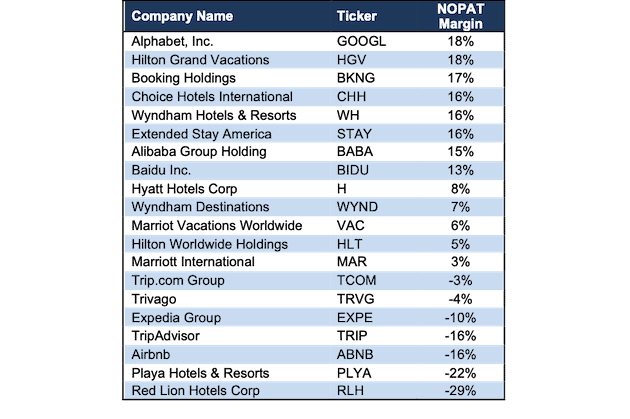
To truly appreciate what sets Airbnb apart, one must look at how the market prices it relative to traditional industry giants like Marriott, Hilton, or Expedia. While traditional hotels trade primarily on cyclical property values and occupancy rates, Airbnb is valued more like a high-growth software-as-a-service (SaaS) or e-commerce marketplace.
Investors are willing to pay a premium multiple for Airbnb shares because of its pricing power and geographic diversification. Operating in over 220 countries and regions, the platform acts as a global macro hedge. If travel slows down in one region due to currency fluctuations or local economic pressures, an uptick in domestic travel or a surge in an entirely different continent often offsets the loss.
Conclusion: The Future of the Flagship Valuation
Airbnb’s valuation flagship status is not an accident of market hype; it is the logical outcome of a resilient, scalable, and capital-efficient business model. By avoiding the heavy anchors of physical real estate, harnessing powerful two-sided network effects, and maintaining the agility to adapt to shifting consumer behaviors, Airbnb has redefined what a travel company can be.
As long as the company continues to innovate its platform and protect its unmatched brand equity, it will likely remain in a league of its own, serving as the definitive financial benchmark for modern global marketplaces.