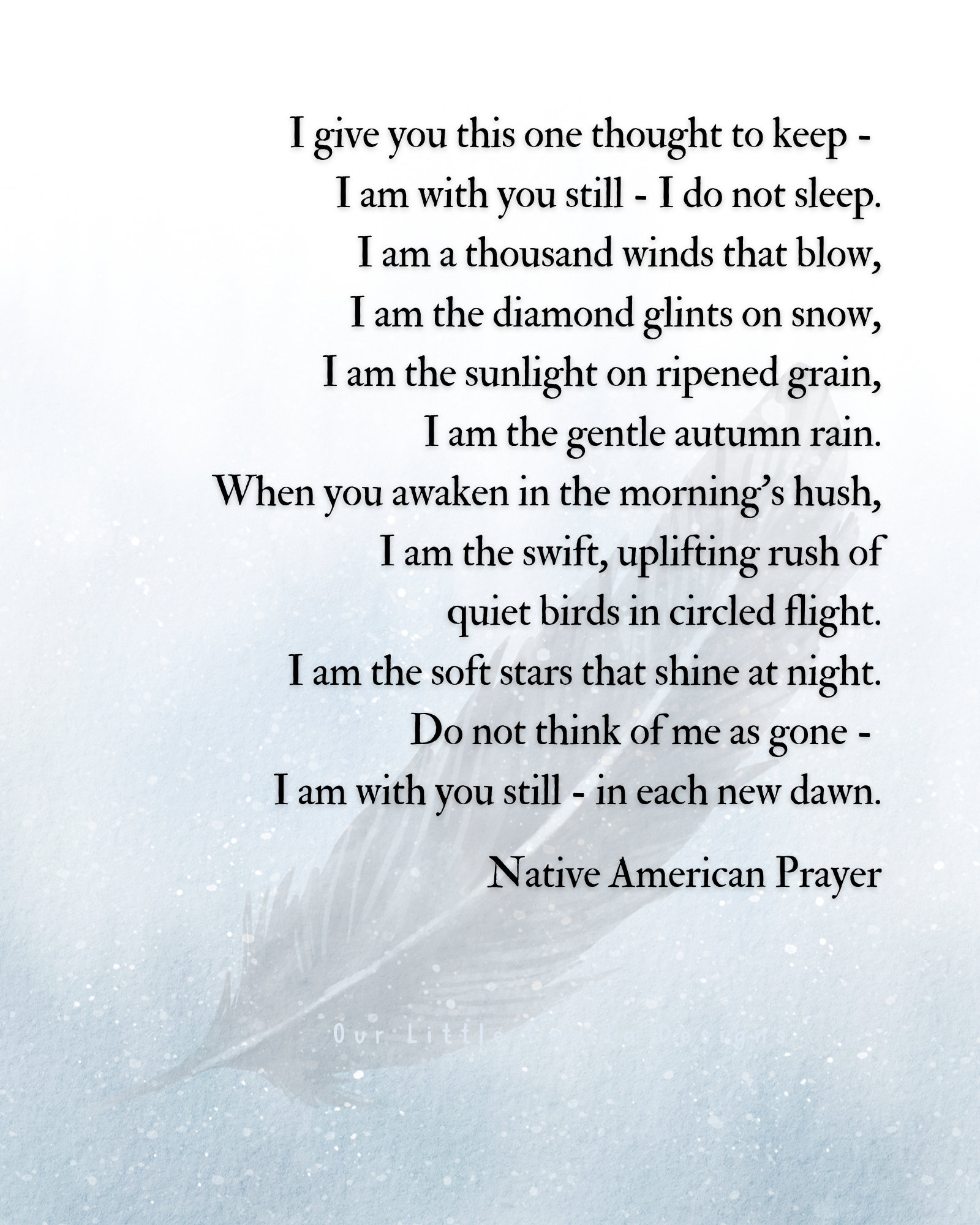
Across diverse Native American and Indigenous traditions, death is rarely viewed as a terrifying end. Instead, traditional philosophies often embrace mortality as a natural transition—a continuation of the soul's journey rather than its final destination. Exploring American Indian quotes on death reveals a profound connection to nature, the elements, and the understanding that human life is merely one thread in a much larger, sacred tapestry.
Western perspectives on dying frequently focus on loss, grief, and separation. In contrast, many Indigenous cultures view the departed as joining the ancestors, becoming part of the wind, the stars, and the earth. This worldview transforms how communities process sorrow, celebrate a life well-lived, and honor those who have crossed over.
Profound American Indian Quotes on Death and Transition
The following sayings and reflections capture the essence of Indigenous wisdom regarding the end of physical life. They offer solace to the grieving and remind us of the enduring beauty of existence.
1. The Chief Seattle Tradition
One of the most widely recognized figures in Native American history, Chief Seattle (Duwamish and Suquamish), spoke eloquently about the interconnectedness of all living things and the inevitability of death:
"Yonder star is not unfamiliar. It is our mother. We are a part of the earth and it is a part of us... There is no death, only a change of worlds."
— Attributed to Chief Seattle
This perspective reframes dying as a change of worlds. Just as a traveler moves from one region to another, the spirit simply transitions to a different state of being while remaining connected to the living world.
2. The Wisdom of the Circle
Many Plains and Woodland tribes view time and life through the symbol of the sacred hoop or circle. In this framework, birth and death are simply points along a continuous, unbroken line.
Life has no beginning and no end; the physical body returns to the earth to nourish new life.
Grief is honored as a deep expression of love, yet it is balanced by the knowledge of renewal.
The ancestors are always present, guiding the living just as the roots of a tree support its branches.
3. Black Elk Speaks
Nicholas Black Elk, a renowned Oglala Lakota medicine man, shared deep insights into the spiritual nature of the universe. His teachings remind us that physical existence is temporary, but the spiritual reality is eternal and expansive.
"The first peace, which is the most important, is that which comes within the souls of people when they realize their relationship, their oneness, with the universe and all its powers, and when they realize that at the center of the universe dwells Wakan-Tanka [the Great Mystery], and that this center is really everywhere, it is within each of us."
When an individual understands their oneness with the universe, fear of death diminishes. The return to the Great Mystery is seen as a homecoming.
The Elements and the Afterlife
In traditional Native American thought, nature provides the ultimate metaphor for life and death. The changing seasons—the falling leaves of autumn, the dormant winter, and the rebirth of spring—mirror the human lifecycle.
Returning to the Earth
Many traditional burial practices emphasize returning the body directly to the earth so that it may nourish plants, animals, and the soil. This practice reinforces the idea that humans do not own the earth, nor do they stand apart from it. Death is an act of reciprocity; the body gives back what it borrowed from the land during its lifetime.
Courage in the Face of Mortality
Historic warrior societies across various tribes cultivated a distinct relationship with death. Courage in battle or during times of hardship was rooted in the understanding that honor and community survival outweighed individual physical preservation. A famous sentiment often echoed in oral histories states:
"It is a good day to die."
— Traditional Saying
Far from expressing suicidal despair, this phrase—frequently associated with Lakota warriors—means that a person has lived honorably, fulfilled their obligations to their family and tribe, and is prepared to meet the Creator without fear or regret.
Finding Comfort in Indigenous Wisdom Today
For those navigating the loss of a loved one, drawing upon American Indian quotes on death can provide a soothing alternative to conventional modern grief practices. Here are ways to apply this wisdom to modern healing:
Look to Nature: Spend time outdoors to observe how the natural world handles decay and rebirth, remembering that endings are also beginnings.
Honor Memories: Keep the memory of the departed alive through storytelling, song, and remembering their contributions to the community.
Embrace Continuity: View grief not as an endless chasm, but as a testament to the enduring bond of love that transcends physical death.
Ultimately, these teachings remind us that while grief is real and heavy, death is not an absolute termination. It is a quiet step across the threshold into the great mystery of the universe.
Image Gallery
American Indian quotes on deathIndigenous wisdomNative American philosophygrief and healingafterlife beliefs