Andre Dawson Topps: The Bold Career Move
Baseball history is filled with blockbuster trades, massive contract extensions, and high-stakes negotiations. Yet, few moments capture the pure romanticism and competitive fire of the game quite like Andre Dawson's historic 1987 free agency saga. It was a high-risk gamble that changed his career trajectory, won over a passionate fanbase, and ultimately ensured that any discussion of Andre Dawson Topps collectibles comes with a legendary backstory.
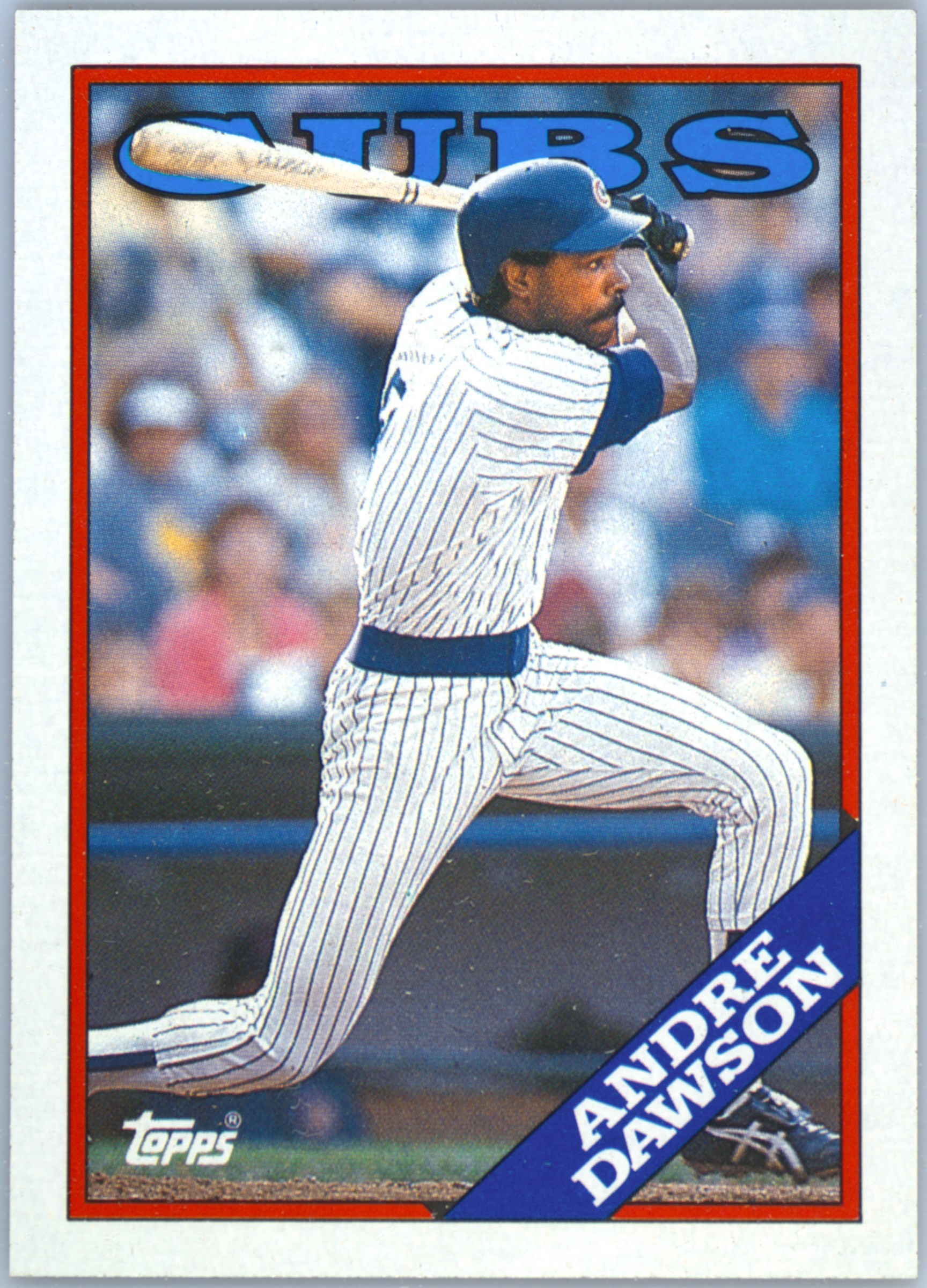
For modern baseball fans and sports card collectors, Dawson's iconic cardboard from the late 1980s represents much more than just statistics on a piece of cardstock. It symbolizes resilience, betting on oneself, and the ultimate reward of sticking to your principles. Let's look back at the bold career move that made Andre Dawson Topps a name you can’t ignore.
The Free Agency Freeze-Out of 1987
To understand why Dawson's career move was so dramatic, you have to look at the landscape of Major League Baseball in the winter of 1986–1987. Collusion among MLB owners was rampant, artificially suppressing salaries and freezing the free-agent market. Despite being a former Rookie of the Year, multiple-time Gold Glove winner, and Silver Slugger—having spent his first nine stellar seasons with the Montreal Expos—Dawson suddenly found himself unwanted on the open market.
Most teams weren't even returning calls from his agent, Dick Moss. Bad knees and artificial turf concerns in Montreal had made Dawson desperate for a change of scenery, preferably playing daytime baseball on natural grass at Chicago’s Wrigley Field. However, major league owners seemed content to sit on their hands and wait him out.
Taking Matters Into His Own Hands
Frustrated by the system and eager to prove he could still dominate at the highest level, Dawson decided to force the issue. He instructed his agent to approach the Chicago Cubs with an unprecedented proposition.
- The Blank Contract: Dawson offered to sign a blank contract, letting the Cubs fill in whatever salary they deemed fair.
- Proving His Worth: He didn't want to break the bank; he just wanted a fair chance to play for a franchise he loved, on a surface that would preserve his body.
- The Ultimate Bet on Himself: By removing financial demands from the equation, Dawson stripped away all excuses the Cubs front office might have had to pass on him.
Ultimately, the Cubs offered him a modest one-year contract worth $500,000, plus performance incentives. It was well below his actual market value, but it was the ticket he needed. The stage was officially set for one of the most memorable prove-it seasons in baseball history.
An MVP Season in the Windy City
The gamble paid off immediately. Walking into Spring Training as a blank-slate signee, Dawson captured the imagination of Cubs fans and the media. He didn't just have a good year; he had a historic, MVP-caliber campaign in 1987.
Video: 🔥 TOP 9 Andre Dawson Card Auctions Ending TODAY! 💰 One Will Sell for OVER $39!

Despite playing for a last-place Cubs team, Dawson put up jaw-dropping numbers:
- Home Run Crown: He smashed a career-high 49 home runs, leading the National League.
- RBI Leader: He drove in 137 runs, carrying the Cubs' offense on his back.
- The MVP Double: In an extremely rare feat for a player on a last-place team, Dawson won the National League Most Valuable Player Award. He also added a Gold Glove and a Silver Slugger to his trophy case for good measure.
Fans at Wrigley Field showered him with adoration, famously chanting 'MVP! MVP!' and showering the outfield with cheers. His gamble had turned him into an instant Chicago folk hero.
How This Moment Defined Andre Dawson Topps Collectibles
For the hobby of sports card collecting, 1987 was a monumental year. It was the era of the 'Junk Wax' boom, dominated by massive print runs from brands like Topps, Fleer, and Donruss. Yet, amidst the millions of cards printed, certain items retained massive cultural significance due to the stories behind them.
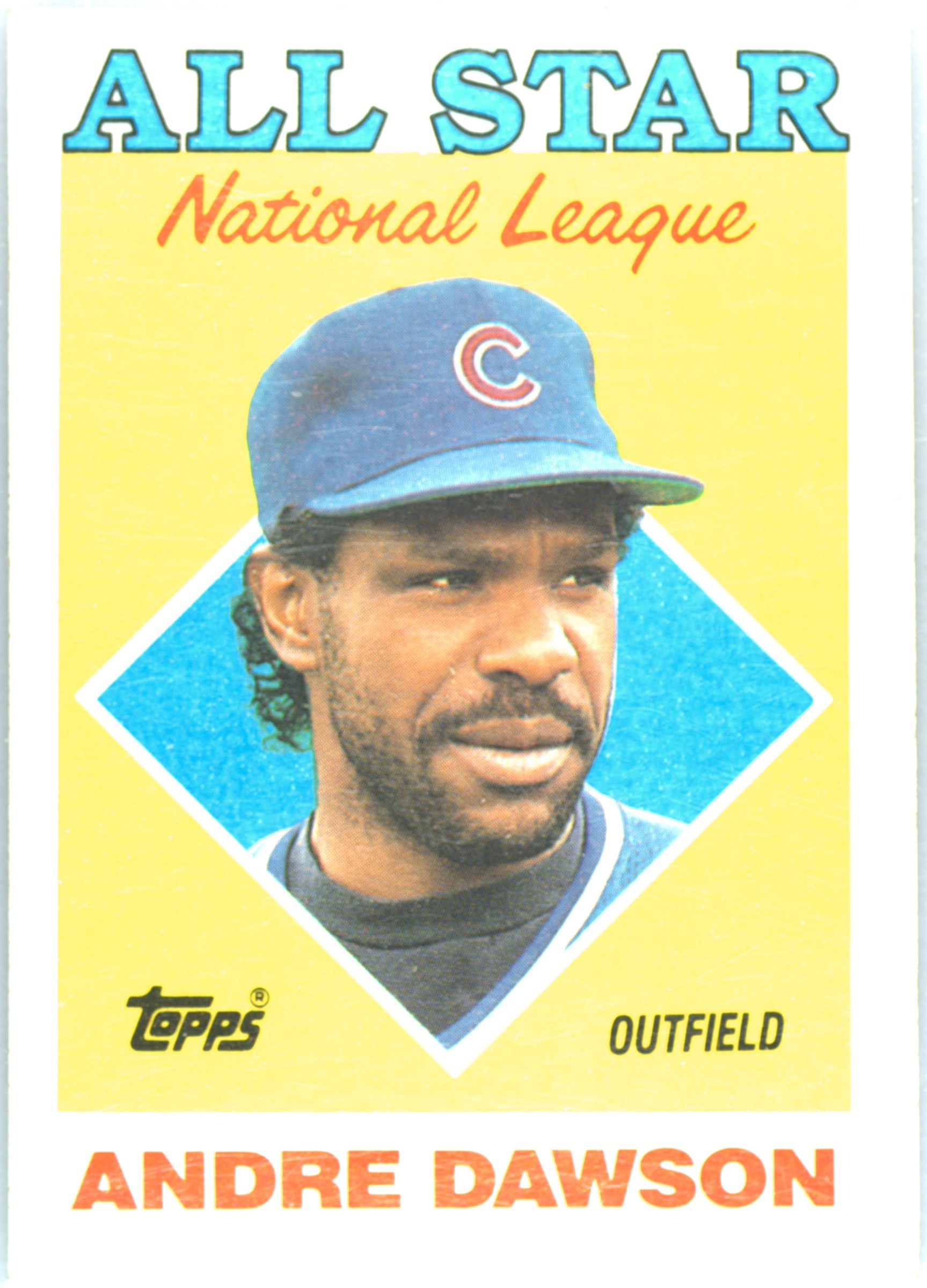
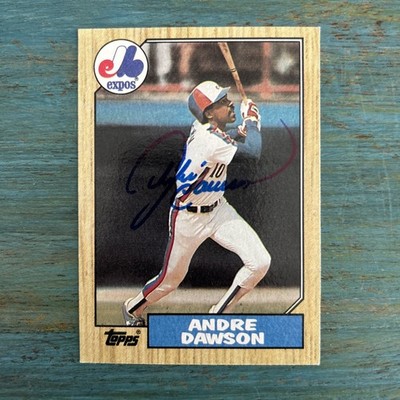
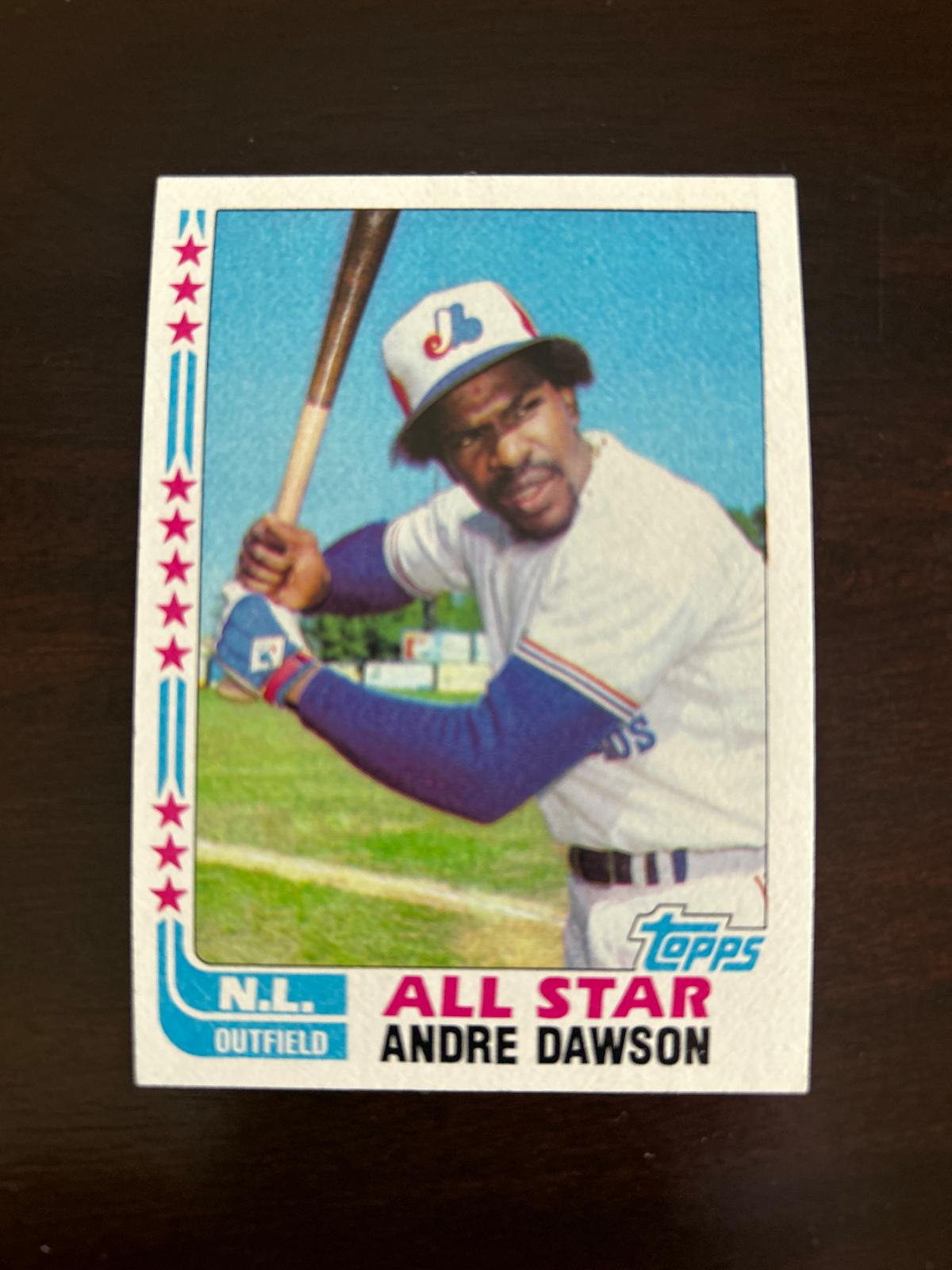
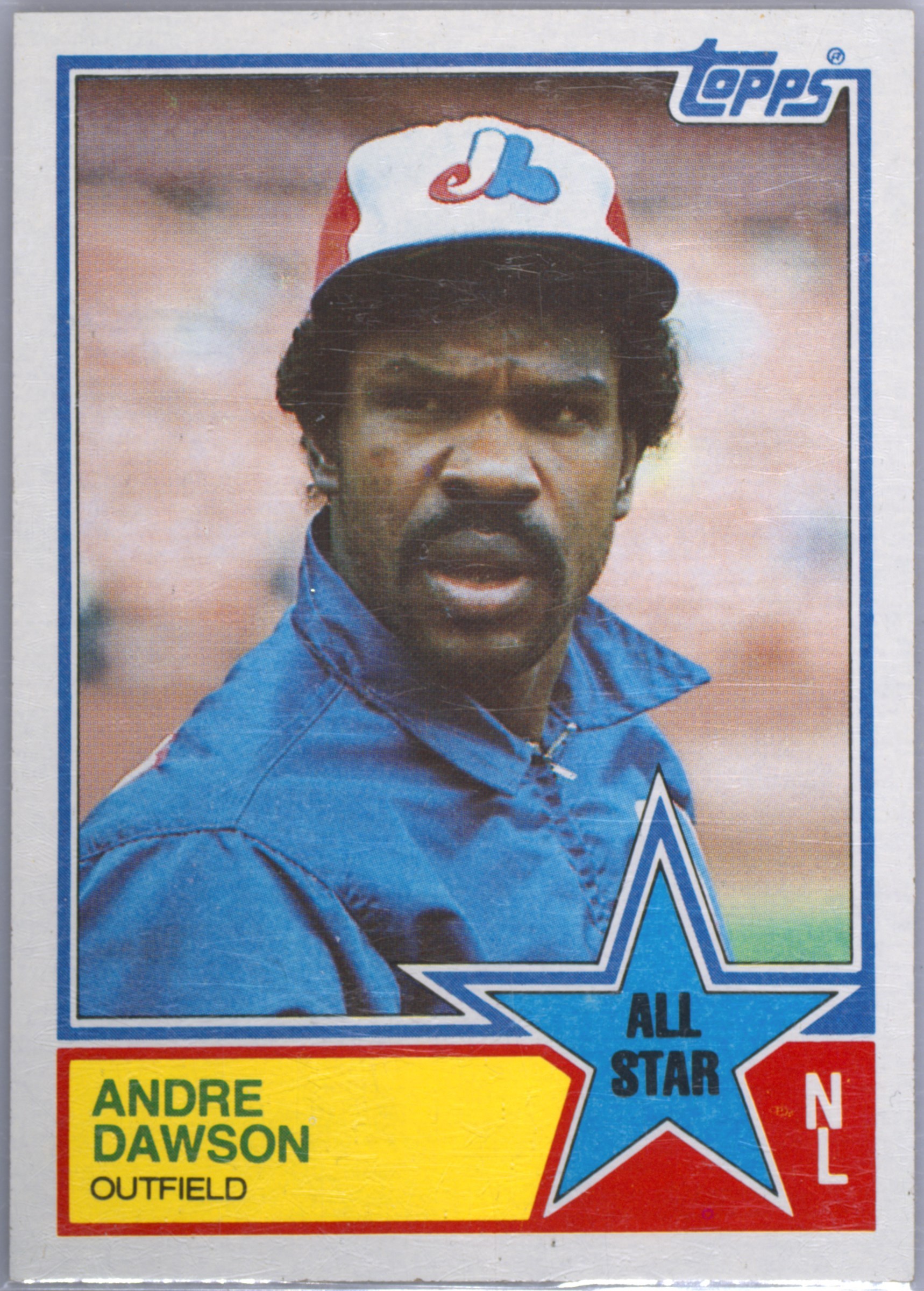
The 1987 Topps set, with its iconic wood-grain border design, features some of the most recognizable cards in the hobby. When collectors pull or purchase an Andre Dawson card from this era—especially his 1987 Topps All-Star subset card or his base Cubs card—they aren't just looking at a picture of a great outfielder. They are looking at the physical manifestation of a player who bet everything on his own talent and won.
Why Collectors Still Chase His Cards Today
Decades after his playing days ended and his induction into the National Baseball Hall of Fame in 2010, Dawson remains a beloved figure. His Topps cards continue to command respect in the collecting community for several key reasons:
- Authentic Grit: Dawson played the game the hard way—hard-nosed, gritty, and leaving everything on the field. Collectors respect that authenticity.
- The Cubs Era Legacy: While he started in Montreal, the visual of Dawson in a pinstriped Cubs uniform with the classic blue cap is how most fans remember his peak power years.
- Investment Stability: Hall of Fame credentials combined with legendary storylines ensure that high-grade vintage and semi-modern Dawson cards hold steady interest in the marketplace.
The Lasting Legacy of a Baseball Maverick
Andre Dawson's decision to sign that blank contract went far beyond a clever salary negotiation. It was a statement against institutional stagnation and a testament to pure competitive drive. He proved that greatness cannot be suppressed by boardroom collusion.
Every time a collector flips through a binder and stops at an Andre Dawson Topps card, they are reminded of that magical summer of 1987. It stands as a timeless reminder that sometimes, the boldest career moves yield the most unforgettable rewards.