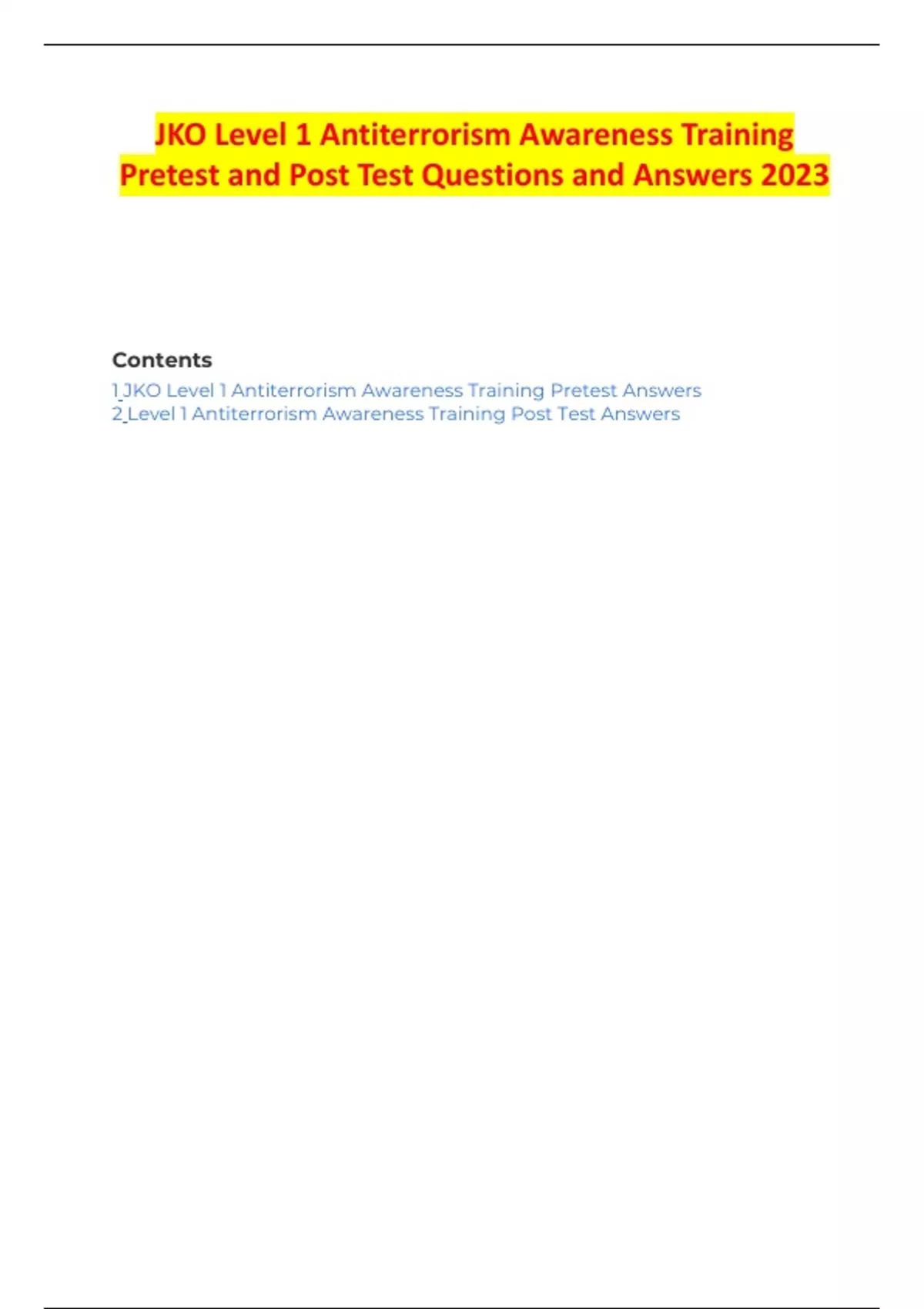
Anti Terrorism Level 1 Answers & Study Guide
Every year, Department of Defense service members, civilian personnel, and defense contractors must complete the JS-US007 Antiterrorism Level I Awareness Training via Joint Knowledge Online (JKO). While many search for quick anti terrorism level 1 answers to satisfy the annual requirement, memorizing an answer key often leads to confusion when questions are randomized. Understanding the core principles of individual protection, situational awareness, and threat response ensures you pass the pre-test or post-test efficiently while maintaining real-world readiness.
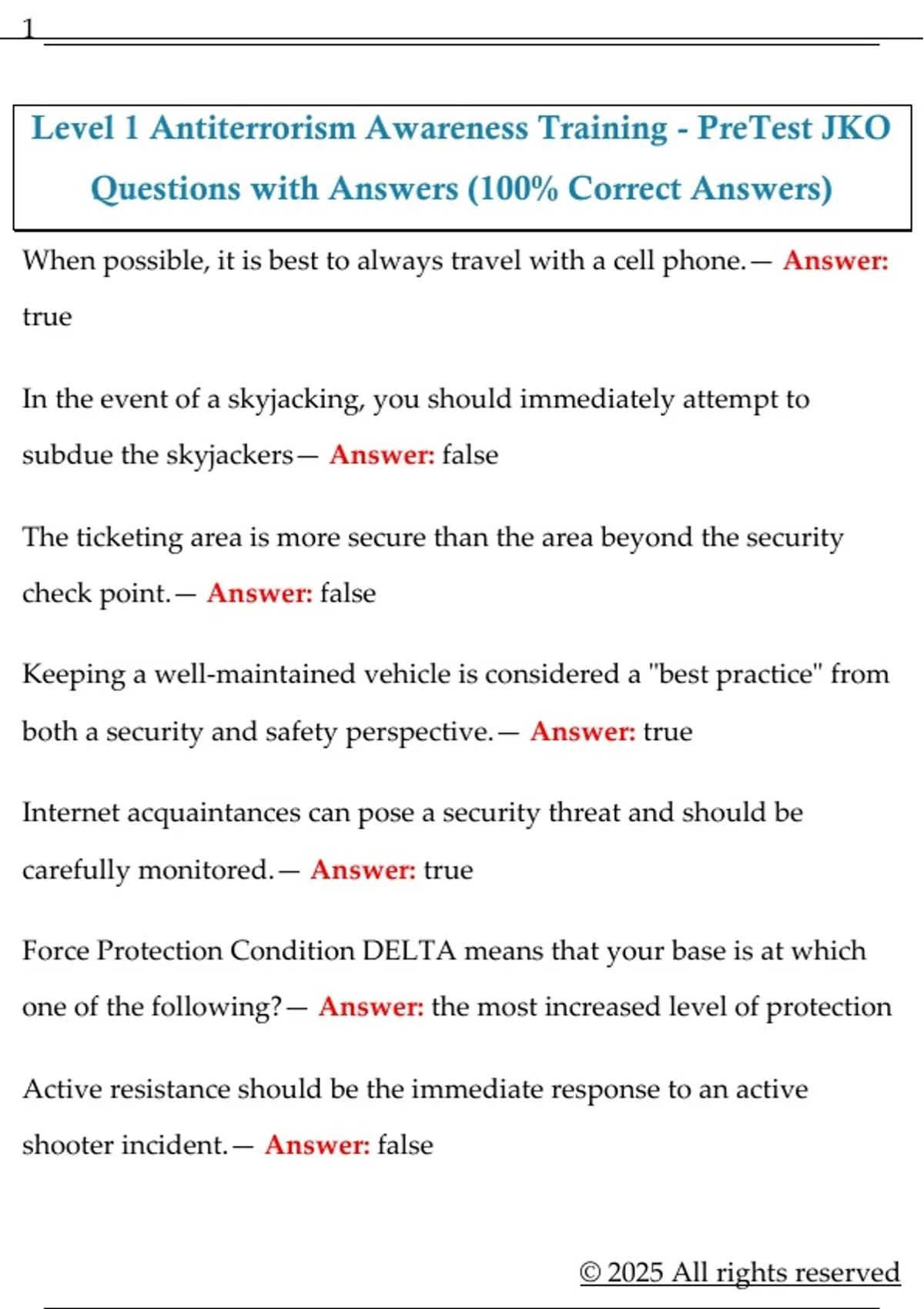
This guide synthesizes the critical doctrines taught in the Level 1 curriculum, breaking down the specific knowledge checks, threat level definitions, and emergency response actions you will encounter during the assessment.
Understanding Force Protection Conditions (FPCON)
A significant portion of the Level 1 exam tests your comprehension of Force Protection Conditions (FPCONs). FPCONs describe the security posture of an installation or facility based on threat probability and intelligence assessments. Commanders can elevate FPCON levels, but they cannot lower them below the combatant commander's baseline.
- FPCON NORMAL: Applies when a general global threat of possible terrorist activity exists. It warrants routine security posture.
- FPCON ALPHA: Applies when there is an increased general threat of possible terrorist activity against personnel and facilities, the nature and extent of which are unpredictable. Measures must be capable of being maintained indefinitely.
- FPCON BRAVO: Applies when an increased or more predictable threat of terrorist activity exists. Sustaining Bravo measures for prolonged periods may affect operational capabilities and relations with local authorities.
- FPCON CHARLIE: Applies when an incident occurs or intelligence indicates that terrorist action or targeting against personnel or facilities is likely. Implementing Charlie measures creates substantial hardship and impedes normal unit operations.
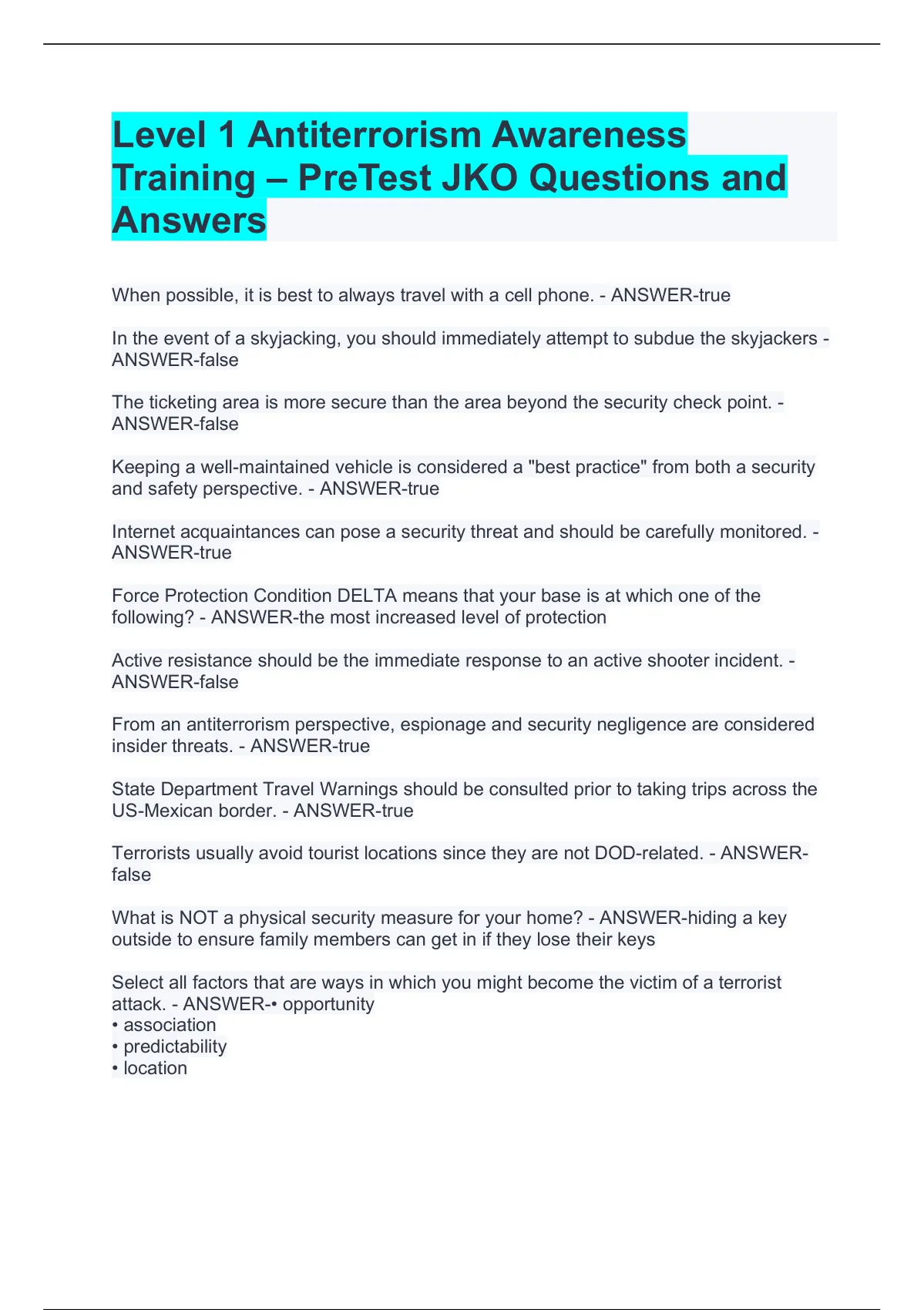
- FPCON DELTA: Applies in the immediate area where a terrorist attack has occurred or when intelligence indicates terrorist action against a specific location or person is imminent. Delta is declared as a localized condition and is not intended to be sustained indefinitely.
Core Knowledge Breakdown: Anti Terrorism Level 1 Answers
The training curriculum evaluates your judgment across several operational environments. Below are the tested concepts organized by topic area.
1. Surveillance Detection and Threat Indicators
Terrorist operations rely heavily on pre-attack surveillance. Knowing how to spot and report surveillance is one of the most heavily tested areas on the exam:
- Surveillance Methods: Stationary surveillance involves observers positioned at fixed points (such as street vendors or parked cars), while mobile surveillance tracks targets on foot or in vehicles. Electronic surveillance includes unauthorized recording, photographing gates, or probing base communication networks.
- Suspicious Indicators: Look for individuals loitering without clear purpose, drawing sketches, noting guard rotation schedules, or repeatedly driving past access control points.
- Reporting Channels: Service members must report suspicious activities immediately through internal reporting systems like the Army's iSALUTE, Air Force Eagle Eyes, Navy NCIS Tips, or local installation security.
2. Travel Security and Off-Duty Safety
Personnel traveling commercially or staying in foreign accommodations represent vulnerable soft targets. Common questions address travel preparedness and disguise of profile:
Video: Anti-terrorism-level-1
- Maintaining a Low Profile: Do not wear military clothing, carry tactical-branded bags, or display military logos while traveling commercially. Blend in with the local population in dress and behavior.
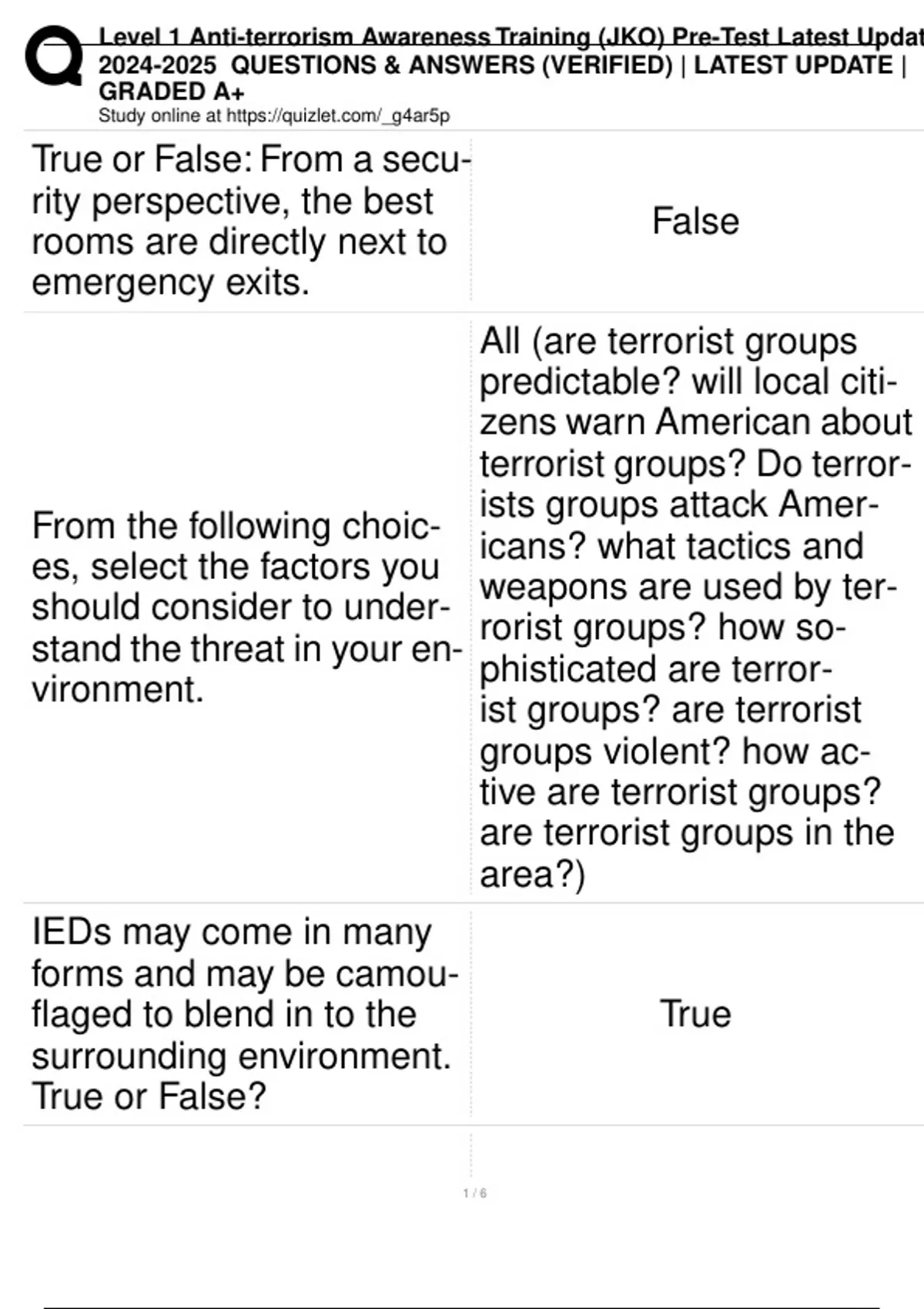
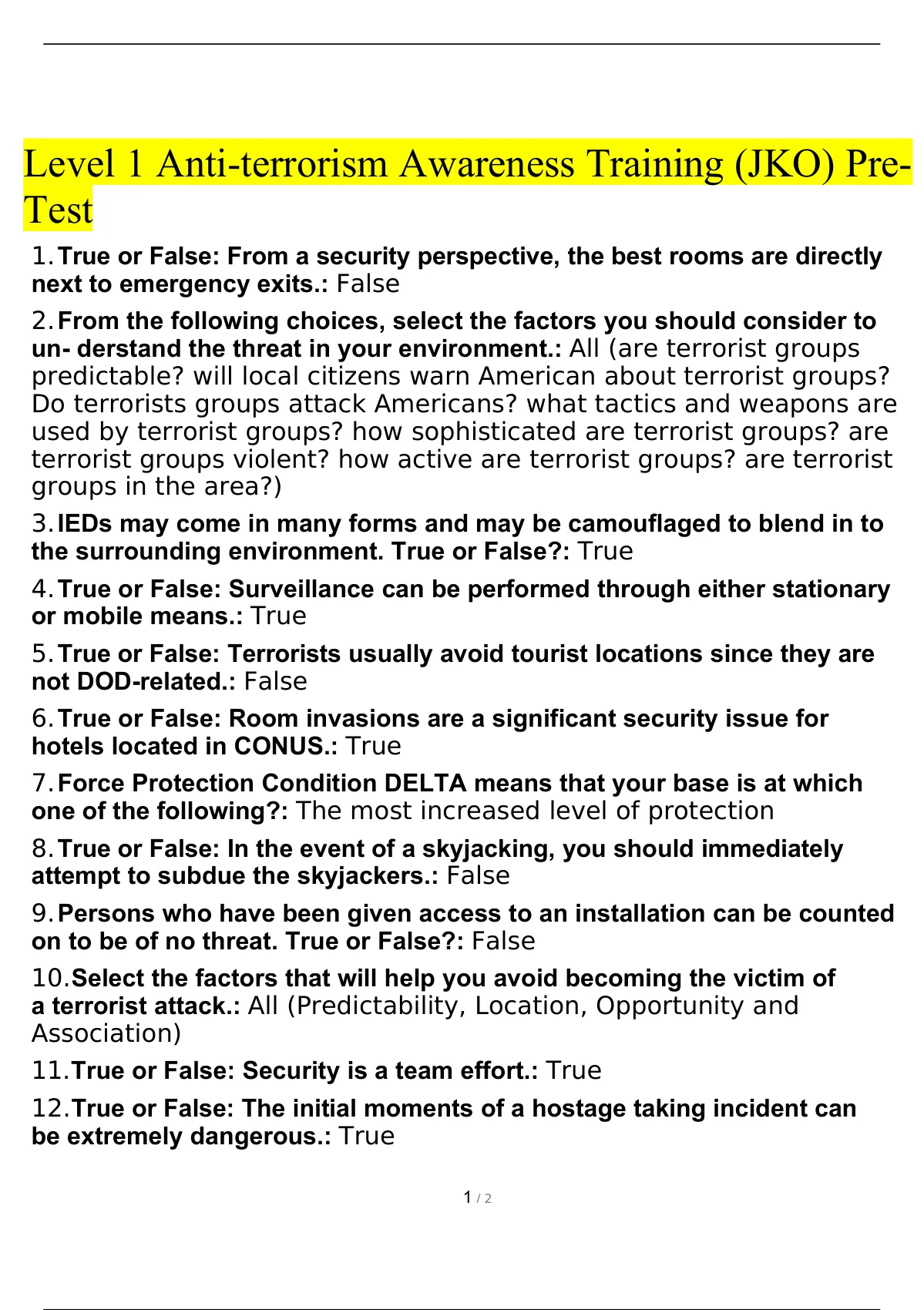
- Hotel Room Selection: The safest rooms are typically on floors 2 through 6. Ground-floor rooms are vulnerable to street-level intrusion, while rooms above the 6th floor often exceed the reach of local fire department rescue ladders. Avoid rooms adjacent to emergency exits, stairwells, or maintenance alcoves where attackers can stage unseen.
- Vehicle Safety: Always inspect your vehicle prior to entry. Check wheel wells, underneath the chassis, and the passenger compartment for signs of tampering or foreign objects. Keep doors locked and windows rolled up in congested traffic.
3. Active Shooter Scenarios
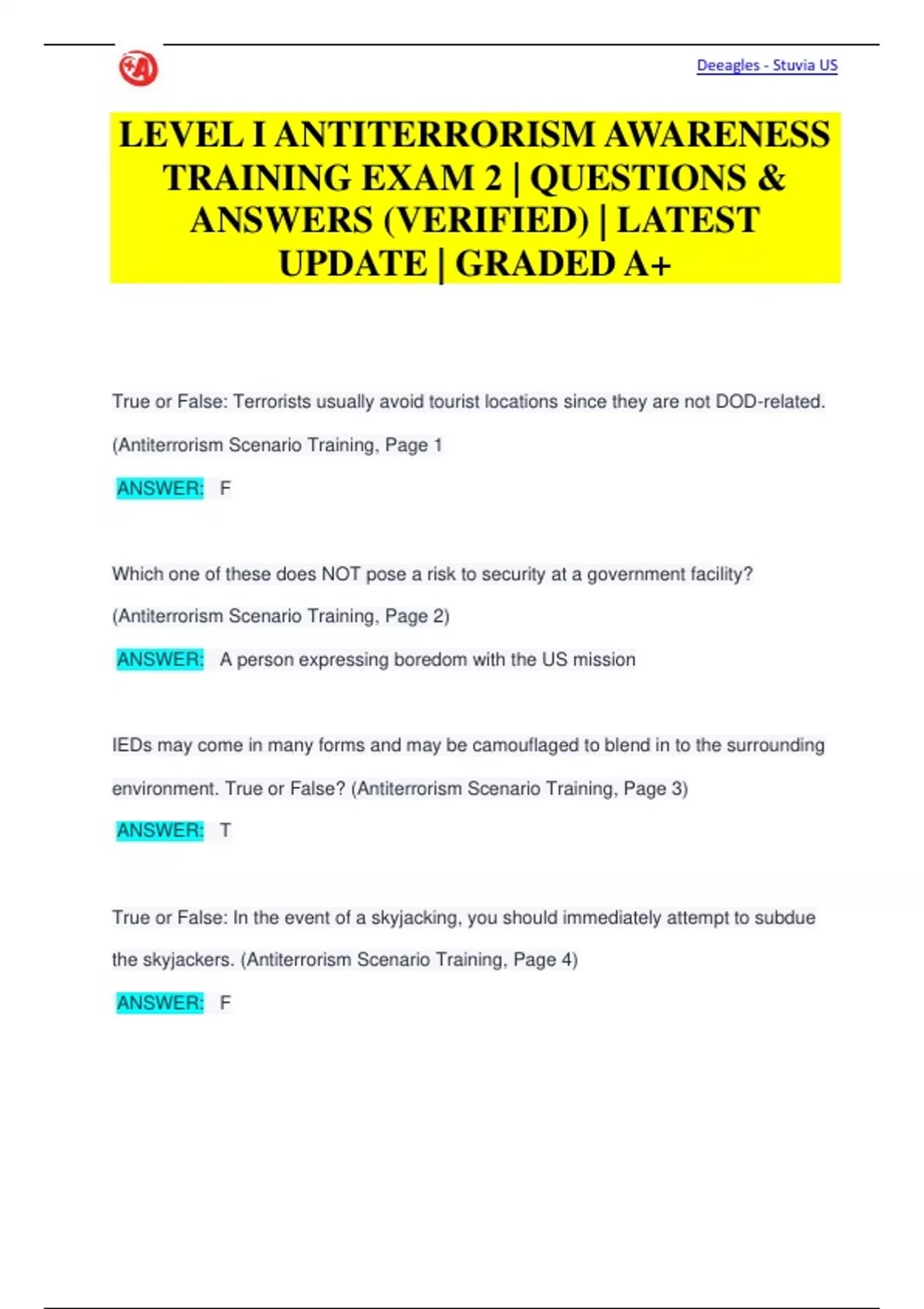
The mandatory response model for active shooter incidents adheres to the federal standard: Run, Hide, Fight.
- Run (Evacuate): If an accessible escape path exists, attempt to evacuate the premises immediately. Leave personal belongings behind, keep your hands visible, and follow any instructions given by arriving law enforcement officers.
- Hide: If evacuation is impossible, find a place where the active shooter is less likely to find you. Lock the door, barricade entry points with heavy furniture, close blinds, silence your cell phone (including vibration mode), and remain quiet.
- Fight: As an absolute last resort, and only when your life is in imminent danger, attempt to disrupt or incapacitate the shooter. Act with physical aggression, improvise weapons (fire extinguishers, chairs, heavy tools), commit entirely to your actions, and work collectively if others are present.
4. Hostage Survival Strategies
If taken hostage by a terrorist or criminal organization, your behavior directly influences your probability of survival. Key principles include:
- Initial Capture: The initial phase is the most dangerous. Remain calm, comply with captors' instructions, avoid sudden movements, and do not show overt resistance or hostility.
- Behavior Over Time: Maintain your dignity while avoiding arrogance. Build human rapport with captors if possible, as it makes violence against you psychologically harder for them. Avoid discussing politics, religion, or sensitive military topics.
- Rescue Operations: If rescue personnel breach the location, drop to the floor immediately, keep your hands visible, and do not make sudden moves toward the rescue force. Comply fully with all instructions, even if rescuers treat you aggressively until identities are confirmed.
5. Insider Threat and Operational Security (OPSEC)
Internal threats present a distinct challenge because perpetrators already possess authorized access to personnel, facilities, or networks:
- Indicators: Unexplained sudden wealth, radicalization of ideology, unauthorized attempts to access classified systems, unusual work hours without tasking, and expressing empathy toward hostile actors or terrorist organizations.
- Social Media Exposure: Sharing deployment schedules, unit locations, geocoded photos, or personal routines on social media compromises operational security and invites targeting. Set privacy settings to high and refrain from posting job-specific details.
Quick-Reference Review Table
Use this summary table to memorize key training benchmarks before attempting your assessment:
| Threat Topic | Key Rule / Standard | Primary Action |
|---|---|---|
| Active Shooter | Evacuation is always primary | Run > Hide > Fight |
| Lodging | Floors 2 through 6 | Inspect room; locate emergency exits |
| Surveillance | Report, do not confront | Record descriptions; notify security via tips app |
| Suspicious Mail | Do not open, shake, or sniff | Isolate package; evacuate room; wash hands with soap |
| FPCON Delta | Localized, incident occurred or imminent | Immediate shelter-in-place or lockdown |
Tips for Successfully Completing the Training
When launching the JS-US007 course on JKO, review the course catalog to ensure you are enrolled in the current fiscal year's curriculum. If you take the pre-test and score 80% or higher, you satisfy the annual training requirement immediately without sitting through every learning module.
Keep your completed certificate saved as a PDF and forward a copy to your unit antiterrorism officer (ATO) or training coordinator to ensure your records update in the Defense Readiness Reporting System (DRRS). Staying grounded in these fundamental security principles keeps both you and your unit safe in an evolving threat landscape.