Anyway คือ: Meaning, Usage, and Examples
If you have ever listened to native English speakers chatting, you have probably heard the word "anyway" multiple times within a single conversation. But what does it actually convey? When language learners ask anyway คือ what in everyday communication, the answer is not just a single dictionary definition. Depending on the context, "anyway" can mean "regardless," serve as a bridge to change topics, or provide a polite signal to wrap up a discussion.

Understanding how and when to use this versatile adverb will immediately make your spoken and written English sound more natural. In this comprehensive guide, we break down the core meanings, practical functions, common confusions, and exact Thai equivalents to help you master "anyway" with confidence.
Understanding the Basics: Anyway คือ Meaning and Core Concepts
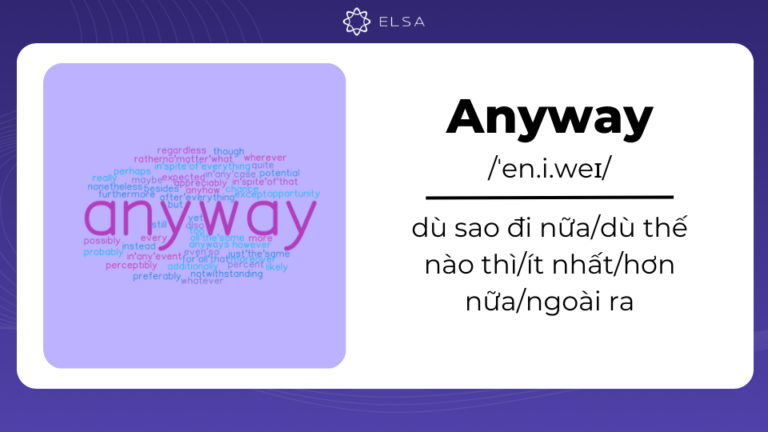
At its core, "anyway" is an adverb. In Thai, it translates depending on tone and context to terms like อย่างไรก็ตาม (formal: nevertheless), ถึงอย่างไรก็ (regardless), or conversational phrases like ช่างมันเถอะ (never mind) and ยังไงก็...
Native speakers primarily rely on "anyway" as a discourse marker. A discourse marker is a word or phrase that organizes discourse, manages conversational flow, and indicates how listeners should interpret the connection between ideas. While "anyway" does have a standalone semantic meaning (in spite of something), its real power lies in steering the direction of a dialogue.
The 4 Primary Ways to Use "Anyway" in English
To use "anyway" correctly, you need to understand the four primary communicative functions it serves in daily English.
1. Indicating "Regardless" or "In Any Case"
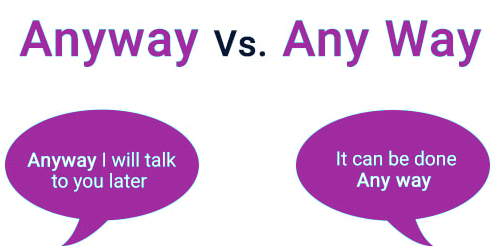
The most traditional definition of "anyway" is doing something despite an obstacle, objection, or prior condition. In this context, it is synonymous with "regardless," "nonetheless," or "even so."
- "It was pouring rain outside, but we decided to go for a hike anyway." (ถึงแม้ฝนจะตกหนัก แต่พวกเราก็ตัดสินใจออกไปเดินป่าอยู่ดี)
- "I know you don't like horror movies, but watch this one anyway—it's brilliant."
- "She wasn't feeling completely well, but she showed up for the presentation anyway."
Notice that in this usage, "anyway" usually appears at the end of the clause or sentence.
2. Shifting the Topic or Returning to the Main Point
Conversations frequently wander. When you or your conversation partner drift off on a tangent and you want to steer the conversation back on track, "anyway" is the standard transition word.
- "...and that was the dog we saw at the café. Anyway, back to our marketing proposal..."
- "I could talk about my vacation all day! Anyway, tell me how your new job is going."
When used this way, "anyway" almost always appears at the beginning of a sentence, accompanied by a brief pause or a comma in writing.
3. Concluding a Conversation Gracefully
Ending a conversation abruptly can sound rude. Native speakers frequently use "anyway" as a soft conversational cue signaling that it is time to part ways, leave, or hang up the phone.
- "Anyway, I should let you get back to work. Talk to you soon!"
- "Anyway, it's getting late and I have an early meeting tomorrow."
- "Anyway, thanks for catching up—I'll see you on Friday."
Here, the word acts as a buffer. It alerts the listener that the interaction is drawing to a close without making the exit feel sudden or dismissive.

4. Adding Supporting Context or Downplaying Importance
"Anyway" can also be used to add an additional supporting reason, often implying that the previous point did not really matter because the final outcome would be the same.
- "I'm glad we didn't buy those concert tickets; they were too expensive, and I had to work tonight anyway."
- "Don't worry about missing the bus. I needed to walk to the post office anyway."
"Anyway" vs. "Anyways": Which One Is Correct?
A frequent point of confusion for English learners is whether to use anyway or anyways.
Here is the short rule: "Anyway" without an "s" is the standard, grammatically correct form.
While you will often hear "anyways" in casual spoken American English, slang, and television shows, it is considered non-standard and informal. You should avoid "anyways" in:
- Academic essays and research papers
- Business emails, reports, and formal proposals
- Standardized English tests such as IELTS, TOEFL, or TOEIC
Always stick with "anyway" in professional and written communication to maintain credibility.
"Anyway" vs. "By the Way": Don't Mix Them Up
Because both words often appear at the beginning of sentences, learners sometimes confuse "anyway" with "by the way." However, their communicative goals are nearly opposites:
- Anyway: Focuses on returning to a previous topic, wrapping up, or dismissing side information. It narrows the focus.
- By the way: Focuses on introducing a completely new, unrelated piece of information that just crossed your mind. In Thai, it translates to เอ้อ จริงสิ or ว่าแต่ว่า.
Compare the two examples below:
- "Anyway, let's look at the financial report." (Returning to the primary matter after a distraction.)
- "By the way, did you remember to email the client?" (Introducing a new thought or side question.)
Formal Alternatives to "Anyway"
While "anyway" works well in everyday speech, using it repeatedly in formal writing can make your tone sound overly conversational. Depending on the nuance you want to express, consider these formal replacements:
- Nevertheless / Nonetheless: Best for expressing contrast ("The results were inconclusive; nevertheless, the team persisted.")
- Regardless / In any event: Best for showing that something holds true irrespective of conditions ("Regardless of market fluctuations, our strategy remains stable.")
- In summary / To return to the matter: Best for refocusing a formal presentation or document.
Summary: Quick Reference Guide
Mastering everyday English discourse markers takes practice, but mastering "anyway" gives you tremendous control over the pace and tone of your conversations. Remember these key takeaways:
- Use it to mean despite that (placed at the end: "I tried anyway.").
- Use it to refocus the conversation (placed at the start: "Anyway, let's continue.").
- Use it to soften an exit ("Anyway, I must get going.").
- Always use anyway instead of anyways in formal writing.
Next time you speak or write in English, try integrating "anyway" to guide your conversations smoothly and sound more like a fluent speaker.