Arizona Vehicle Bill of Sale: Why You Need One
Buying or selling a car in the Grand Canyon State involves more than just handing over the keys and exchanging cash. While Arizona does not always legally mandate a notarized bill of sale for every single private-party car transaction, having one is universally recommended. Understanding the importance of a vehicle bill of sale in Arizona transactions can save both buyers and sellers from costly legal disputes, tax complications, and unexpected liabilities.

What is an Arizona Vehicle Bill of Sale?
A vehicle bill of sale is a legal document that acts as an official receipt for the purchase and sale of a motor vehicle. It outlines the specific terms of the deal agreed upon by the private buyer and seller. In Arizona, this document essentially serves as a paper trail proving that ownership legally transferred from one party to another on a specific date and for a specific agreed-upon price.
While the back of the Arizona title includes a section for transfer of ownership, a separate bill of sale provides a dedicated record that both parties can keep for their personal files, insurance companies, and tax records.
Why Sellers Need a Bill of Sale
Many private sellers focus entirely on getting cash for their car and signing over the title. However, neglecting to use a bill of sale can leave a seller vulnerable long after the buyer drives away.
Protection from Post-Sale Liability
Imagine selling your car on a Saturday afternoon, and the buyer fails to immediately register the vehicle in their name. On Monday, the new owner gets into a hit-and-run accident, or accumulates hundreds of dollars in parking tickets and toll violations. Because the state MVD database still lists you as the registered owner, law enforcement and government agencies will come knocking on your door.
A properly executed bill of sale establishes the exact date and time the vehicle left your possession. Along with submitting a Sold Notice to the Arizona Motor Vehicle Division (MVD), the bill of sale acts as your primary legal defense proving you were no longer operating or responsible for the vehicle.
Proof of Sale Price for Taxes
When the buyer goes to register the vehicle, the state assesses vehicle license tax (VLT) based on the purchase price or the manufacturer's base retail price. Having a clear bill of sale prevents misunderstandings regarding the transaction amount and ensures the seller has a record of the capital transaction for their own financial tracking.
Why Buyers Need a Bill of Sale
Buyers also benefit immensely from insisting on a detailed bill of sale during a private vehicle purchase in Arizona.
Establishing Proof of Ownership
Video: Arizona Bill of Sale - GUIDE

A bill of sale provides immediate proof that you paid for the vehicle. If there is ever a dispute over whether the vehicle was a gift, a loan, or a legitimate purchase, the bill of sale clears up any ambiguity.
Verifying Vehicle Details
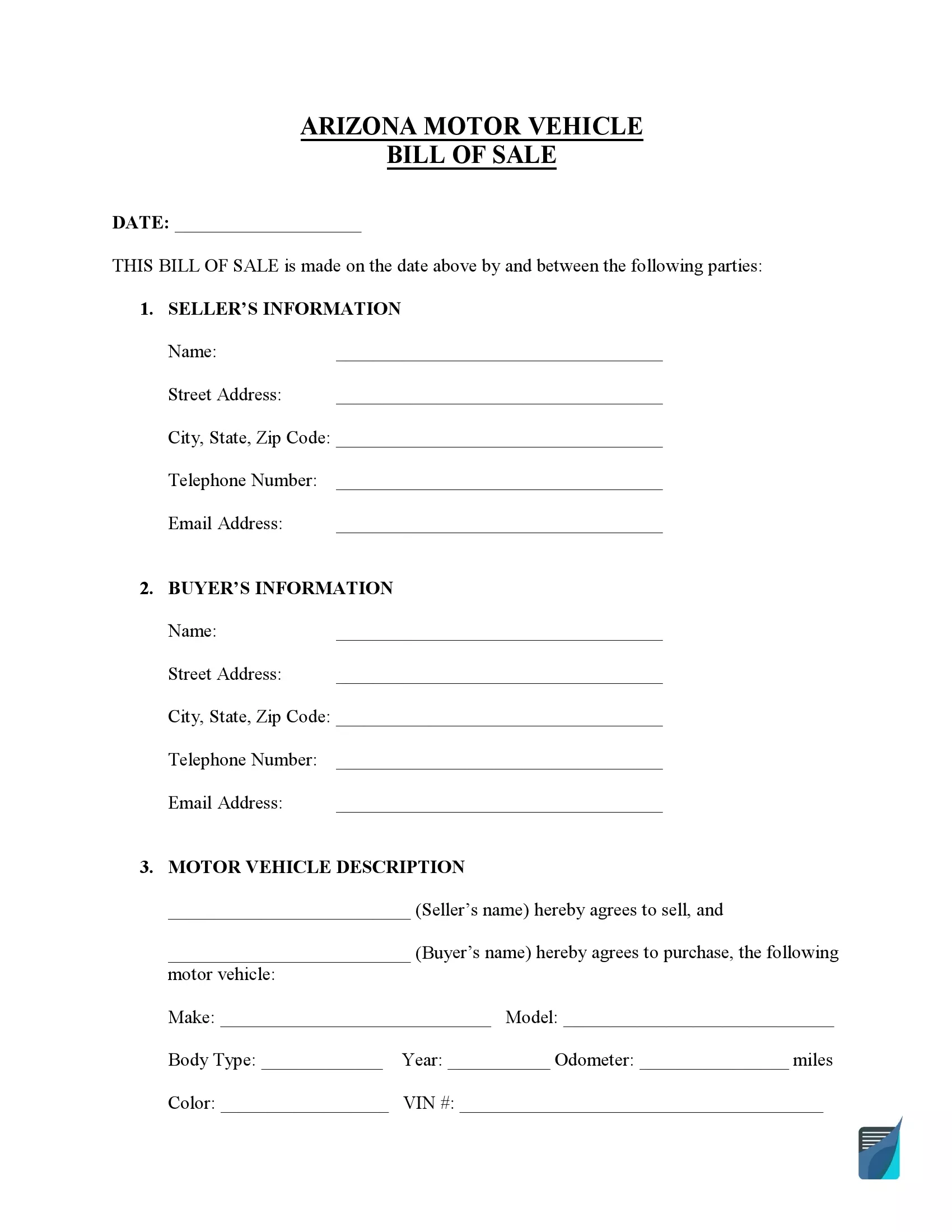
Creating a bill of sale forces the buyer and seller to write down crucial vehicle information, including:
- The Vehicle Identification Number (VIN)
- Make, model, and year
- Odometer reading at the time of sale
- License plate number
By comparing the VIN on the bill of sale with the physical VIN plate on the dashboard and the title document, the buyer can verify they are purchasing the exact vehicle advertised and that the title matches the car.
Protection Against As-Is Sales
Private vehicle sales in Arizona are generally considered 'as-is' transactions unless a written warranty is provided. A comprehensive bill of sale can explicitly state that the vehicle is sold without any guarantees or warranties, protecting the seller from unreasonable post-sale demands while giving the buyer a clear record of the agreed conditions.
What to Include in an Arizona Bill of Sale
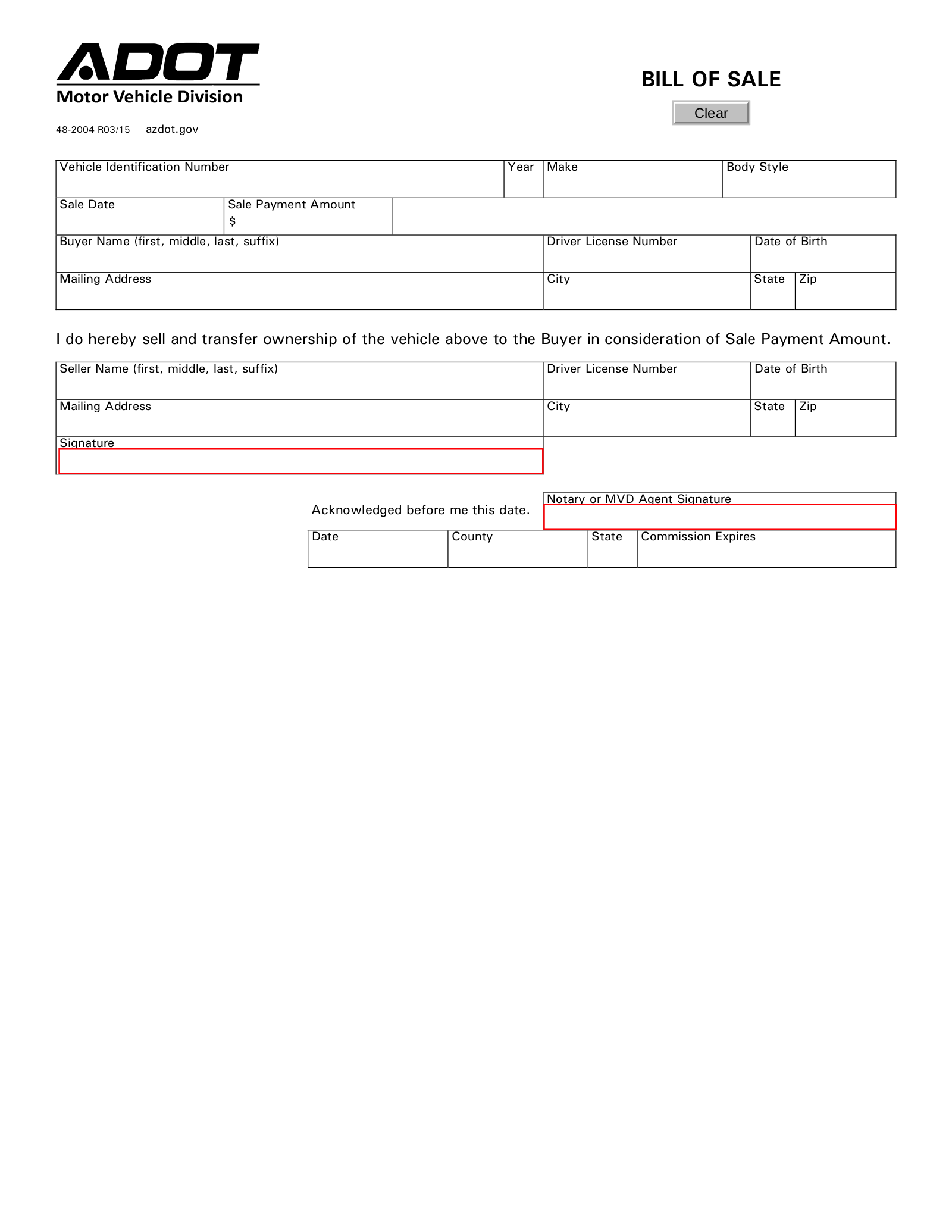
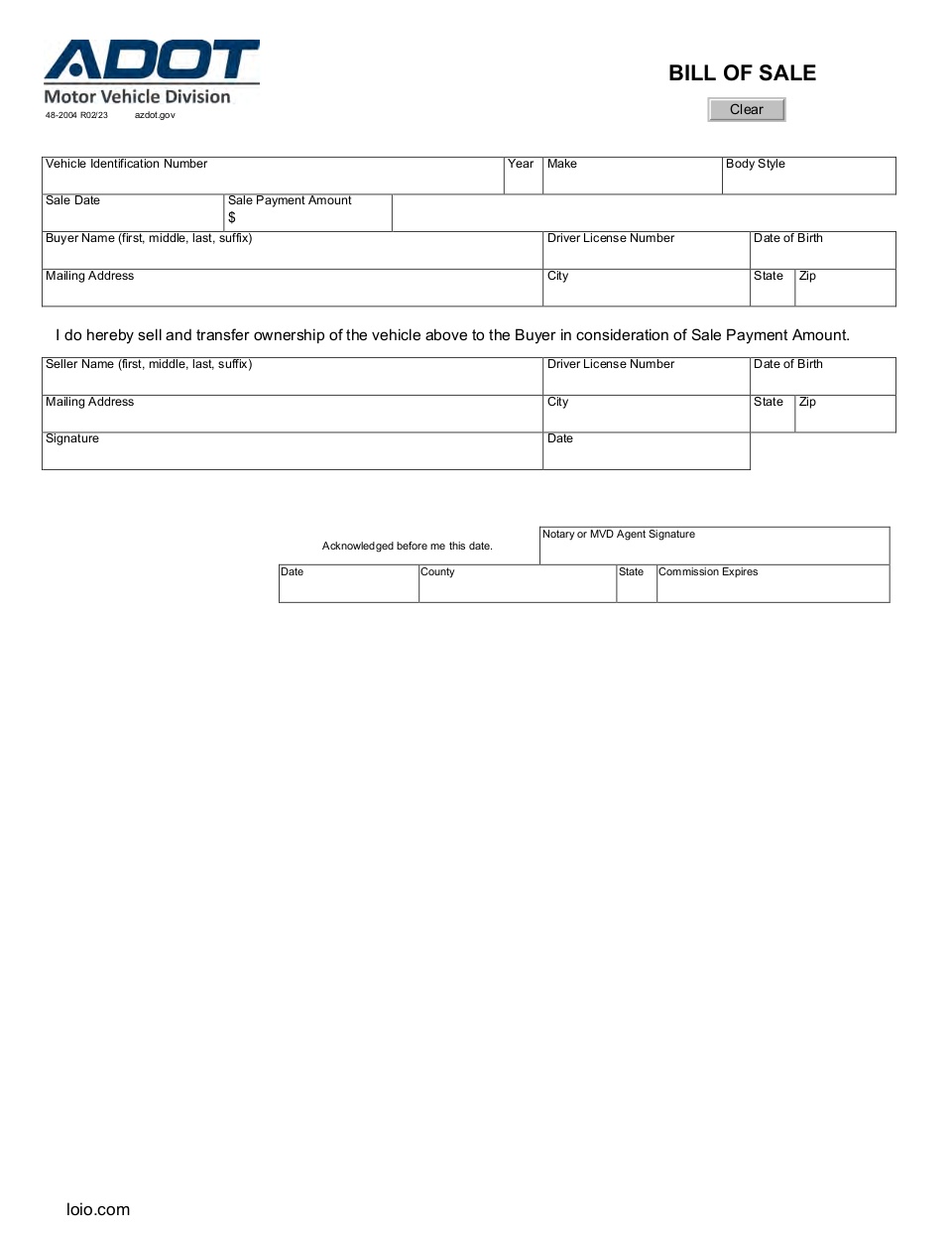
To ensure the document holds up legally and satisfies MVD requirements if needed, an Arizona vehicle bill of sale should include specific essential details:
- Buyer and Seller Information: Full legal names, physical addresses, and phone numbers for both parties.
- Vehicle Details: Year, make, model, body type, and the 17-digit VIN.
- Purchase Price: The exact amount paid in U.S. dollars.
- Date of Sale: The exact date the transaction takes place.
- Odometer Disclosure: The mileage showing on the odometer at the time of sale, as required by federal and state law.
- Signatures: The signatures of both the buyer and the seller.
Do You Need a Notary in Arizona?
A common question among Arizona residents is whether a bill of sale needs to be notarized. Technically, Arizona law does not strictly require a bill of sale to be notarized for a standard private vehicle transfer. However, having a notary public witness the signatures adds an extra layer of security. Notarization prevents either party from claiming that a signature was forged or that the document was signed under duress. For high-value vehicles, taking the extra step to visit a notary is always a smart practice.
Next Steps After Completing the Bill of Sale
Once the bill of sale is signed and the money has changed hands, both parties have immediate responsibilities to complete the transaction properly:
- The Seller: Must sign over the physical title, remove their license plates (plates stay with the seller in Arizona, not the car), and immediately submit a Sold Notice to the Arizona MVD online.
- The Buyer: Must take the signed title, bill of sale, and lien release (if applicable) to an MVD office or authorized third-party provider to register the vehicle and transfer the title into their name.
Conclusion
Taking shortcuts during a private vehicle sale can lead to severe headaches down the road. Utilizing a clear, detailed bill of sale protects both parties, establishes accountability, and ensures a smooth ownership transition. Whether you are buying a commuter car in Phoenix or selling a truck in Tucson, never skip this vital document.