Avalon Game Guide: Rules, Roles, and Strategy
Few tabletop titles capture psychological tension quite like the avalon game. Officially titled The Resistance: Avalon and designed by Don Eskridge, this social deduction classic pits the noble forces of King Arthur against the treacherous minions of Mordred. Played with 5 to 10 players, the game relies entirely on conversation, logic, deception, and deduction—without eliminating players before the final round.

Whether you are learning the game for your next game night or looking to sharpen your read on your friends, this guide covers the core rules, role dynamics, and tactical strategies you need to lead your faction to victory.
The Core Objective and Game Overview
At its heart, Avalon is a battle over five quests. The Good team (Loyal Servants of Arthur) wins if three quests succeed, provided Merlin survives the endgame. The Evil team (Minions of Mordred) wins if three quests fail, if the group rejects five proposed teams in a single round, or if the Assassin identifies Merlin at the end of the game.
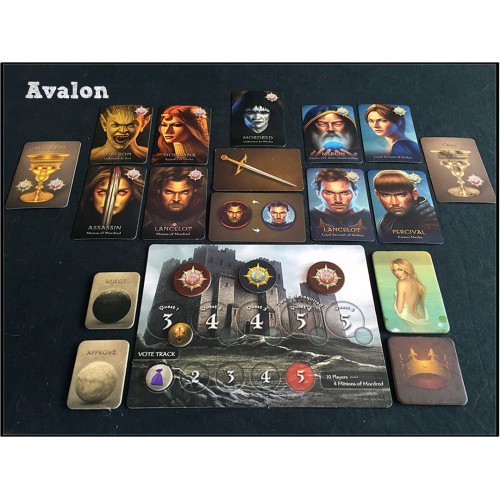
Before the first round begins, players receive secret role cards. A night phase follows where all players close their eyes, allowing Evil players to identify one another, while Merlin secretly discovers who the traitors are (with certain role-specific exceptions).
Character Roles in the Avalon Game
While Avalon can be played with standard loyal knights and basic minions, the inclusion of special roles elevates the game from a simple guessing match into a complex web of hidden information and calculated risks.
The Forces of Good
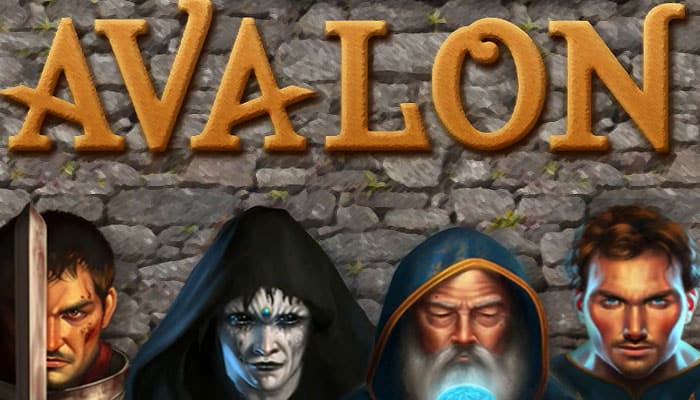
- Merlin: The most crucial role on the Good team. Merlin opens his eyes during the night phase and learns the identity of almost all Evil players. However, Merlin must guide his team discreetly; if Evil loses the quest race, the Assassin gets one final guess to identify Merlin and steal the victory.
- Percival: Introduced in the Avalon edition, Percival sees both Merlin and Morgana at the start of the game, but cannot tell who is who. Percival's primary mission is to figure out the real Merlin, protect them from exposure, and relay Merlin's subtle guidance to the rest of the table.
- Loyal Servants of Arthur: Standard good players who know only their own identity. They must rely on deduction, voting patterns, and speech analysis to deduce who to trust.
The Minions of Mordred
- The Assassin: A core evil role. If Good manages to complete three successful quests, the Assassin deliberates with fellow evil players and attempts to name Merlin. A correct guess secures an instant win for Evil.
- Morgana: Appears to Percival as Merlin. Morgana's objective is to deceive Percival into believing she is the true prophet, thereby steering Good players into sending evil teams on quests.
- Mordred: The master traitor. Mordred's identity is hidden from Merlin during the night phase, giving Evil an invisible infiltrator that Merlin cannot warn the table about.
- Oberon: An outsider minion. Oberon is on the Evil team, but he does not open his eyes with the other evil players and remains unknown to them. However, Merlin still sees Oberon as evil.
How a Round Works: Step-by-Step
Avalon plays out over a maximum of five rounds. Each round consists of two primary phases: Team Building and the Quest Phase.
Video: FRIENDSHIP-RUINING GAME!! AVALON! #MABOY

1. Team Proposal and Voting
The Leader marker passes clockwise each round. The current Leader chooses a specific number of players (dictated by the player count and quest number on the board) to go on the mission.
Once the team is proposed, open discussion begins. Players debate whether the team is trustworthy. When discussion wraps up, all players simultaneously reveal an Approve or Reject token.
- If the majority approves, the mission proceeds.
- If the vote ties or rejects, the Leader marker passes to the next player, and the Vote Track advances by one.
- Warning: If five proposed teams are rejected in a single round, Evil wins the game automatically.
2. The Quest Phase
The players chosen for the team receive two Quest cards: Success and Fail. Each team member secretly selects one card and places it face-down into a common pile. The cards are shuffled thoroughly before being revealed to maintain anonymity.
- Good players must always play a Success card.
- Evil players may choose to play a Success or a Fail card.
- A single Fail card ruins the mission and awards the point to Evil (with one key exception: in games with 7 or more players, the fourth quest requires at least two Fail cards to fail).
Key Strategies for Both Factions
Victory in the Avalon game depends heavily on information control. Every vote, hesitation, and card reveal leaves a digital footprint on the table.
Strategies for the Good Team
- Pay Attention to Voting History: Evil players must vote carefully. Tracking who approved failed missions or who voted against clean teams provides vital historical data in the mid-to-late game.
- Merlin Must Play Dumb: If you are Merlin, avoid immediate, high-confidence accusations against Evil players early on. Instead, guide votes subtly through questions, or pass your insights discreetly through Percival.
- Percival Must Act as a Shield: If Percival identifies Merlin early, Percival should adopt a high-profile, confident demeanor to draw the Assassin's suspicion away from the true Merlin.
- Use Late-Track Leverage: Approving teams on vote 4 or 5 is inherently risky, but forcing Evil to expose their preferences on votes 1 through 3 yields the data Good needs to solve the puzzle.
Strategies for the Evil Team
- Do Not Fail Every Quest: If an evil player is on Quest 1, throwing a Fail card gives away immense information to a 5- or 6-player table. Sometimes passing Quest 1 builds the trust needed to sabotage Quests 3 and 4 decisively.
- Coordinate Sabotage Silently: Having two evil players accidentally throw two Fail cards on a mission where only one is required narrows down the suspect pool drastically. Read the room and your partner's tendencies before committing your card.
- Hunting Merlin: Pay attention to quiet confidence. Players who consistently vote against bad teams without offering loud, speculative theories are frequently Merlin relying on hidden information.
- Morgana Must Mirror Merlin: If you draw Morgana, play assertively. Try to feed Percival clean reads on one known evil teammate to gain their unwavering trust before springing the trap.
Why Avalon Remains a Classic
Unlike traditional party deduction games like Mafia or Werewolf, the Avalon game does not eliminate players early, ensuring everyone stays engaged from the opening night phase to the final vote. Its balanced blend of social engineering and deductive logic rewards analytical thinking as much as persuasive acting, making it an enduring staple of modern board gaming.