Avon Antique Bottles: Spotting Fakes and Scams
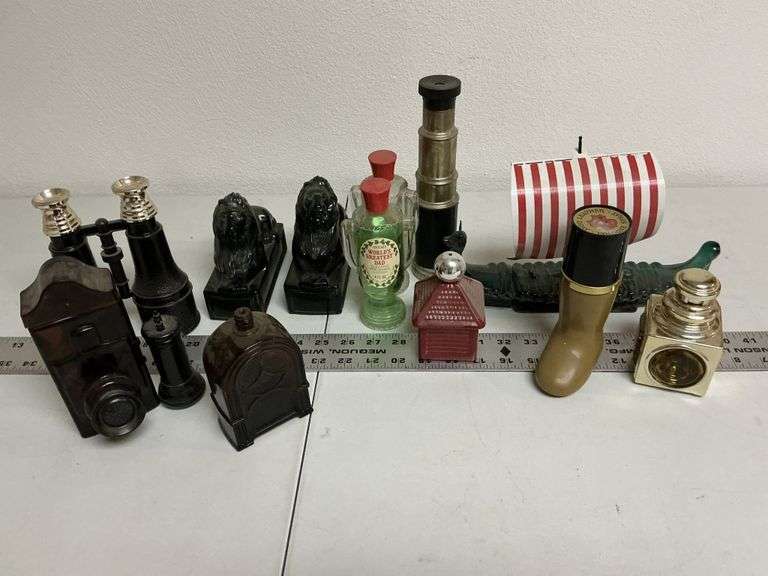
Few collecting crazes in American history rival the Avon decanter boom of the late 1960s and 1970s. Millions of households proudly displayed glass cars, historical figures, animals, and festive bells on their mantels. Today, interest in these decorative containers has surged again among retro design enthusiasts and glassware collectors. However, navigating the secondary market is fraught with misinformation. If you are diving into the market for Avon antique bottles: the complete guide to spotting fakes and scams begins with understanding what is truly valuable, what is common, and how dishonest sellers exploit unwary buyers.

Vintage vs. Antique: The Fundamental Misconception
The single most pervasive scam in the Avon collecting niche is not sophisticated counterfeit glass manufactured overseas; it is deceptive labeling. In the antiques trade, the term "antique" strictly refers to items that are at least 100 years old. An item made between 20 and 99 years ago is classified as "vintage."
Avon was founded in 1886 as the California Perfume Company (CPC) by David H. McConnell. The company did not adopt the name "Avon Products, Inc." until 1939. Therefore, if an embossed bottle bears the modern script or serif "AVON" name, it is almost certainly a vintage piece from the mid-to-late 20th century, not a 19th-century antique.
Unscrupulous online sellers routinely tag mass-produced 1970s decanters as "1800s Victorian Antiques" with price tags exceeding $500, hoping an uninformed buyer will mistake the bottle's nostalgic aesthetic for genuine antiquity.
Avon Antique Bottles: The Complete Guide to Spotting Fakes and Scams
While the mass-market decanters produced between 1965 and 1985 rarely warrant high-end counterfeiting, high-value early Avon bottles and specific limited editions frequently fall victim to fraud. Here are the most common tactics used by dishonest sellers.
1. The California Perfume Company (CPC) Label Swap
Original CPC bottles from 1886 to the 1920s are the true holy grails of Avon collecting, occasionally fetching hundreds or even thousands of dollars. Because many early medicinal and perfume bottles shared standard utility shapes, fraudsters often take an inexpensive, unmarked generic turn-of-the-century apothecary bottle and affix a reproduction CPC label.
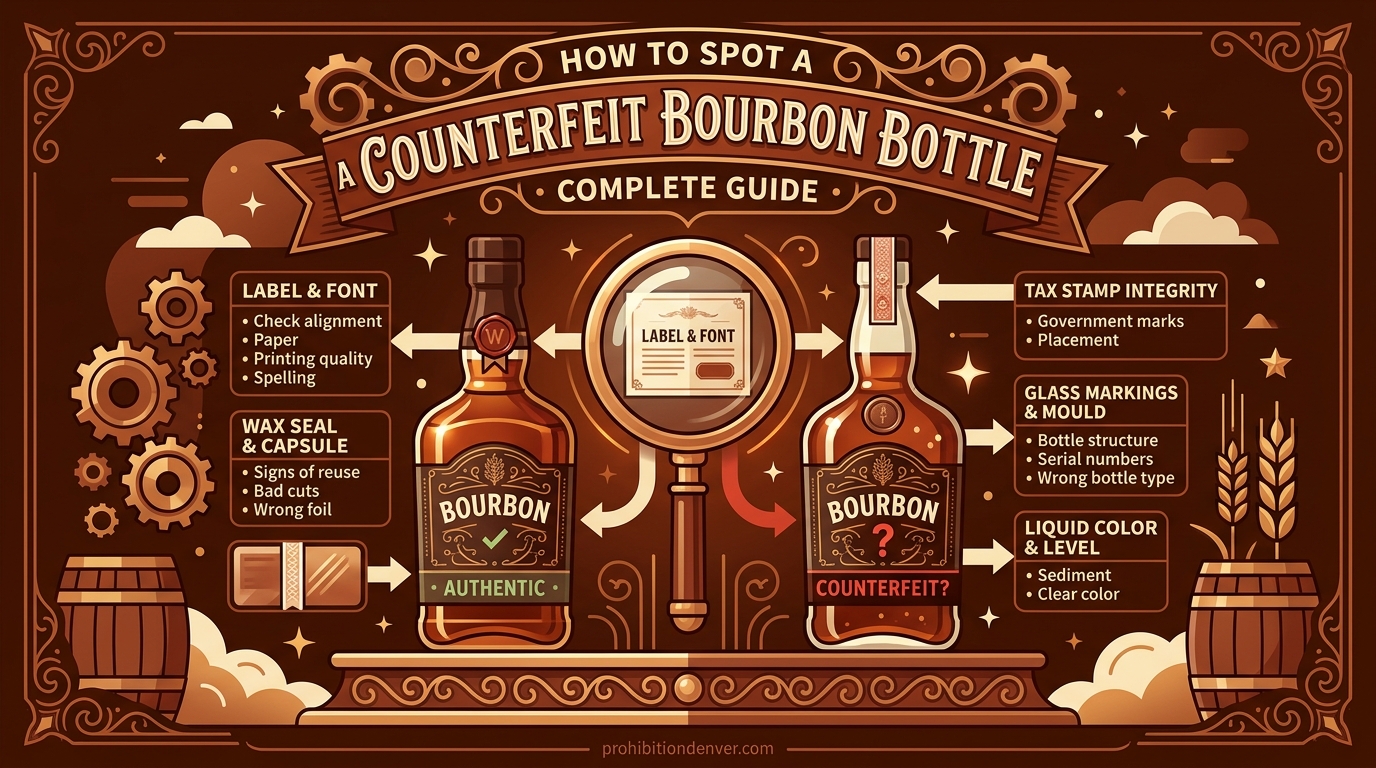
- Paper Examination: Modern reproductions printed on an inkjet or laser printer exhibit sharp halftone dot patterns under a 10x jeweler's loupe. Authentic antique labels were printed using letterpress or early lithography, leaving distinctive ink pooling or soft, feathered ink edges.
- Adhesive Reaction: True antique labels were applied with animal- or starch-based glues that dry brittle and yellow over a century. If a label feels smooth, glossy, or shows modern chemical adhesive residue under UV blacklight, walk away.
2. The Modern "Anniversary Reissue" Trap
In the 1970s and 1980s, Avon celebrated various company milestones by issuing replica editions of their earliest products—most notably the 1886 Little Dot Perfume Set and early CPC trailing arbutus bottles. These commemorative items were produced with vintage-style graphics, amber or clear glass, and nostalgic typography.
Sellers routinely scrape off modern regulatory stickers or remove the base labels identifying the piece as a "Centennial Reissue," marketing the bare bottle as an original late-19th-century prototype. Look closely at the base of the glass: commemorative pieces produced in the 1970s are machine-molded with precise, razor-sharp seam lines, whereas 19th-century CPC bottles were blown into molds and finished with hand-tooled lips.
3. "Fantasy" Colors and Cold-Painted Alterations
In glass collecting, "test colors" and factory error pieces command premium prices. Scammers exploit this by taking standard Avon decanters—usually the common clear, amber, or milk glass varieties worth $3 to $5—and modifying them:
- Iridescent Coatings (Fake Carnival Glass): Sellers bake modern spray-on carnival finishes onto clear glass decanters to simulate rare carnival glass variations. Genuine Avon carnival glass (such as the 1970s commemorative plates or goblets manufactured by Wheaton Glass) has the iridescence fired directly into the batch, exhibiting uniform, durable luster that does not scratch off under a thumbnail.
- Repainted Finishes: Many figurals originally featured painted accents, such as gold trim or colored vehicle details. Unscrupulous dealers use modern acrylic hobby paints to "restore" worn bottles or create non-existent color schemes, advertising them as "ultra-rare one-of-a-kind prototypes."
4. "Franken-Bottles" and Mismatched Caps
Avon decanters typically consist of two distinct parts: the molded glass vessel and a molded plastic or metal-finished stopper (often forming the head of a figure, the cab of a truck, or an animal's bust). Over the decades, stoppers were lost or broken. Sellers often fit an incorrect Avon stopper onto a mismatched base to create an artificial "complete" collectible. Always cross-reference the exact combination against historical Avon collector guides or original sales brochures before buying.
Physical Markers: How to Authenticate Genuine Avon Glass
Evaluating an Avon bottle requires inspecting three physical elements: the mold marks, the glass composition, and the base embossing.
Mold Seams and Manufacturing Marks
True antique CPC bottles (pre-1910) feature seams that fade out before reaching the top of the lip because the lip was finished by hand using a rotating lipping tool. Most mass-produced Avon decanters from the 1960s onward were manufactured by commercial glassworks, primarily the Wheaton Glass Company of Millville, New Jersey.
Look at the bottom of the vessel. Wheaton-produced Avon bottles often bear an embossed "W" inside a circle or an embossed letter-and-number code (e.g., "AVON 2" or a small batch mold number). These marks confirm factory authenticity, immediately disproving any claim that the item is a pre-industrial antique.
The Blacklight (UV) Test
Carrying a small 365nm or 395nm UV flashlight is one of the most effective ways to spot fraudulent glasswork:
- Uranium/Vaseline Glass: Authentic early green glassware contains uranium salts that glow vivid neon green under UV light. Counterfeit green coatings or modern reproductions without uranium will appear dull olive or fail to fluoresce entirely.
- Adhesives and Repairs: Epoxies, cyanoacrylate (Super Glue), and modern synthetic label adhesives fluoresce brightly under ultraviolet light, exposing hidden repairs, reattached stoppers, and substituted labels instantly.
How to Avoid Paying Inflated "Listing Prices"
Perhaps the most common financial scam surrounding Avon bottles involves weaponized pricing data on online auction platforms. A seller will list a common 1972 Avon Cape Cod ruby red cruet for $4,500, then point prospective local buyers to that active listing as proof of market value.
Never rely on active asking prices. Instead, search eBay and filter specifically by "Sold Items" and "Completed Items." You will quickly discover that bottles listed for hundreds of dollars consistently sell for between $5 and $15. Millions of these bottles were saved in pristine condition by consumers who believed they would become a retirement fund; as a result, market supply massively exceeds collector demand.
Final Checklist for Safe Buying
Before completing any purchase of high-ticket Avon or California Perfume Company glassware, run through this practical checklist:
- Verify whether the brand marking reads "CPC" or "AVON." If it says "AVON," it is post-1939.
- Inspect paper labels with a 10x magnification loupe to rule out modern digital print patterns.
- Run a UV light over the bottle to identify glued cracks, modern paints, and fraudulent label paste.
- Check the lip and seams: seamless finished tops point to genuine early bottles; full-length machine seams indicate mid-20th century construction.
- Verify the historical colorway and stopper pairing against an authoritative collector encyclopedia.
Armed with these authentication practices, you can confidently collect genuine Avon treasures while sidestepping the inflated listings, altered pieces, and outright fakes that circulate in today's vintage marketplace.