Barbie Doll White Dress: History & Collector Guide
Few garments in miniature fashion carry the enduring elegance and symbolic power of a white gown. Across more than six decades of style evolution, the barbie doll white dress has represented everything from fairytale bridal romance and mid-century debutante glamour to edgy contemporary red-carpet couture. Whether crafted in shimmering satin, delicate Chantilly lace, or dramatic architectural organza, white dresses remain among the most sought-after wardrobe pieces for both casual enthusiasts and serious collectors.

Understanding the history, notable releases, and preservation methods for these miniature garments allows collectors to appreciate the craftsmanship behind Mattel's design legacy while safeguarding their investments for years to come.
The Evolution of the Barbie Doll White Dress Through the Decades
Since Barbie's debut in 1959, white has served as an essential canvas for Mattel's lead designers, including Charlotte Johnson, Carol Spencer, and Robert Best. The color reflects fashion movements across eras while highlighting the intricate tailoring required for 1:6 scale clothing.
The Vintage Era (1959–1966): Classic Tailoring and Bridal Dreams
In Barbie's earliest years, white dresses were primarily associated with formal nuptials and society galas. The standout piece from this era is the iconic Wedding Day Set (#972), introduced in 1959 and produced through 1962. Featuring a flocked floral design on sheer nylon over an ivory-satin base, this gown established Mattel’s standard for miniature couture. Accessories such as a tulle veil with a pearl cap, short tricot gloves, and blue-trimmed garter completed the look.
Another beloved vintage offering was Bride's Dream (#947, 1963), an empire-waist dress made of embossed tulle, showing that even subtle textures could give white fabric dimension on an eleven-and-a-half-inch figure.
The Mod and Superstar Eras (Late 1960s–1980s): Daring Cuts and Synthetic Sheen
As cultural tastes shifted, Barbie embraced contemporary silhouettes. During the late 1960s, white took on modern structural forms with mini-dresses, vinyl accents, and metallic trims. By the late 1970s and 1980s—the Superstar era—white returned to evening wear with high volume. Dresses from this period featured tiers of ruffled organza, iridescent lame fabrics, and glittery accents, catching dynamic play-set light.
The Modern & Designer Collaboration Era (1990s–Present)
Starting in the 1990s, Mattel partnered with celebrated fashion designers to produce high-end collector editions. White dresses evolved from sweet playline staples into museum-worthy couture:
- Vera Wang Bride (1998): A masterclass in modern bridal design, featuring an asymmetrical neckline, sheath cut, and minimalist train that mirrored 1990s runway trends.
- Carolina Herrera Bride (2005): A sophisticated gown with delicate embroidery and traditional tailoring, honoring high-society elegance.
- Monique Lhuillier Bride (2006): Known for lace appliqué and mermaid silhouettes, bringing contemporary bridal runways into 1:6 scale.
Iconic Pop Culture White Gowns in the Barbie Universe
Beyond traditional wedding looks, white dresses have marked some of the most memorable licensed and tribute dolls in Mattel's catalog.
The Seven Year Itch Marilyn Monroe Barbie (1997)
Perhaps the most famous pop-culture white dress of all time is Marilyn Monroe's pleated halter dress over the Lexington Avenue subway grate. Mattel rendered this moment in the Hollywood Legends Collection with crisp accordion pleats, an accurate bodice drape, and classic styling that remains instantly recognizable.
The Barbie Fashion Model Collection (BFMC): Delphine
Video: Rapunzel Elsa Barbie Wedding Shop Wedding Dress Shopping Barbie Toko pernikahan Vestido de casamento
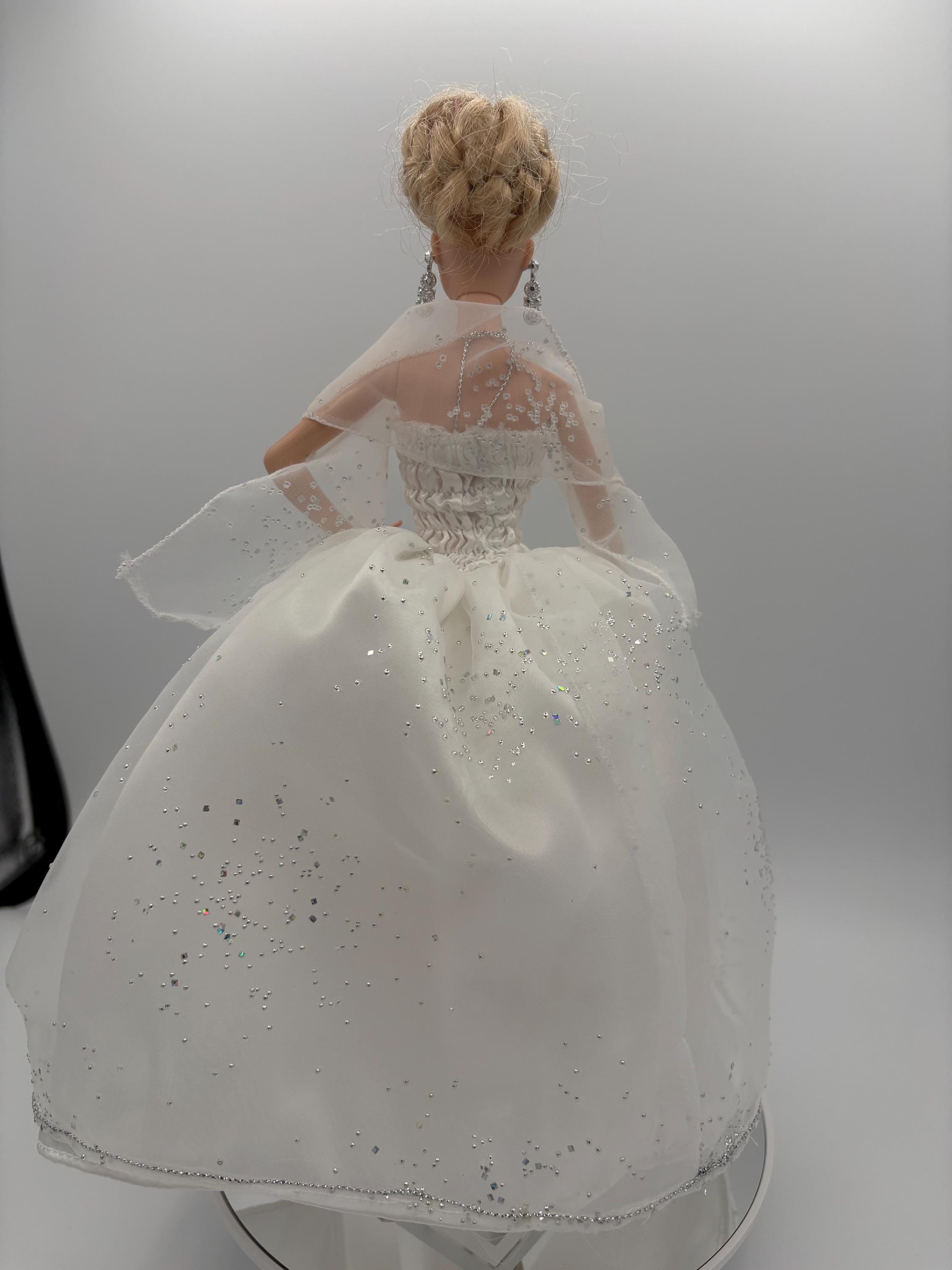
Introduced in 2000 as part of the Silkstone BFMC series designed by Robert Best, Delphine wore a dramatic strapless ballgown of icy-white satin accented with a pale blue sash and dramatic stole. The weighty, tailored fabric honored mid-20th-century Parisian haute couture, making it one of the most valuable collector releases in modern doll history.
Holiday Barbies Featuring White Themes
While the annual Holiday Barbie often favors traditional holiday reds and golds, white editions hold a special place. The 2000 Millennium Princess gown featured royal blue velvet with an expansive silver-stitched white organza center panel. More recently, the 2017 Holiday Barbie showcased an elaborate metallic-frosted white starburst gown, celebrating the magic of winter snowfalls.
Key Features Collectors Look For
When assessing a vintage or collectible white Barbie dress, several factors dictate both aesthetic appeal and market value:
- Fabric Integrity: Fine materials like vintage silk, faille, organza, and nylon tulle age differently. Collectors check whether the fabric has retained its crispness or suffered fiber breakdown.
- Original Closures: Early Mattel dresses utilized metal snaps (YKK or square snaps), while later eras switched to plastic snaps or low-profile Velcro. The presence of original, rust-free closures is crucial.
- Tagging: Vintage clothing items produced between 1959 and 1972 often carry the woven black-and-white "Barbie ® by Mattel" fabric tag sewn into an interior seam.
- Completeness: Gowns that retain their original veils, tiaras, opera-length gloves, and white pilgrim or open-toe heels command significant premiums over bare garments.
How to Care for and Clean a White Barbie Dress
White fabrics are especially vulnerable to age, sunlight, and handling. Dust, human skin oils, and ambient humidity can cause yellowing, oxidation spots (foxing), or permanent discoloration.
1. Handling and Storage
Always wash and thoroughly dry your hands before handling white doll apparel, or wear lint-free cotton inspection gloves. Store loose garments flat inside acid-free tissue paper within archival boxes. Avoid sealed, non-breathable plastic bins in unconditioned spaces like attics or basements, which accelerate moisture damage and plasticizer breakdown.
2. Dealing with UV Light
Direct sunlight and standard fluorescent lighting will turn white fabrics yellow over time. If you display your dolls out of the box, use display cabinets equipped with UV-filtering glass or acrylic, and position them well away from windows.
3. Safe Cleaning Techniques
If an unboxed white dress has accumulated grime or yellowed over time, gentle cleaning can often restore its brilliance without harsh bleach:
- Dusting First: Use a soft-bristled makeup brush or a camera lens blower to remove loose surface dirt before introducing water.
- Spot Testing: Always test a hidden interior seam with a damp cotton swab to ensure fibers and threads won't bleed or degrade.
- Soaking Solution: Fill a clean bowl with lukewarm distilled water and a drop of gentle, dye-free detergent or specialized quilt soap (like Retro Wash or Orvus WA Paste). Avoid chlorine bleach, which dissolves delicate nylon stitching and weakens silk.
- Gentle Agitation: Submerge the dress and gently press the soapy water through the fabric. Never wring, twist, or scrub aggressively, especially on tulle or flocked details.
- Rinsing and Air Drying: Rinse repeatedly in clean distilled water until all soap residue vanishes. Lay the garment flat between two clean white towels to blot out excess moisture, then reshape and dry it away from direct heat.
Styling White Gowns for Modern Displays and OOAK Customs
The simplicity of white makes it an ideal canvas for OOAK (One of a Kind) customizers and doll photographers. Contemporary Fashionistas and Made-to-Move Barbies can easily wear vintage or modern white gowns, creating striking contrasts against colorful backgrounds.
Pairing a stark white dress with metallic silver jewelry, bold monochrome makeup, or vibrant backdrops creates dramatic editorial displays. For crafters sewing 1:6 scale garments, choosing lightweight textiles like silk dupioni, batiste cotton, and fine bridal netting ensures the gown drapes naturally on Barbie’s small frame without appearing stiff or bulky.
A Lasting Legacy in Miniature Fashion
Whether it represents a nostalgic childhood bridal set, a cinematic homage, or a pinnacle of designer haute couture, the white dress continues to be an essential element of the Barbie mythos. By paying attention to fabric quality, provenance, and proper preservation, collectors ensure that these small masterpieces of miniature fashion remain bright, pristine, and captivating for generations to come.


