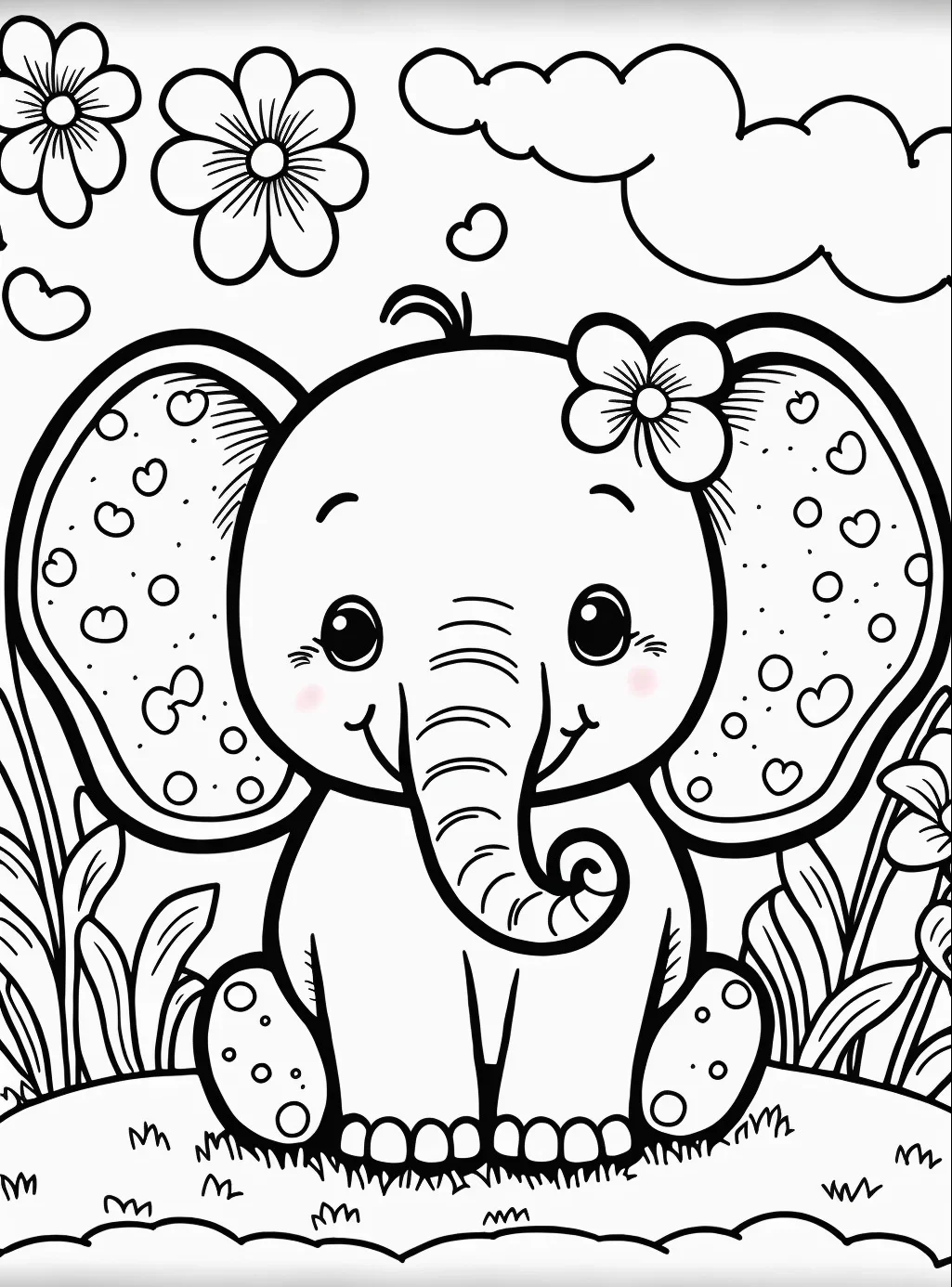
Best High Quality Coloring Pages for Kids to Print
Coloring remains one of the simplest, most rewarding screen-free activities available to young children. However, any parent or educator who has ever hit "Print" on a quick web search knows the disappointment of pixelated lines, faded gray outlines, and smeared ink. Finding truly high quality coloring pages for kids can transform a five-minute distraction into an engaging, focused creative session that builds confidence and fine motor control.

Low-grade coloring sheets often feature jagged edges or murky backgrounds that frustrate children, especially those just learning to control their pencils. When illustrations are crisp, sharp, and purpose-designed for specific developmental stages, children stay engaged longer and feel more proud of their finished work.
What Defines High Quality Coloring Pages for Kids?
Not every printable illustration delivers a great coloring experience. When evaluating coloring sheets for home or classroom use, look for these foundational characteristics:
- High Resolution (300 DPI or Vector Formats): Standard web graphics are usually optimized for screens at 72 dots per inch (DPI). When printed, they look grainy. True printable sheets are created at 300 DPI or formatted as scalable vector PDFs, guaranteeing razor-sharp lines regardless of print size.
- Intentional Line Weight: A toddler gripping a chunky crayon requires thick, bold outlines that provide a forgiving boundary. An eight-year-old using dual-tip markers needs thinner, more intricate lines that allow for shading and precision.
- Clean, White Backgrounds: Poorly scanned coloring pages frequently print with gray, mottled backgrounds that drain printer ink and make the page look uninviting. Premium printables have pure white negative space.
- Thoughtful Composition: Great pages feature balanced visual weight. They leave room for children to add background details, write stories, or practice hand-drawn accents without feeling visually overwhelmed.
Age-Appropriate Complexity
Matching the sheet's complexity to your child's age is crucial for preventing frustration. Consider these guidelines when selecting designs:
- Ages 2 to 4: Single subjects, bold contours (3–5 points thick), large open areas, and familiar everyday objects such as fruits, basic animals, or simple vehicles.
- Ages 5 to 7: Scene-based illustrations with introductory detail, such as an animal in its habitat, simple fairy tales, or geometric patterns.
- Ages 8 and Up: Complex mandalas, intricate wildlife scenes, architectural details, and comic-style frames that encourage layering, blending, and pattern generation.
Best Sources for Crisp, Safe Printables
Rather than relying on random image searches that often lead to spammy websites or copyright infringements, turn to reputable platforms that offer dedicated printable resources.
Museums and Educational Institutions
Cultural institutions are among the best sources of free, high-resolution art. Initiatives like the annual "Color Our Collections" campaign provide free downloadable coloring books based on rare archives from the Smithsonian, the New York Public Library, and botanical gardens worldwide. These pages combine artistic quality with historical and scientific curiosity.
Heritage Craft Brands
Companies specializing in children's art supplies—such as Crayola and Faber-Castell—host extensive online directories of free printables. Because these companies design sheets specifically to test their own crayons and markers, their lines are sharp, scalable, and tested for practical paper use.
Independent Artists and Teacher Marketplaces
Platforms like Teachers Pay Teachers and Etsy feature hundreds of independent illustrators producing targeted, thematic coloring bundles. Purchasing a printable bundle directly from an illustrator ensures high-resolution PDF files, unique artistic styles, and support for creative educators.
Video: Unlimited Printable Coloring Pages in Seconds | Perfect for Kids & Teachers #colouringpages #drawing

The Secret to Better Coloring: Paper and Print Settings
Even the sharpest digital file will fall flat if run through a printer using default economy settings and flimsy copy paper. To dramatically upgrade the coloring experience, pay attention to the physical materials you use.
Choosing the Right Paper Stock
Standard multipurpose office paper weighs roughly 20 lbs (75 gsm). It works well enough for wax crayons, but felt-tip markers will bleed straight through it, and watercolors will buckle the surface instantly. Consider these alternatives:
- Bright White 28 lb to 32 lb Paper: Noticeably thicker and smoother than standard copy paper. Markers glide across it without feathering, and colored pencils blend more evenly.
- 65 lb Cardstock: The gold standard for mixed-media projects. It handles heavy marker saturation, light watercolor washes, and glue without tearing or curling.
- Cold-Press Watercolor Paper (Cut to Sheet Size): If your printer handles heavy media (typically 90 lb or higher), you can feed custom sheets through a rear-feed tray to create authentic painting panels.
Optimizing Your Printer Output
Before pressing print, adjust your printer dialog settings to maximize line quality and save color ink:
- Select Black & White or Grayscale to prevent the printer from using composite color inks to generate black lines.
- Set the print quality to High or Best instead of "Normal" or "Draft." This slows down the print head and prevents faint horizontal banding.
- Ensure the scaling option is set to Fit to Printable Area so borders are not trimmed off accidentally.
Cognitive and Motor Benefits of Coloring
While often viewed as simple entertainment, coloring plays a vital role in childhood development. Occupational therapists frequently recommend coloring exercises for children struggling with motor coordination or attention span.
First, holding a coloring tool strengthens the intrinsic hand muscles needed for writing. It reinforces the dynamic tripod grasp, improving handwriting stamina and reducing hand fatigue when children begin formal schooling.
Second, coloring demands spatial awareness and bilateral coordination. A child stabilizes the page with their non-dominant hand while manipulating the tool with their dominant hand, guiding their eyes ahead of their strokes to stay within boundaries. This coordination between visual perception and motor execution forms the foundation for reading and writing.
Finally, coloring offers a predictable, low-stakes environment that encourages emotional regulation. Unlike academic tasks with right or wrong answers, coloring allows children to exercise autonomy in color choice and creative expression, helping to reduce anxiety after a stimulating school day.
Creative Ways to Extend the Activity
Once a child finishes coloring, the page does not need to sit in a pile or go straight to the recycling bin. You can extend the life of high-quality prints with simple creative prompts:
- Cut-Out Puppetry: Have children cut out completed characters, glue them onto craft sticks, and put on a living-room theater show.
- Collaborative Murals: Print multiple coordinating pages, tape them together on the reverse side, and work on a panoramic scene as a family.
- Laminated Reusable Mats: Run completed or blank sheets through a thermal laminator. Kids can use dry-erase markers or play dough to fill in the designs repeatedly.
- Custom Gift Wrap: Use sheets colored with repeating geometric designs as personalized wrapping paper for small gifts to grandparents or friends.
Investing a few extra minutes to source sharp files, adjust your print settings, and choose sturdy paper elevates coloring from a passive pastime into an enriching artistic pursuit. With the right materials in hand, children gain a reliable canvas to build motor dexterity, explore visual storytelling, and enjoy creative calm.