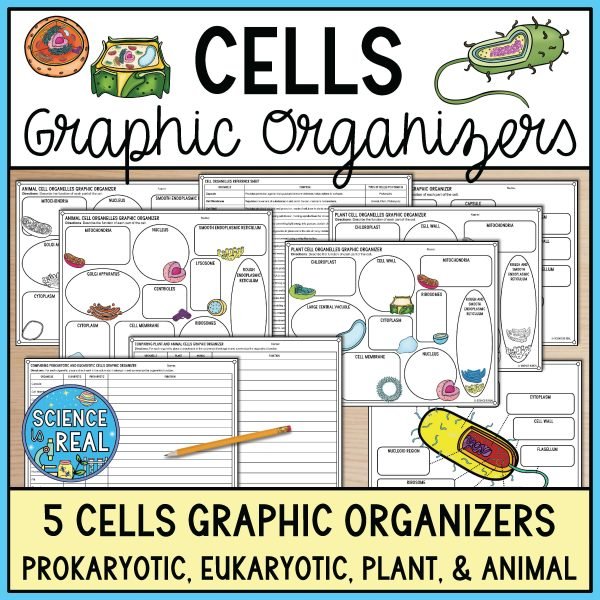
Best Must Have Biology Organizer for Students
Biology is a fascinating subject, but it is also notoriously content-heavy. Between memorizing the intricate steps of cellular respiration, tracking genetics probability charts, and organizing messy lab reports, it is easy for high school and college students to feel overwhelmed. Standard notebooks often fall short when dealing with the multidisciplinary nature of life sciences. That is why finding the right must have biology organizer for students is essential for turning academic chaos into structured success.

Whether you prefer a physical binder system with color-coded tabs or a streamlined digital workspace on your tablet, having a dedicated framework for your biology materials saves time, reduces stress, and ultimately leads to better exam scores. In this guide, we explore why traditional organization fails for science majors and what features make up the ultimate biology toolkit.
Why Standard Notebooks Fail Biology Students
Most students start the semester with a single spiral notebook or a generic multi-subject folder. While this works well for humanities classes where note-taking is linear, biology requires a totally different approach. You are constantly shifting between vocabulary heavy definitions, spatial diagrams, and data-driven lab analysis.
When everything is crammed into one chronological notebook, finding the notes on mitosis right before a midterm becomes a frustrating treasure hunt. Furthermore, biology relies heavily on visual learning. Drawing cross-sections of a leaf, tracing the circulatory system, or mapping out ecological food webs requires blank space, grid lines, and flexible placement that standard lined paper simply cannot provide.
Core Features of the Ultimate Biology Organizer
To conquer botany, zoology, anatomy, and cellular biology, your organizational system needs specific structural components. Here is what to look for when choosing or building your study system:
- Modular Section Dividers: Separate your semester by major biological units, such as Ecology, Cellular Biology, Genetics, and Physiology.
- Mixed Paper Types: Combine lined paper for lecture notes, graph paper for genetic crosses and data analysis, and blank unlined paper for biological drawing.
- Clear Plastic Sleeves: Protect delicate hand-drawn diagrams, syllabus sheets, and graded lab reports from spills in the science lab.
- Flashcard Pockets: Biology requires mastering hundreds of Latin roots and complex terminology. Built-in pouches keep review cards handy.
Top Physical and Digital Organization Systems
Depending on your personal learning style, your ideal system might be tactile and paper-based or sleek and digital. Here is a breakdown of the top options available to students today.
1. The Customizable Ring Binder System
Video: Biology Binder Organization

A heavy-duty 2-inch or 3-inch D-ring binder remains a classic choice for a reason. By outfitting it with durable tab dividers and customizable inserts, you can build a personalized must have biology organizer for students that grows with your syllabus.
Use sheet protectors to hold full-color handouts provided by your professor. Keep a pencil pouch snapped into the rings containing fine-tip colored pens—crucial for color-coding metabolic pathways like the Krebs cycle.
2. Digital Tablet Workspaces
For students using iPads or Android tablets with a stylus, apps like GoodNotes, Notability, or OneNote offer infinite organizational flexibility. You can import your professor's PDF lecture slides directly onto a digital page and annotate right over them.
Digital organizers allow you to instantly duplicate diagram templates, erase mistakes without tearing paper, and search your handwritten notes for specific keywords like "homeostasis" or "osmosis" in seconds.
How to Structure Your Notes Inside Your Organizer
Having the best organizational tool means little if your actual note-taking strategy is messy. To get the most out of your setup, implement a structured methodology like the Cornell Note-Taking System adapted specifically for science.
- Divide the Page: Draw a vertical line about two inches from the left margin. Use the left column for key vocabulary words and potential test questions, and the right column for main lecture concepts.
- Incorporate Sketches Immediately: Do not wait until study time to draw diagrams. Sketch cellular structures while the professor explains them to build active visual memory.
- Create a Summary Box: At the bottom of every page, write a three-sentence summary of the core biological concept in your own words.
Tips for Maintaining Your System All Semester Long
The biggest challenge of any organizational method is consistency. It is easy to maintain your system during the first week of class, only to abandon it by midterm season when coursework ramps up.
To avoid falling behind, schedule a weekly 15-minute "biology clean-up" session. File away loose handouts, update your table of contents, review your vocabulary flashcards, and recycle scrap paper. By keeping your workspace tidy, you lower the cognitive barrier to starting your study sessions, setting yourself up for an effortless 'A' in the class.