Best Short Bobs for Thinning Hair: 7 Full-Volume Cuts
When hair starts losing its density—whether due to hormonal shifts, genetics, stress, or natural aging—holding onto long strands often backfires. Long, fine hair weighs itself down, separating at the scalp and emphasizing sparse patches. Choosing short bobs for thinning hair is one of the most effective, confidence-boosting decisions you can make. By removing dead weight and focusing density along a crisp perimeter, a well-cut bob instantly restores the illusion of thickness and bounce.

Why Short Bobs for Thinning Hair Deliver Instant Volume
Hair behaves according to basic physics: the longer a strand is, the heavier it becomes. For someone with low density or fine strand diameter, that gravitational pull drags the hair flat against the scalp. Short bobs solve this dilemma through several structural advantages:
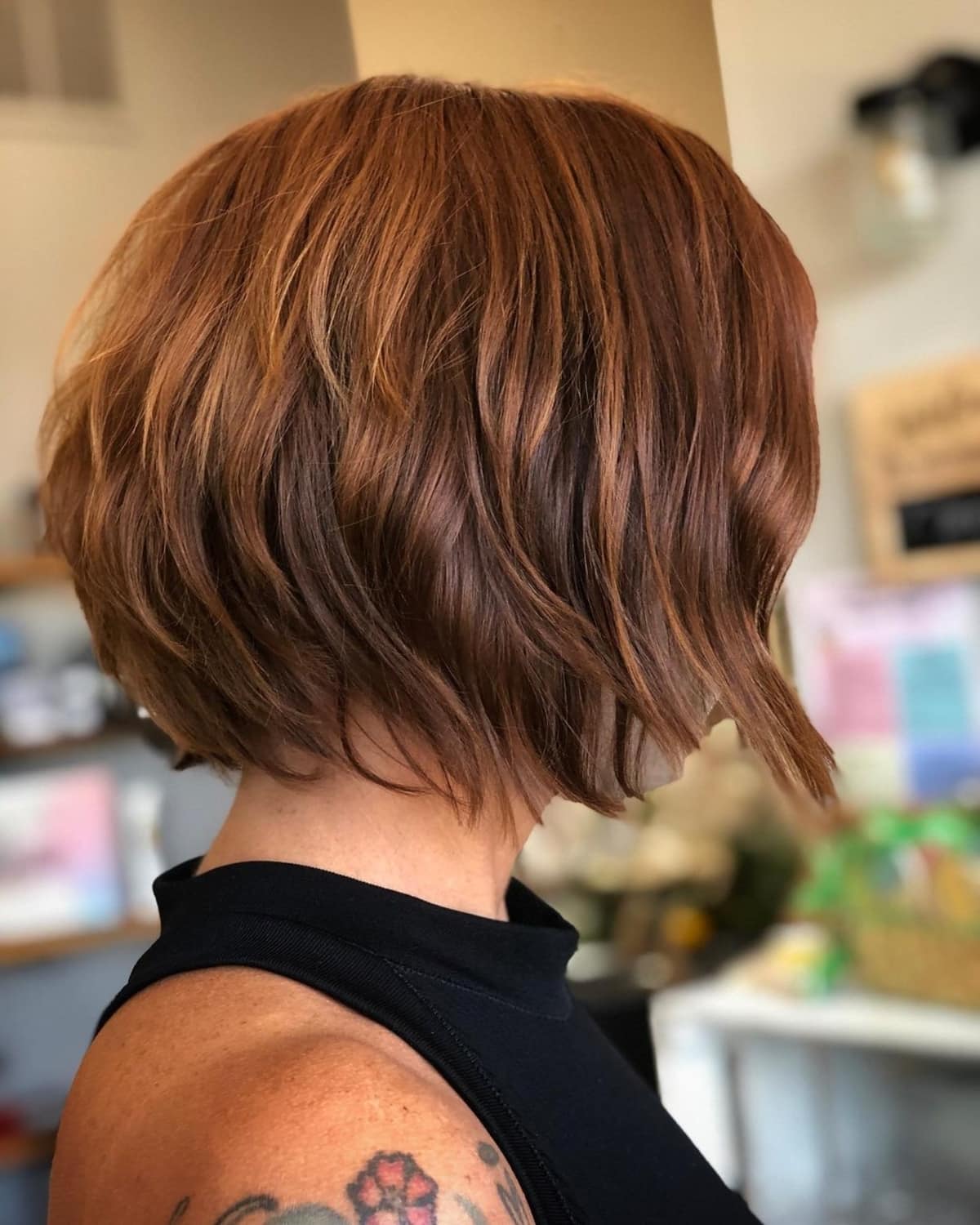
- Weight elimination: Removing 4 to 8 inches of hair allows the roots to lift naturally, delivering organic volume without requiring heavy styling products.
- Perimeter density: Cutting hair blunt at the jawline or chin creates a solid, uninterrupted baseline. This sharp horizontal line tricks the human eye into perceiving the entire hair mass as thicker than it really is.
- Reduced breakage: Fine, thinning hair is fragile. Shorter styles reduce mechanical friction from shoulders, collars, and purses, helping preserve hair integrity.
The Top 7 Short Bobs for Thinning Hair
Not every bob works the same way. The best variation depends on where your hair is thinning most—whether at the crown, the temples, or throughout the lengths.
1. The Classic Blunt Chin-Length Bob
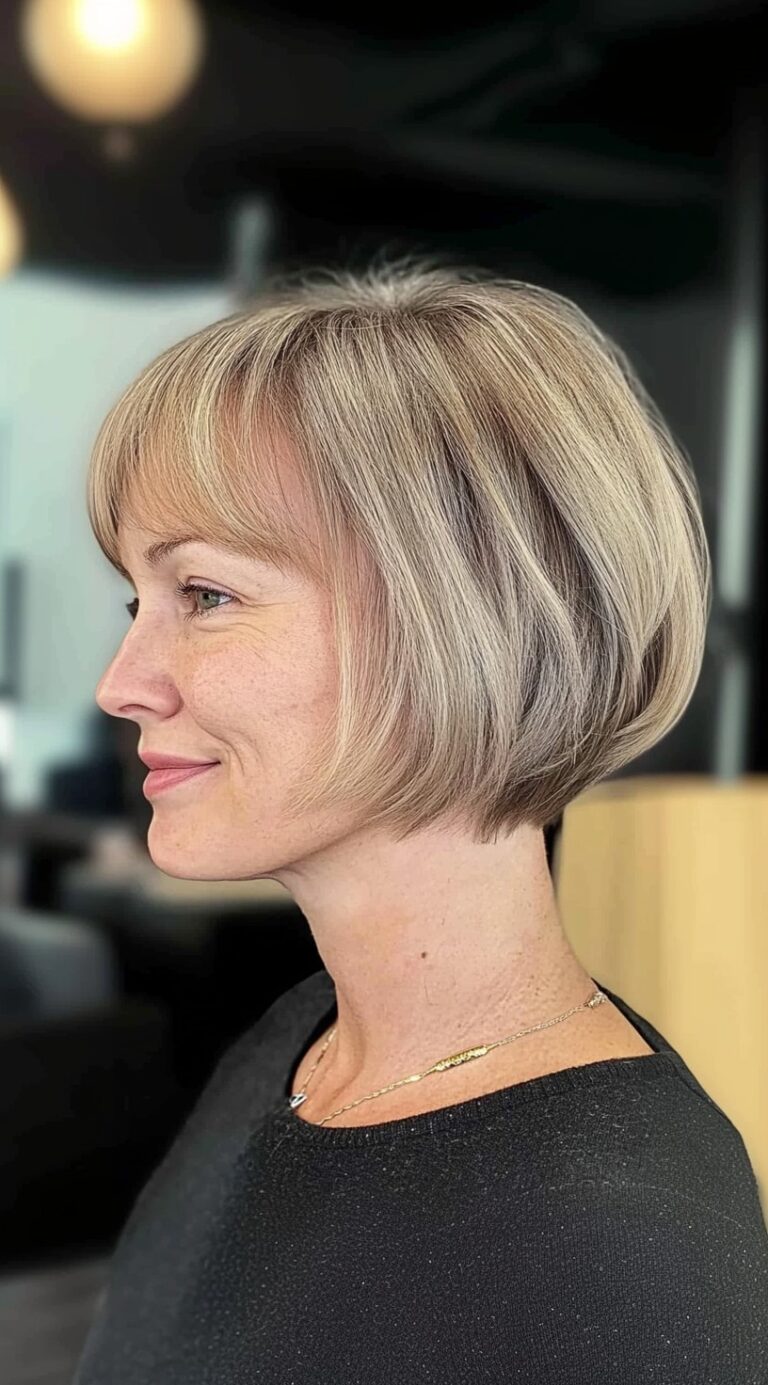
If your hair is thinning evenly across your scalp, the blunt chin-length bob is the gold standard. By keeping all strands at a single length with zero surface layering, every individual fiber contributes to the bottom edge. When you tuck one side behind an ear, the remaining hair appears twice as dense. Keep the ends cut completely square rather than bevelled under for the most modern, robust appearance.
2. The Micro French Bob
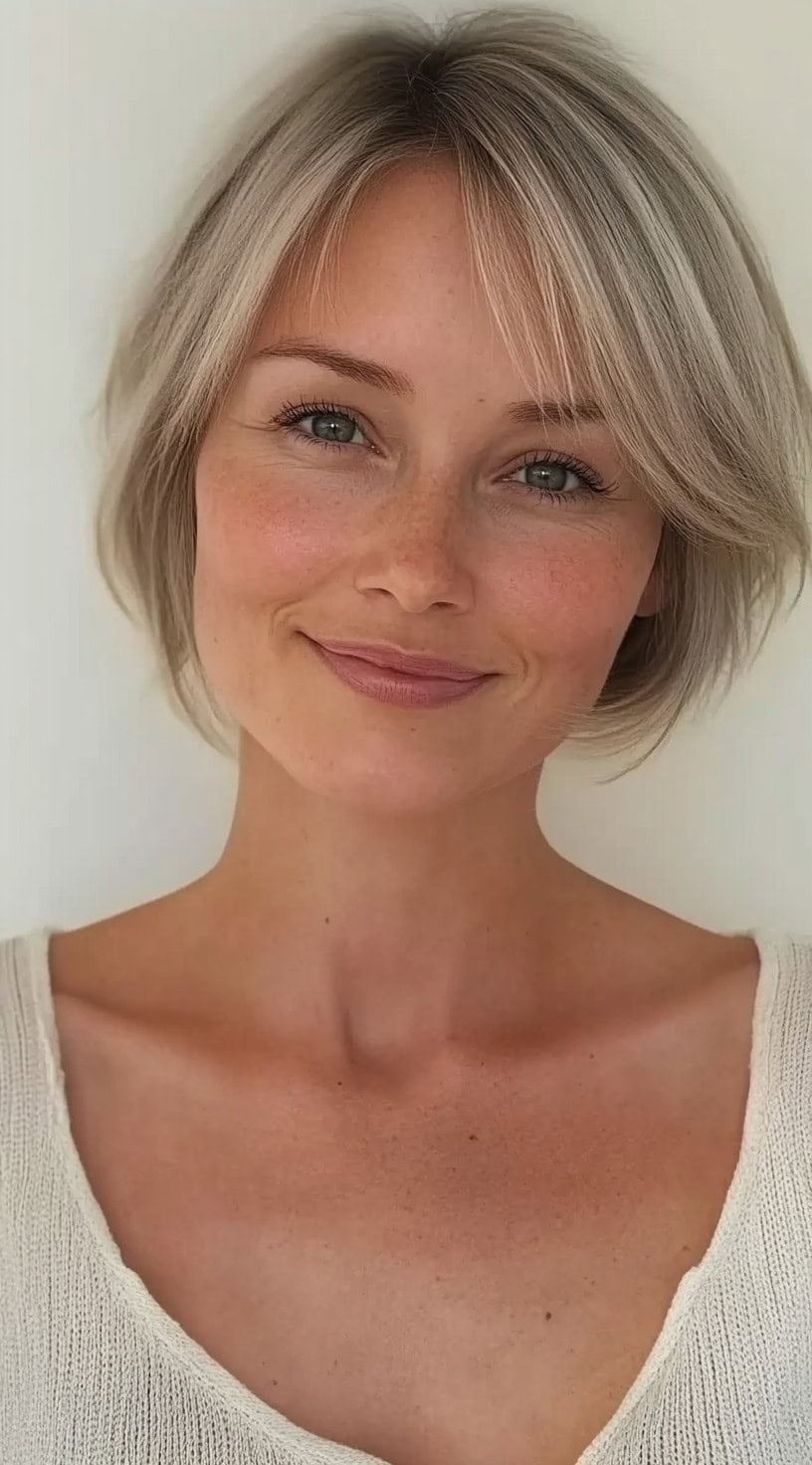
Hitting right at the cheekbones or mouth level, the French bob is a powerhouse for diffuse thinning. Paired with soft, brow-grazing bangs, this cut redirects attention from a widening part line to your eyes and facial structure. The short length allows natural texture to blossom, while wispy fringe conceals receding hair or sparser temples with effortless Parisian charm.
3. The Stacked Graduated Bob
For individuals dealing with crown thinning or a flat occipital bone, a stacked or graduated bob is engineered for lift. By cutting the back shorter with precise, angled micro-layers that gradually lengthen toward the front, weight is shifted upward. The shorter hairs underneath physically prop up the longer surface hairs, generating structural volume that lasts all day.
4. The Soft Textured Italian Bob
Unlike the razor-sharp blunt bob, the Italian bob features slightly rounded, chunky ends and subtle internal movement. It is typically cut slightly below the chin, giving enough room to flip the part back and forth. Flipping your part to the opposite side creates instant "root shock," an easy way to hide a visible scalp line while creating an airy, luxurious silhouette.
5. The Asymmetrical Bob
Thinning is rarely symmetrical; many people notice greater loss on one side of their head or around a specific temple. An asymmetrical bob—where one side sits noticeably longer than the other—turns this irregularity into an intentional design feature. The deep side part required for this look concentrates hair onto the sparser side, instantly masking uneven growth.
6. The Shaggy Pixie-Bob (Bixie)
If your hair feels too sparse for a traditional blunt cut, consider the bixie. This hybrid style combines the perimeter of a cropped bob with the feathered crown layers of a pixie cut. Because it relies on deliberate, piecey separation, any natural scalp visibility looks like intentional styling rather than hair loss.

7. The Undercut Bob
While cutting hair away might seem counterintuitive for thinning hair, a micro-undercut at the nape works wonders for fine textures. Removing the wispy, baby-fine hairs at the base of the neck prevents the bottom line from looking stringy, leaving a pristine, thick exterior layer that sits crisply against the neck.
Salon Rules: What to Ask For (and What to Avoid)
Clear communication with your stylist makes the difference between an expansive, bouncy bob and a limp cut. Keep these professional guidelines in mind during your consultation:
- Do ask for blunt cutting: Shears should cut straight across the perimeter to create a strong, clean edge.
- Do ask for subtle internal layering: If your hair falls flat, ask for "invisible layers" or interior slide-cutting beneath the canopy to create lift without sacrificing the perimeter's weight.
- Avoid thinning shears (texturizing shears): These scissors contain teeth that snip out chunks of hair. On thin or fine hair, thinning shears shred the ends, making the cut look frizzy, see-through, and frail.
- Avoid heavy razor work: Razors can feather the ends too severely, robbing fine hair of the compact density it needs to look full.
How to Style a Short Bob to Maximize Volume
Even the most strategic haircut requires smart styling habits to reach its full potential. The goal is to build long-lasting root support without overloading the strands with heavy residue.
1. Master the Root Prep
Apply styling products exclusively where lift is needed. Use a golf-ball-sized dollop of lightweight volumizing mousse or a targeted root-lift spray on damp roots. Keep rich conditioners, oils, and silicone serums strictly away from the scalp, applying them only in minuscule amounts to the very ends.
2. Dry Against the Grain
Blow-drying technique dictates how your hair rests throughout the day. Turn your head upside down during rough-drying to train the roots to stand upright. Once your hair is about 80% dry, flip upright and use a medium ceramic round brush to pull sections upward and back, rather than straight down. The ceramic barrel heats up, acting like a gentle hot roller to set maximum volume at the base.
3. Switch to Dry Texturizing Sprays
Traditional hairsprays rely on polymers that can make fine hair sticky, heavy, and clumped together into visible sections. Replace them with dry texturizing sprays or volcanic ash powders. These lightweight formulas coat each strand with microscopic grip, allowing hairs to physically lean against each other rather than falling flat.
4. Change Your Part Line Frequently
Hair memory is real: when parted in the identical spot for months or years, hair flattens permanently into that position, exposing the scalp. Move your part a half-inch to the left or right every few weeks. This simple shift forces the roots to stand erect over the natural fall line, immediately doubling crown height.
Embrace the Fuller Look of Shorter Hair
Thinning hair can feel like a loss of control, but clinging to sparse, trailing ends only highlights the issue. A short bob is not a surrender—it is a smart, chic recalibration. By shifting weight upward and framing your features with a sharp, intentional shape, you take control of your texture and enjoy thick, bouncy, head-turning style every single day.