Best Universities Ranked: Global Guide for 2025
Choosing where to pursue higher education is one of the most consequential decisions a student will make. When evaluating potential institutions, seeing the world's best universities ranked side-by-side provides critical clarity on academic reputation, research productivity, and graduate employability. However, navigating league tables requires an understanding of what these metrics actually measure and how to weigh them against your personal academic goals.
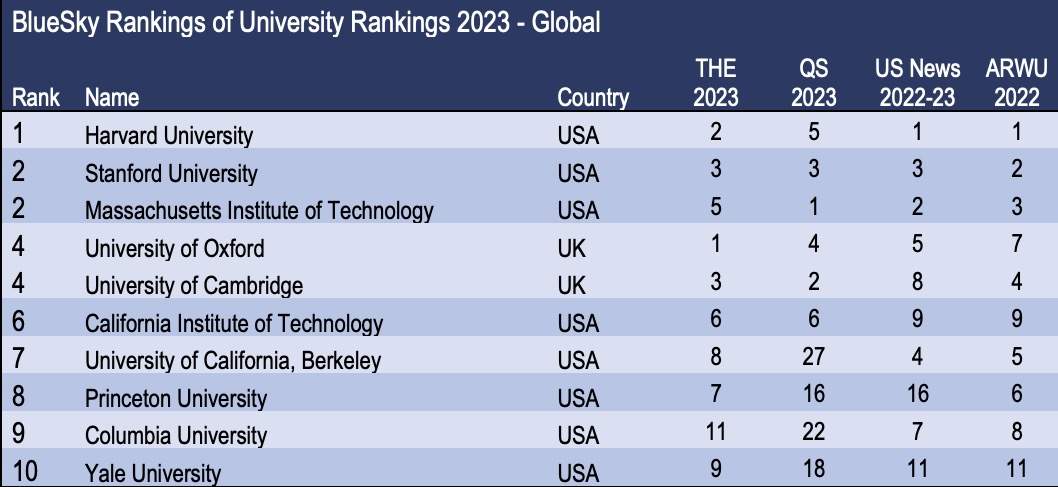
Whether you are targeting an Ivy League institution, an Oxbridge college, or a dynamic technological research hub in Asia or Europe, this guide consolidates data from premier international ranking bodies to give you a transparent look at the global higher education landscape.
The World’s Best Universities Ranked for 2025
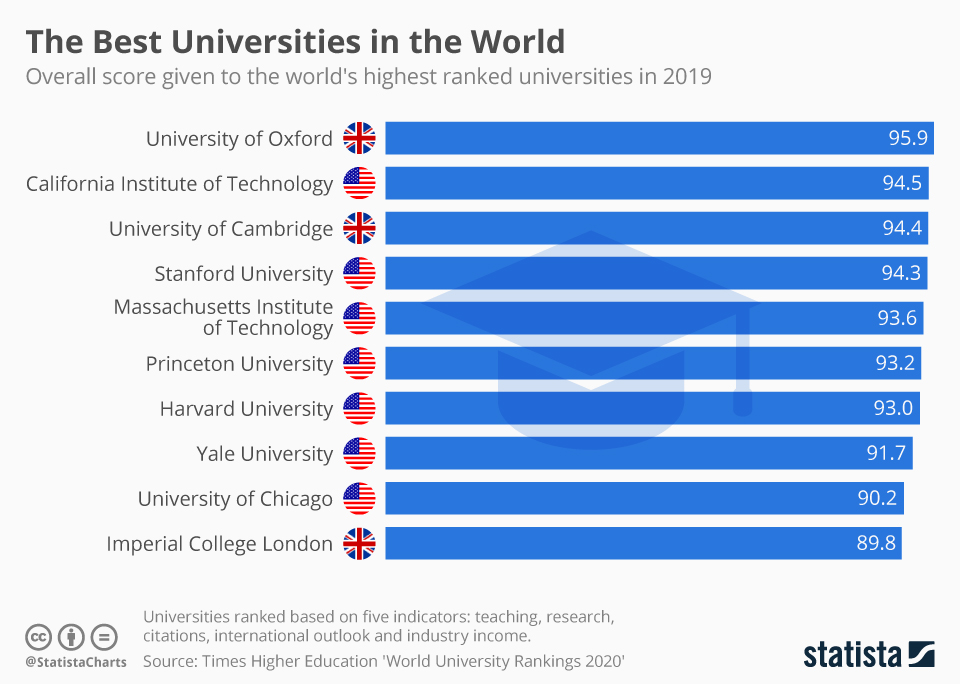
While positions shift slightly depending on the organization evaluating them, a select group of institutions consistently dominates the upper echelons of global tables. Below are the consensus leaders across major assessment bodies including QS World University Rankings, Times Higher Education (THE), and the Academic Ranking of World Universities (ARWU):
- Massachusetts Institute of Technology (MIT) – United States: A perennial front-runner, MIT remains unrivaled in engineering, physical sciences, and computer science. Its high citation rate per faculty member and extensive commercialization pipelines keep it at the summit of technological research.
- University of Cambridge – United Kingdom: Renowned for its collegiate system and rigorous supervisory model, Cambridge excels across arts, humanities, and core STEM fields, supported by centuries of scientific breakthroughs.
- University of Oxford – United Kingdom: Known for producing global leaders, Oxford routinely captures top honors in Times Higher Education metrics due to exceptional teaching scores and worldwide research influence.
- Harvard University – United States: Backed by the world's largest academic endowment, Harvard maintains an unmatched global alumni network and peerless library and research collections across law, medicine, business, and liberal arts.
- Stanford University – United States: Sitting in the heart of Silicon Valley, Stanford blends elite academic research with an entrepreneurial ecosystem that generates industry-defining startups and patents.
- Imperial College London – United Kingdom: Focused exclusively on science, engineering, medicine, and business, Imperial's industry collaborations and practical research outputs have earned it top-tier international placement.
- ETH Zurich – Switzerland: Consistently ranked as continental Europe's finest institution, ETH Zurich offers world-class education in engineering and natural sciences with significantly lower tuition rates than its US and UK peers.
- National University of Singapore (NUS) – Singapore: Leading Asia's higher education surge, NUS combines cutting-edge research infrastructure with deep integration into global supply chains and digital economies.
Understanding the Major League Tables
No two ranking systems measure institutional quality the same way. Relying on a single table can provide a skewed perspective. To understand why a university sits at a specific position, you must understand the criteria behind the primary ranking systems.
1. QS World University Rankings (Quacquarelli Symonds)
QS places significant weight on qualitative reputation surveys alongside quantitative outputs. Its core indicators include:
- Academic Reputation (30%): Gathers opinions from over 100,000 international academics on where the best research is taking place.
- Employer Reputation (15%): Evaluates which universities produce the most competent, innovative, and adaptable graduates.
- Citations per Faculty (20%): Measures total citations divided by the number of faculty members over a five-year period to assess research intensity.
- Faculty-to-Student Ratio (10%): Assesses teaching capacity and classroom attention.
- Internationalization & Sustainability (25% combined): Evaluates student diversity, international research networks, and environmental footprint.
2. Times Higher Education (THE) World University Rankings
THE relies on a balanced methodology structured around five core pillars: Teaching (the learning environment), Research Environment (volume, income, and reputation), Research Quality (citation impact, research strength, excellence, and influence), International Outlook (staff, students, and cross-border research), and Industry (income and patents).
3. Academic Ranking of World Universities (ARWU / Shanghai Ranking)
ARWU focuses almost entirely on objective research metrics and historical scientific prestige. It measures alumni and staff winning Nobel Prizes and Fields Medals, the number of Highly Cited Researchers selected by Clarivate, and articles published in Nature and Science. As a result, ARWU heavily favors established, large-scale research powerhouses in the hard sciences.
Top Universities by Study Field
Overall institutional rank does not always reflect the quality of a specific department. Many universities that fall outside the global top 20 host world-leading programs in dedicated disciplines.
Engineering and Technology
Institutions like MIT, Stanford, Nanyang Technological University (NTU) in Singapore, Tsinghua University in China, and TU Delft in the Netherlands frequently outpace traditional comprehensive universities in computer science, civil engineering, and robotics.
Business, Finance, and Economics
For finance and management, specialized programs often provide stronger recruitment pipelines than broad universities. Top performers include the London School of Economics (LSE), Wharton (University of Pennsylvania), INSEAD (France/Singapore), and Bocconi University in Italy.
Arts, Humanities, and Social Sciences
If your focus is history, philosophy, international relations, or modern languages, universities with deep archival holdings and seminar-style traditions stand out. Leading choices include Oxford, Cambridge, Columbia University, Sciences Po (France), and the University of Edinburgh.
How to Use Rankings Effectively
Global rankings should serve as a discovery tool rather than a final verdict. Selecting the right university involves matching an institution's profile to your career trajectory, financial realities, and personal learning preferences.
- Look at Subject Rankings First: An institution ranked 75th globally might boast the #3 program worldwide for marine biology, petroleum engineering, or clinical psychology. Prioritize subject-specific performance over aggregate scores.
- Examine the Student-to-Faculty Ratio: Research-heavy universities often post impressive citation scores because their faculty prioritize laboratory output over undergraduate mentoring. A lower faculty-to-student ratio typically correlates with smaller seminars and greater access to advising.
- Assess Career Outcomes and Regional Ties: Top global rank does not automatically ensure employment rights in every market. Consider where you want to work post-graduation; local industry partnerships and post-study work visa policies can outweigh slight differences on a global ranking list.
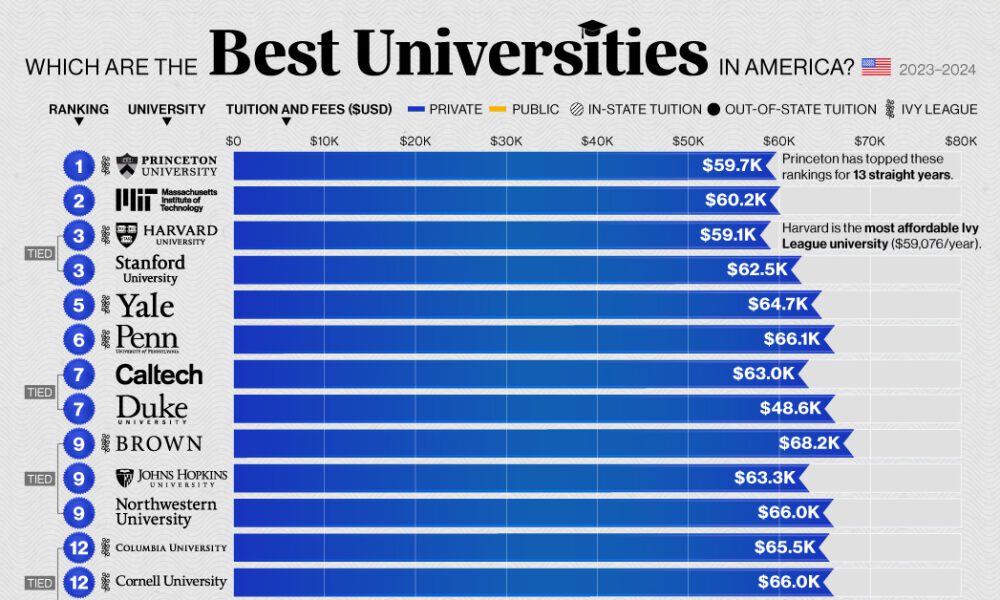
- Factor in Total Cost of Attendance: Top US private universities carry annual price tags exceeding $85,000 before financial aid. Meanwhile, elite public institutions in Europe—such as the Technical University of Munich or KU Leuven—offer equivalent academic training at a fraction of the cost.
Use university rankings as an informed starting point. Drill into course syllabi, faculty publication histories, alumni employment records, and financial aid structures to identify the institution that aligns best with your academic and professional goals.