Beyoncé’s Hard-Won Path to a $400M Fortune
When discussing modern entertainment moguls, few stories match the calculated, relentless rise of Beyoncé Knowles-Carter. Long before stadium tours grossed hundreds of millions in a single summer, she laid the groundwork for an enduring financial empire through discipline, creative sovereignty, and rare corporate leverage. Looking closely at Beyoncé’s hard-won path to a $400 million fortune explained through her business decisions reveals a masterclass in turning raw talent into generational wealth.

The Early Grind: Destiny’s Child and Industry Realities
Beyoncé did not arrive at financial independence overnight. Her career began in Houston under the rigorous management of her parents, Mathew and Tina Knowles. As the frontwoman of Destiny’s Child, she experienced massive global success, selling tens of millions of records worldwide. However, standard major-label record deals in the late 1990s and early 2000s were notorious for leaving artists with thin margins after recouping advances, marketing, and distribution expenses.
While Destiny’s Child generated vast revenues for Columbia Records, the experience served as an invaluable crash course for Beyoncé. She witnessed firsthand where the financial leaks occurred: high producer fees, management percentages, third-party publishing stakes, and restrictive touring contracts. These early lessons cemented a central philosophy that defined the rest of her career: autonomy matters far more than a quick advance.
The Pivot to Power: Founding Parkwood Entertainment
By 2010, Beyoncé was already one of the biggest solo acts on the planet, with hits like "Crazy in Love," "Irreplaceable," and "Single Ladies." Yet she was still operating inside the traditional talent-management framework. In 2011, she made a high-stakes decision that shocked the music business: she severed professional ties with her father as her manager and took total control of her enterprise.
She established Parkwood Entertainment, a private management, production, and entertainment company. Instead of outsourcing her decisions to third-party agencies, Parkwood brought everything in-house:
- Creative Direction: Concept art, video treatments, and album visualizers.
- Tour Production: Stage design, lighting, band curation, and logistics.
- Merchandising: Direct control over garment quality, distribution channels, and margins.
- PR and Marketing: Completely controlling her narrative without reliance on traditional media press cycles.
By absorbing the operational overhead herself, Beyoncé captured the profits usually reserved for corporate promoters and management firms. Parkwood was not merely a vanity imprint; it became the vehicle that powered her journey toward ultra-high-net-worth status.
Live Touring: The Primary Engine of Her Wealth
While streaming and album sales build cultural relevance, live performances generate cold, hard cash. Beyoncé’s live performance prowess enabled her to command unprecedented guarantees and ticket pricing power.
Her live career evolved from standard arena circuits into mammoth global stadium spectacles:
- The Mrs. Carter Show World Tour (2013–2014): Grossed over $229 million across 132 shows, proving her stamina and global reach.
- The Formation World Tour (2016): Supporting her visual album Lemonade, this all-stadium run grossed over $256 million in just 49 dates.
- On the Run II Tour (2018): Co-headlining alongside Jay-Z, the stadium trek generated more than $254 million.
Because she controlled the production through Parkwood and partnered directly with promoters like Live Nation, Beyoncé retained a significantly higher percentage of box office receipts and high-margin merchandise sales than industry peers.
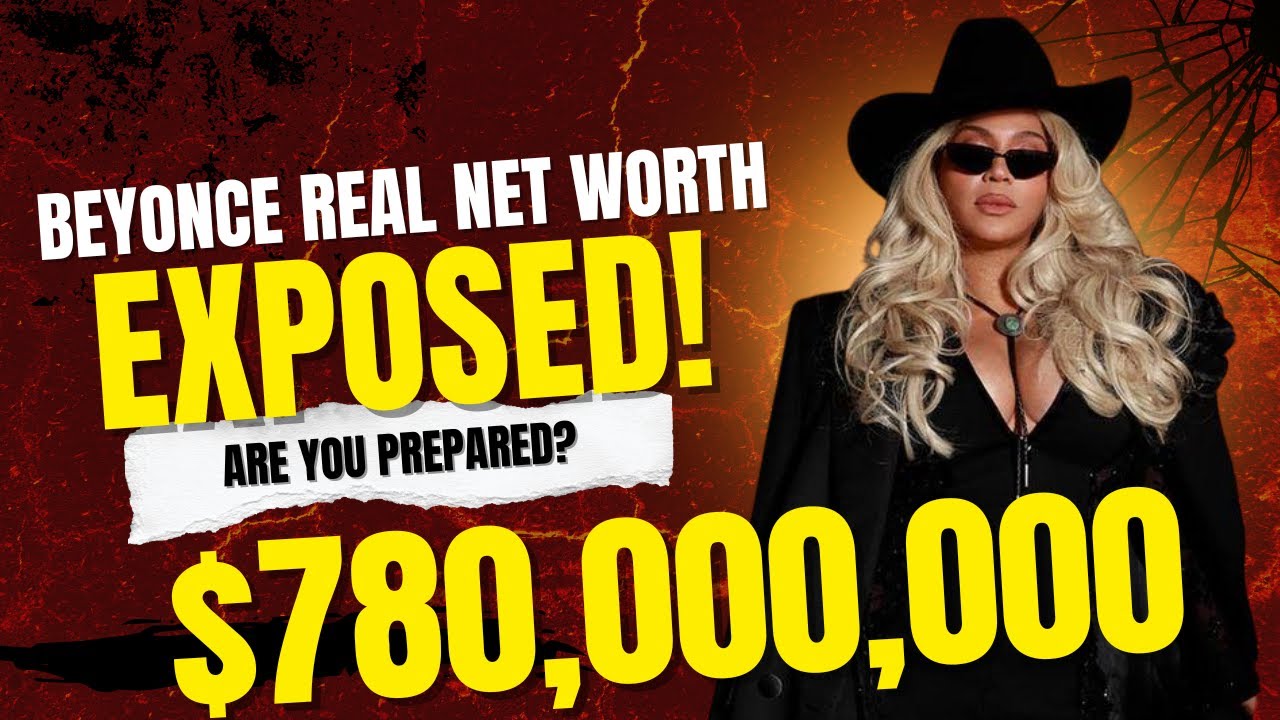
Video: Beyonce's $800 Million Fortune Explained

Beyoncé’s Hard-Won Path to a $400 Million Fortune Explained
Reaching a benchmark net worth of $400 million—which laid the foundation for her even higher valuation today—required more than just singing and touring. It demanded calculated risks where equity took precedence over cash fees.
A prime example of this financial acumen occurred in 2015. Hired to perform at a private corporate event for Uber, Beyoncé reportedly bypassed a traditional $6 million performance fee. Instead, she negotiated to receive payment entirely in Uber restricted stock units (RSUs). When Uber went public in 2019, those shares were valued at an estimated $9 million or more, exemplifying her long-term wealth strategy.
Her business approach relies on three fundamental pillars:
- Master Recording & Catalog Ownership: Retaining or negotiating back ownership rights to her masters allowed her to license music for commercials, films, and streaming on her own terms.
- Scarcity and Exclusivity: By limiting interviews and public appearances, Beyoncé created an aura of high demand, ensuring every tour announcement, release, or partnership felt like a historic cultural event.
- Direct Distribution: Her surprise self-titled album drop in 2013 bypassed the traditional marketing machine entirely, selling 617,000 copies in three days on iTunes without spending millions on preliminary retail campaigns.
Strategic Ventures: Ivy Park, Cécred, and SirDavis
Beyoncé also translated her cultural capital into consumer products. In 2016, she launched Ivy Park, initially as a joint venture with Topshop. When Topshop’s parent company faced reputational and financial trouble, she bought back 100% of the brand, retaining the intellectual property.
She subsequently partnered with Adidas to scale Ivy Park into footwear and elevated streetwear. While market dynamics led to a mutual parting of ways in 2023, the licensing fees and global retail exposure proved lucrative and reinforced her reputation as a formidable brand architect.
More recently, she expanded into high-margin consumer sectors:
- Cécred (2024): A premium haircare line rooted in scalp health and inclusive hair textures, entering a rapidly expanding prestige beauty market.
- SirDavis (2024): A luxury American whisky venture created in partnership with French luxury conglomerate Moët Hennessy, giving her a foothold in the high-margin spirits sector.
Rather than merely endorsing existing products for a one-time sponsorship check, Beyoncé enters markets as a co-creator and equity holder, ensuring she participates directly in the enterprise value.
Key Takeaways from Beyoncé’s Financial Playbook
Beyoncé’s climb offers concrete principles for entrepreneurs and creators in any field:
- Prioritize ownership over quick advances: Sacrificing short-term payouts to retain equity and master rights compounds over decades.
- Eliminate non-essential intermediaries: Bringing operational, creative, and tour logistics in-house prevents revenue leakage.
- Let the work do the marketing: Maintaining high standards of craftsmanship builds pricing power that discounts can never match.
The journey to hundreds of millions was not accidental. It was built through decades of vocal preparation, grueling 16-hour rehearsal schedules, tough managerial breakups, and an uncompromising refusal to let corporations dictate her worth.