Biomedical Field Service Technician: Career Guide
Modern healthcare relies heavily on complex technology, from patient monitors and MRI machines to infusion pumps and surgical lasers. When these critical devices malfunction, patient safety and hospital operations are immediately put at risk. This is where the biomedical field service technician steps in. They are the specialized professionals who travel to hospitals, clinics, and laboratories to install, calibrate, troubleshoot, and repair life-saving medical equipment.

If you enjoy working with your hands, have a strong aptitude for electronics and computer science, and want a career that directly impacts patient care, this role offers a rewarding and stable path. Below is a comprehensive guide to what the job entails, how to enter the field, and what to expect regarding salary and career growth.
What Does a Biomedical Field Service Technician Do?
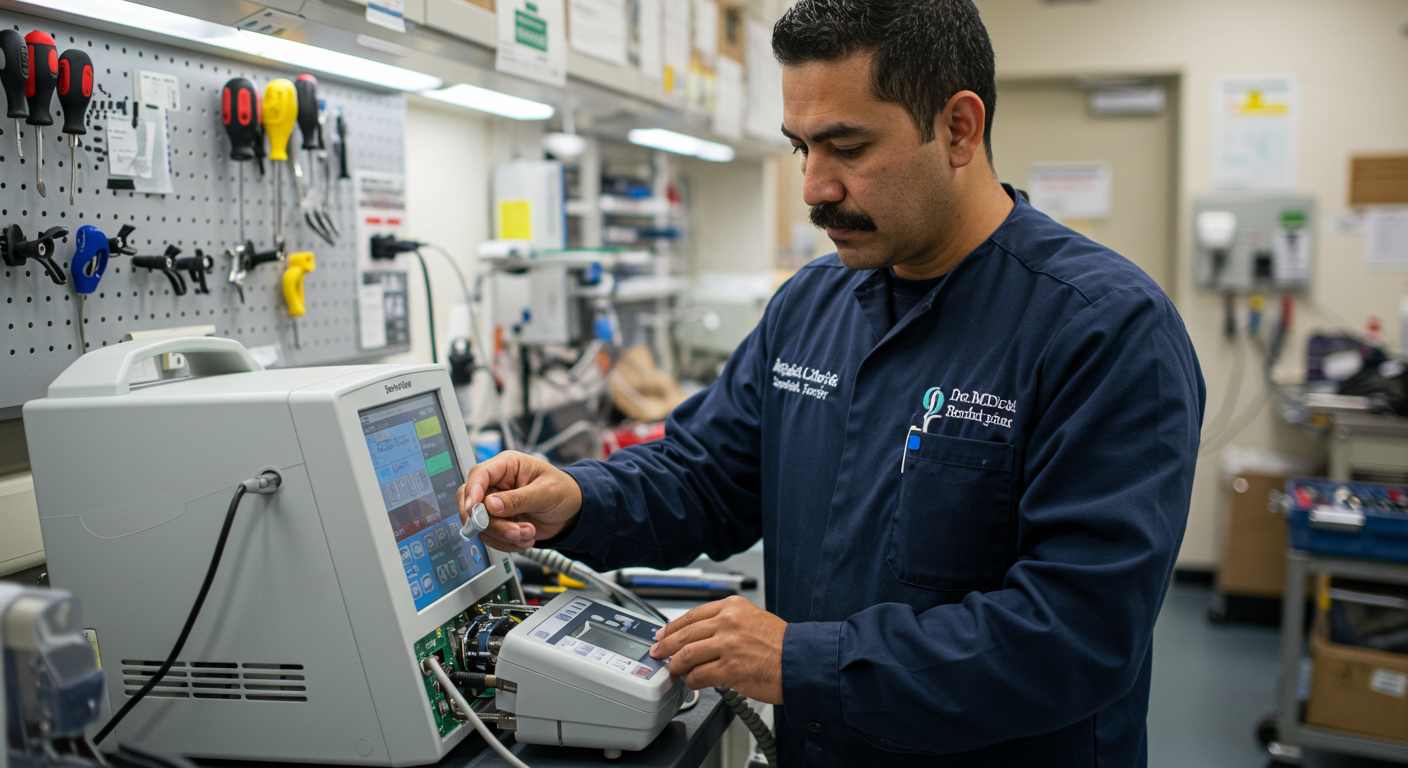
Unlike in-house biomedical equipment technicians (BMETs) who typically work at a single hospital facility, a field service technician travels extensively. They act as the primary representatives for medical device manufacturers or third-party service organizations, supporting clients across a designated geographic territory.
Their daily responsibilities generally fall into a few core categories:
- Installation and Setup: Unboxing, assembling, and testing new medical machinery in clinical environments, ensuring it integrates properly with the facility's network and electrical systems.
- Preventative Maintenance (PM): Performing scheduled inspections, cleaning, and diagnostic testing to prevent unexpected equipment failures and maintain compliance with regulatory standards like The Joint Commission.
- Troubleshooting and Repair: Diagnosing complex mechanical, electrical, or software malfunctions on-site, replacing faulty components, and restoring devices to peak operational performance.
- Calibration: Using specialized, NIST-traceable test equipment to ensure devices measure and deliver precise metrics, such as accurate drug dosage delivery or correct radiation output.
- Client Training and Support: Educating doctors, nurses, and clinical engineers on proper device operation, basic troubleshooting routines, and safety protocols.
Essential Skills and Qualifications
To succeed as a field service technician in the biomedical sector, you need a unique blend of technical expertise and interpersonal skills. Because you will often interact directly with stressed medical staff in high-pressure environments, soft skills are just as important as technical know-how.
Technical Competencies
A solid foundation in STEM principles is non-negotiable. Key technical requirements include:
- Electronics and Circuitry: The ability to read schematics, use digital multimeters, and solder delicate circuit boards.
- Networking and IT: Modern medical devices are heavily computerized. Technicians must understand hospital networks, DICOM standards, cybersecurity, and operating systems (Windows, Linux).
- Mechanical Aptitude: Understanding fluid dynamics, pneumatic systems, and mechanical assemblies common in ventilators, anesthesia machines, and centrifuges.
Education and Certifications
Most employers require at least an Associate Degree in Biomedical Equipment Technology, Electronics Technology, or a related field. Some complex imaging modalities (like CT, MRI, and linear accelerators) may require a Bachelor’s degree in Biomedical Engineering or equivalent military training (such as a biomedical equipment specialist in the US military).

Certifications can significantly boost your employability and earning potential:
- CBET (Certified Biomedical Equipment Technician): Administered by the AAMI (Association for the Advancement of Medical Instrumentation), this is the industry gold standard.
- CRES (Certified Radiology Equipment Specialist): Focused specifically on imaging and X-ray systems.
- CHTM (Certified Healthcare Technology Manager): For those moving into supervisory or managerial roles.
Work Environment and Travel Demands
The work environment varies significantly depending on your specialization and employer. Most technicians spend a large percentage of their time driving or flying to different client sites. A typical week might involve servicing three different hospitals in neighboring cities or states.
Because healthcare operates 24/7, field service technicians often participate in an on-call rotation. Emergency service calls on weekends or overnight are not uncommon, especially for critical care equipment. However, many employers offer generous overtime pay, travel per diems, and company vehicles to compensate for the demanding travel schedule.
Salary and Job Outlook
The demand for skilled biomedical technicians is growing rapidly. As the population ages and healthcare technology becomes more sophisticated, hospitals continuously upgrade and maintain their device inventories.
According to labor statistics, the median annual wage for biomedical equipment technicians typically ranges between $55,000 and $85,000 per year. However, biomedical field service technicians often command higher salaries—frequently earning upwards of $80,000 to $100,000+—due to the independent nature of the work, travel requirements, and specialized expertise required for high-end imaging or laboratory systems.
How to Start Your Career
If you are ready to break into this exciting field, follow these strategic steps:
- Get Educated: Complete an accredited associate or bachelor’s degree program in biomedical technology or electronics.
- Gain Hands-On Experience: Look for internships or entry-level in-house BMET roles at local hospitals to build foundational troubleshooting skills.
- Learn Networking Basics: Familiarize yourself with IT, cybersecurity, and medical device integration, as this is one of the fastest-growing demands from manufacturers.
- Build a Professional Network: Join organizations like AAMI to connect with hiring managers and industry veterans.
- Apply to OEMs: Target Original Equipment Manufacturers (OEMs) like GE Healthcare, Siemens Healthineers, Philips, or specialized third-party service providers for field service roles.
A career as a biomedical field service technician offers a unique mix of technical problem-solving, travel, and rewarding work that supports frontline healthcare workers. By combining solid electronics training with strong customer service skills, you can build a lucrative and stable career in an essential industry.