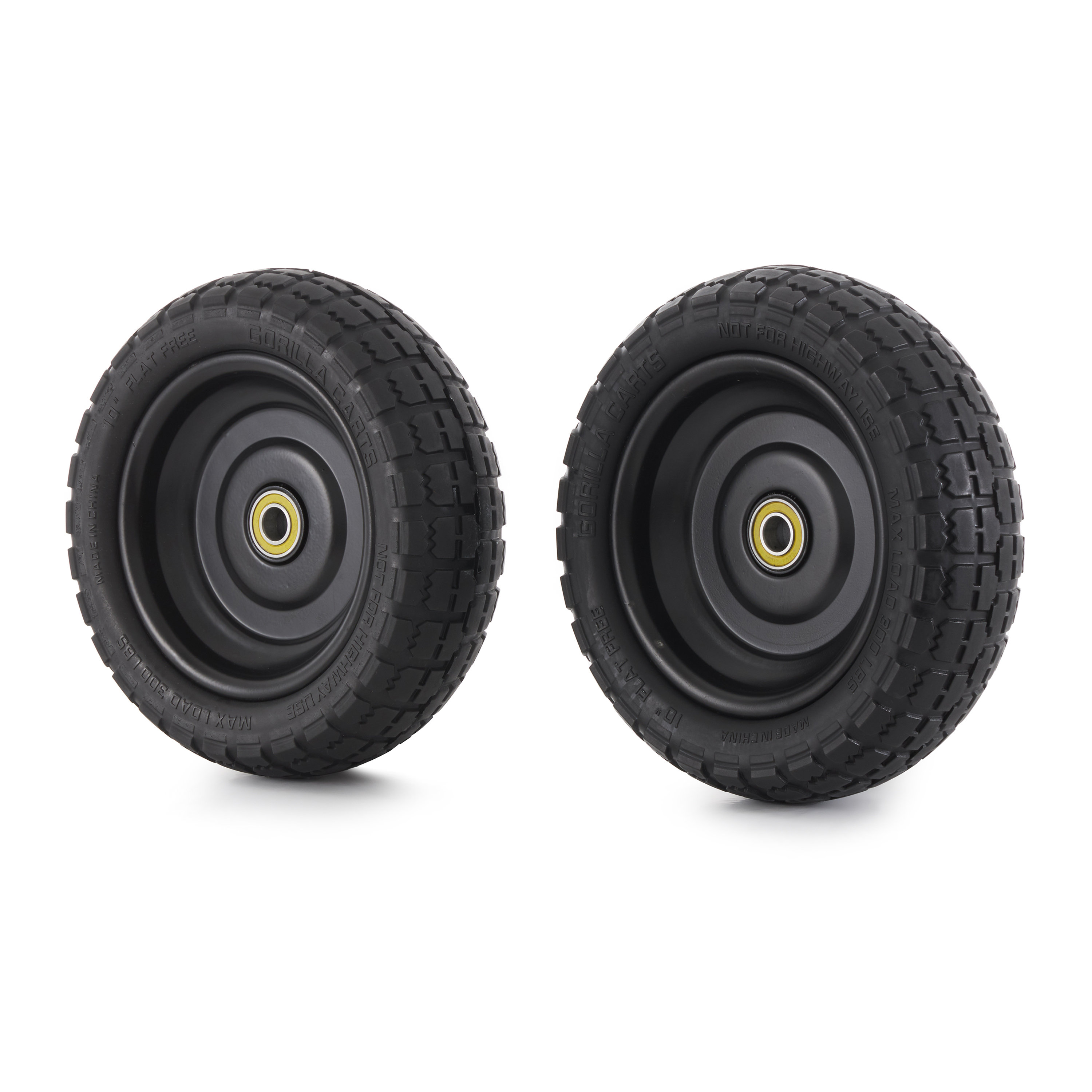
Blue Hawk Dump Cart Replacement Tire Guide
Few things are more frustrating than loading up your yard cart for a weekend landscaping project, only to find a flat or rotting tire. If you own a utility wagon from Lowe's house brand, finding the right Blue Hawk dump cart replacement tire is the key to restoring your cart's hauling power. Whether you are dealing with a slow leak, a shredded sidewall, or a rusted-out rim, swapping out the wheel assembly is a straightforward DIY fix.

This guide walks you through identifying your tire size, deciding between pneumatic (air-filled) and solid rubber options, and safely installing your new wheel so you can get back to work.
Understanding Your Tire Specifications
Before you buy any replacement wheel, you need to know the exact dimensions of your current setup. Guessing based on the cart's overall look usually leads to ordering the wrong size, resulting in a wheel that won't clear the cart frame or slide onto the axle.
Check the Sidewall for Numbers
Look closely at the rubber sidewall of your existing tire. Manufacturers typically stamp sizing information directly into the rubber. You will usually see a set of numbers that look something like 4.10/3.50-4 or 13x5.00-6.
- The first set of numbers (e.g., 4.10 or 13) represents the total outer diameter of the inflated tire in inches.
- The middle numbers (e.g., 3.50 or 5.00) represent the width of the tire.
- The final number (e.g., 4 or 6) represents the diameter of the metal rim or wheel hub in inches.
Measure the Axle Bore Diameter
Dump cart axles come in standard sizes, most commonly 5/8 inch or 3/4 inch in diameter. If the numbers on the sidewall are worn off or unreadable, use a caliper or a tape measure to measure the thickness of the steel axle shaft. Your replacement wheel must have a matching bearing or bore size, otherwise it will not fit securely onto the cart.
Check the Hub Length and Offset
Pay attention to the center hub of the wheel. Some wheels have a symmetrical hub (centered), while others have an offset hub where the metal rim extends further on one side than the other. You also need to measure the length of the center tube (hub length) to ensure it fits properly between the cart frame and the cotter pin slot on the axle.
Pneumatic vs. Flat-Free: Choosing the Right Upgrade
Video: The BlueHawk 17cuFT Metal Dump Cart, A Long Term Review. With Lots up modifications, It's Still here
When shopping for a Blue Hawk dump cart replacement tire, you will generally have to choose between two main material types. Each has distinct advantages depending on how you use your cart.

Pneumatic (Air-Filled) Tires
Pneumatic tires feature an inner tube filled with air, much like a bicycle or car tire.
- Pros: They provide a cushioned, shock-absorbing ride. This is ideal if you frequently haul delicate plants, tools, or heavy loads over rough terrain, bumps, or tree roots, as the air absorbs the impact rather than transferring it to the cart bed.
- Cons: They are vulnerable to punctures from thorns, nails, glass, and sharp gravel. Over time, air can also slowly seep out, requiring regular pressure checks.
Solid Polyurethane (Flat-Free) Tires
Flat-free tires are made of solid, micro-cellular polyurethane foam molded onto a steel or heavy-duty plastic rim.
- Pros: They never go flat. You can drive right over blackberry thorns, construction debris, and sharp stones without worry. They require zero maintenance and last for years without losing their shape.
- Cons: They offer a slightly firmer ride than air-filled tires. They can also develop a flat spot if the cart sits fully loaded in one position for weeks during the off-season.
For most homeowners using a utility or dump cart around the yard, upgrading to a solid flat-free Blue Hawk dump cart replacement tire is well worth the investment to eliminate the hassle of flat tires.
Step-by-Step Installation Guide
Replacing a cart wheel takes about 10 to 15 minutes and requires only basic hand tools. Follow these steps to complete the job safely.
- Prep the Workspace: Park your dump cart on a flat, level surface. Empty out any dirt, mulch, or tools so the cart is lightweight and stable.
- Elevate the Cart: Tilt the cart or use a sturdy jack or wood blocks to lift the side with the damaged tire off the ground. Ensure the cart is secure and will not tip over while you work.
- Remove the Fastener: Locate the outer end of the axle. Depending on your specific model, the wheel will be held in place by a cotter pin, an R-clip (hairpin cotter), or a push nut. Use pliers to straighten and pull out the cotter pin or slide off the R-clip. Save this hardware if it is still in good condition.
- Slide Off the Old Wheel: Pull the old wheel straight off the axle. Watch out for any small metal washers or spacers positioned behind or in front of the hub. Note their exact placement so you can put them back the same way.
- Inspect and Grease the Axle: Wipe down the metal axle shaft with a clean rag to remove dirt, grit, and old grease. Apply a light coat of multi-purpose automotive grease or white lithium grease to the axle shaft. This ensures the new wheel spins freely and prevents the metal hub from seizing to the axle over time.
- Install the New Wheel: Slide any inner washers back onto the axle, then push your new Blue Hawk dump cart replacement tire onto the shaft. Ensure the side of the hub with the longer offset faces inward toward the cart body if your model requires it.
- Secure the Hardware: Slide any outer washers into place, then reinsert your cotter pin or R-clip through the hole in the end of the axle. Bend the ends of the cotter pin apart so it cannot vibrate loose during use. Give the wheel a spin to verify smooth rotation.
Tips to Extend the Life of Your New Cart Tires
Once you have installed your new wheel, a little preventative maintenance goes a long way toward protecting your investment.
If you opted for pneumatic tires, check the air pressure monthly using a standard tire gauge. Running tires under-inflated places excessive stress on the sidewalls, leading to premature cracking and bead failure. Keep them inflated to the maximum PSI printed on the sidewall.
Additionally, avoid storing your cart outdoors in direct, baking sunlight for months on end. Ultraviolet (UV) rays degrade rubber over time, causing dry rot and cracking. If you must store your utility cart outside, consider tossing a tarp over it, or at least shielding the tires from harsh exposure during the winter months. By following these steps, your cart will haul heavy loads smoothly for years to come.