Bob Ross’s Financial Enigma: Truth Behind Millionaire Status
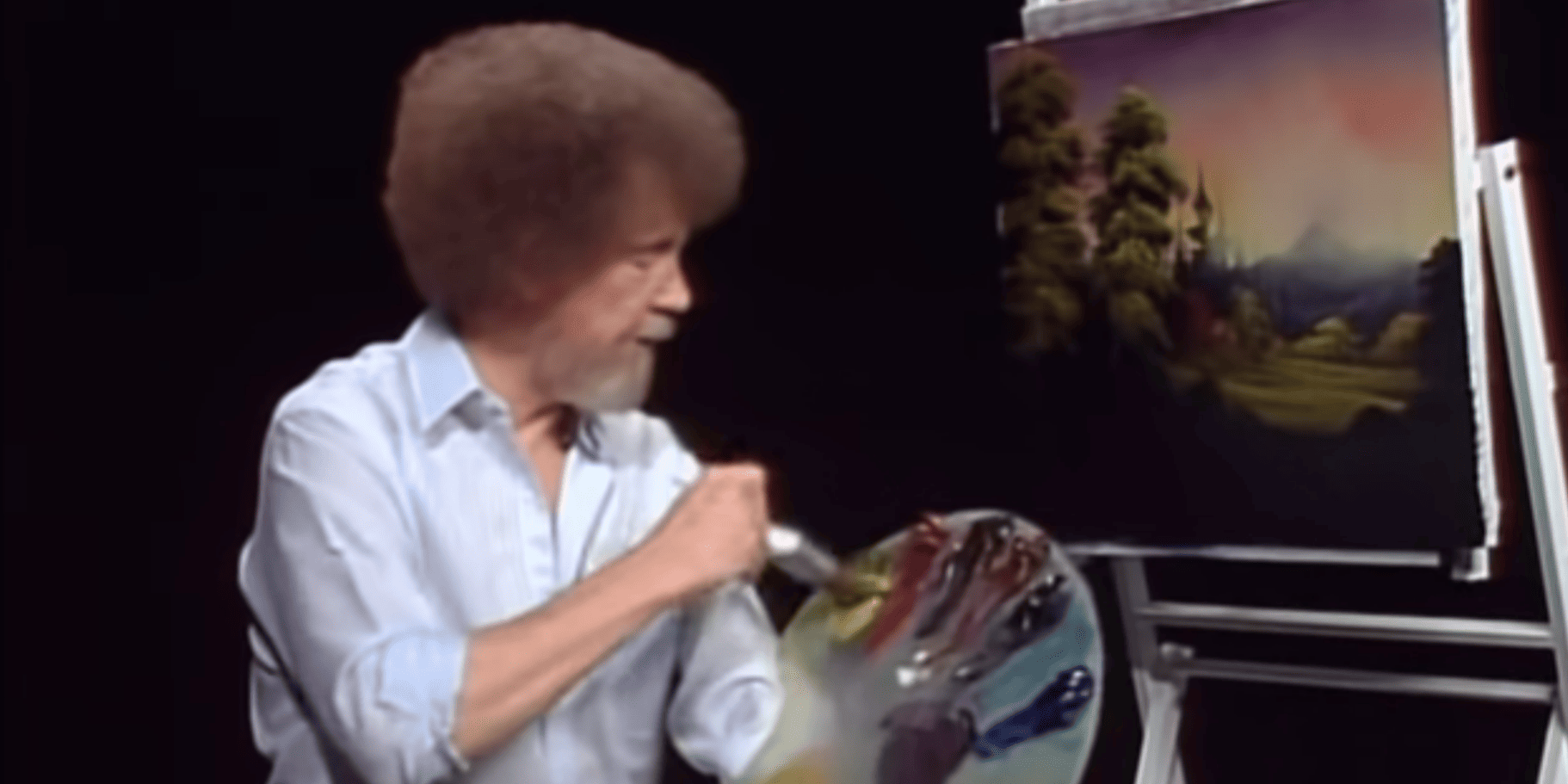
With his soothing baritone voice, iconic permed hair, and gentle philosophy of turning mistakes into “happy accidents,” Bob Ross became an enduring pop culture icon. For more than a decade, his public television series, The Joy of Painting, brought tranquil landscapes and wet-on-wet oil painting techniques into millions of living rooms across the globe. Yet behind the easel stood a complex corporate reality that few viewers ever suspected. When examining Bob Ross’s Financial Enigma: The Truth Behind His Millionaire Status!, fans are often astonished to discover that the world’s most recognizable television artist never made a single dollar directly from his beloved PBS show.

How did a soft-spoken former Air Force drill instructor build a global brand, and did he actually die a wealthy man? Unraveling Ross’s finances requires navigating public broadcasting contracts, lucrative retail merchandising, and a heartbreaking legal war that reshaped his family’s future.
The PBS Myth: Zero Dollars for 403 Episodes
One of the most persistent misconceptions about Bob Ross is that his television contract made him fabulously rich. Between 1983 and 1994, Ross filmed 31 seasons of The Joy of Painting, spanning 403 episodes. For this staggering body of work, public television paid him exactly zero dollars in salary.
Public Broadcasting Service (PBS) stations operate on non-commercial educational models funded by viewer pledges, grants, and government support. Unlike commercial television networks, PBS did not hand out lucrative talent salaries to instructional hosts. Ross was fully aware of this arrangement and embraced it deliberately.
To Ross, television was not an end in itself; it was a 30-minute infomercial. He understood that appearing in living rooms across North America gave him unprecedented cultural visibility. That visibility, in turn, fueled an entirely separate business entity designed to turn his artistic method into a commercial juggernaut.
Building Bob Ross Inc.: Where the Money Actually Came From
If television was not funding his bank account, what was? The answer lies in Bob Ross Inc. (BRI), a company founded in the mid-1980s by four equal partners: Bob Ross, his second wife Jane Ross, and their close business associates Annette and Walt Kowalski.
Annette Kowalski had discovered Ross after taking one of his traveling painting workshops in Florida. Mesmerized by his calm teaching style, she and her husband Walt convinced Ross that they could market his technique nationally. Together, they established a business model based on three highly profitable pillars:
- Branded Art Supplies: Ross designed proprietary brushes, odorless paint thinners, and specially formulated oil paints suited for his rapid wet-on-wet technique. These supplies were manufactured and distributed directly to major craft retailers.
- Instructional Materials: Companion books, instructional VHS tapes, and how-to guides accompanied every season of the television show, generating continuous retail revenue.
- Certified Ross Instructors (CRI): The company created an intensive certification program. Artists paid thousands of dollars to train directly under Ross and Kowalski, earning the right to teach Ross’s method in their own local workshops.
By the early 1990s, Bob Ross Inc. was generating an estimated $15 million annually in gross revenue. Ross’s face appeared on paint tubes, palette knives, and easels found in almost every arts-and-crafts store in North America.
Bob Ross’s Financial Enigma: The Truth Behind His Millionaire Status!
Despite the immense financial footprint of the company bearing his likeness, Bob Ross’s personal balance sheet told a very different story. Ross was technically a millionaire, but he was far from the mega-wealthy celebrity mogul that many assumed him to be.
At the time of his death in 1995, Bob Ross’s personal estate was valued at roughly $1.3 million (the equivalent of around $2.6 million today adjusted for inflation). While certainly comfortable, this sum represented a modest fraction of the tens of millions of dollars generated by Bob Ross Inc. over the course of his career.
Why Wasn’t Bob Ross Wealthier?

The discrepancy between the company’s massive enterprise value and Ross’s personal liquid wealth stems from corporate structure and personal lifestyle:
- Equal Corporate Equity: Ross owned only 25% of Bob Ross Inc. at its inception. He did not possess unilateral corporate control, meaning that three-quarters of the company’s equity and voting power rested in other hands.
- Modest Living: Ross avoided flamboyant displays of luxury. He lived in a modest home in Orlando, Florida, drove sensible vehicles, and devoted substantial time to rehabilitating injured wildlife in his backyard.
- Heavy Reinvestment: Substantial company profits were routinely funneled back into inventory expansion, international distribution, and trademark defense rather than immense cash executive payouts.
The Contractual Tragedy and the Deathbed Battle
The structural cracks in Bob Ross Inc. turned catastrophic when Jane Ross died of cancer in 1992. Under the original terms of the partnership agreement, when one partner passed away, their equity did not automatically flow to their surviving children. Instead, Jane’s 25% share was absorbed equally among the surviving partners.
This legal mechanism instantly shifted the power balance: Walt and Annette Kowalski together held two-thirds (66.6%) of the company, leaving Bob Ross with a minority one-third share. Ross could now be outvoted on every corporate decision involving his own name, likeness, and brand.
In 1994, Ross was diagnosed with late-stage lymphoma. As his health rapidly deteriorated, the Kowalskis repeatedly pressured him to sign over all rights to his commercial likeness, intellectual property, and artistic catalog. Ross refused, fiercely wanting his life’s work to support his son, Steve Ross, who was also an accomplished painter featured on several episodes of The Joy of Painting.
Shortly before his death on July 4, 1995, Ross executed a revised trust. He assigned 51% of his name and likeness rights to his half-brother, Jimmie Cox, and 49% to his son, Steve. However, following Ross’s passing at the age of 52, Bob Ross Inc. launched aggressive legal action, claiming that all aspects of Ross’s artistic identity had been surrendered to the corporation under prior employment agreements.
Financially drained and grieving, Steve Ross lost the initial legal battle in 1997. For decades, the Kowalski family retained near-total commercial control over Bob Ross’s image, merchandising, and brand royalties, while Ross’s biological son received virtually nothing from the commercial empire.
The Fate of the Original Paintings
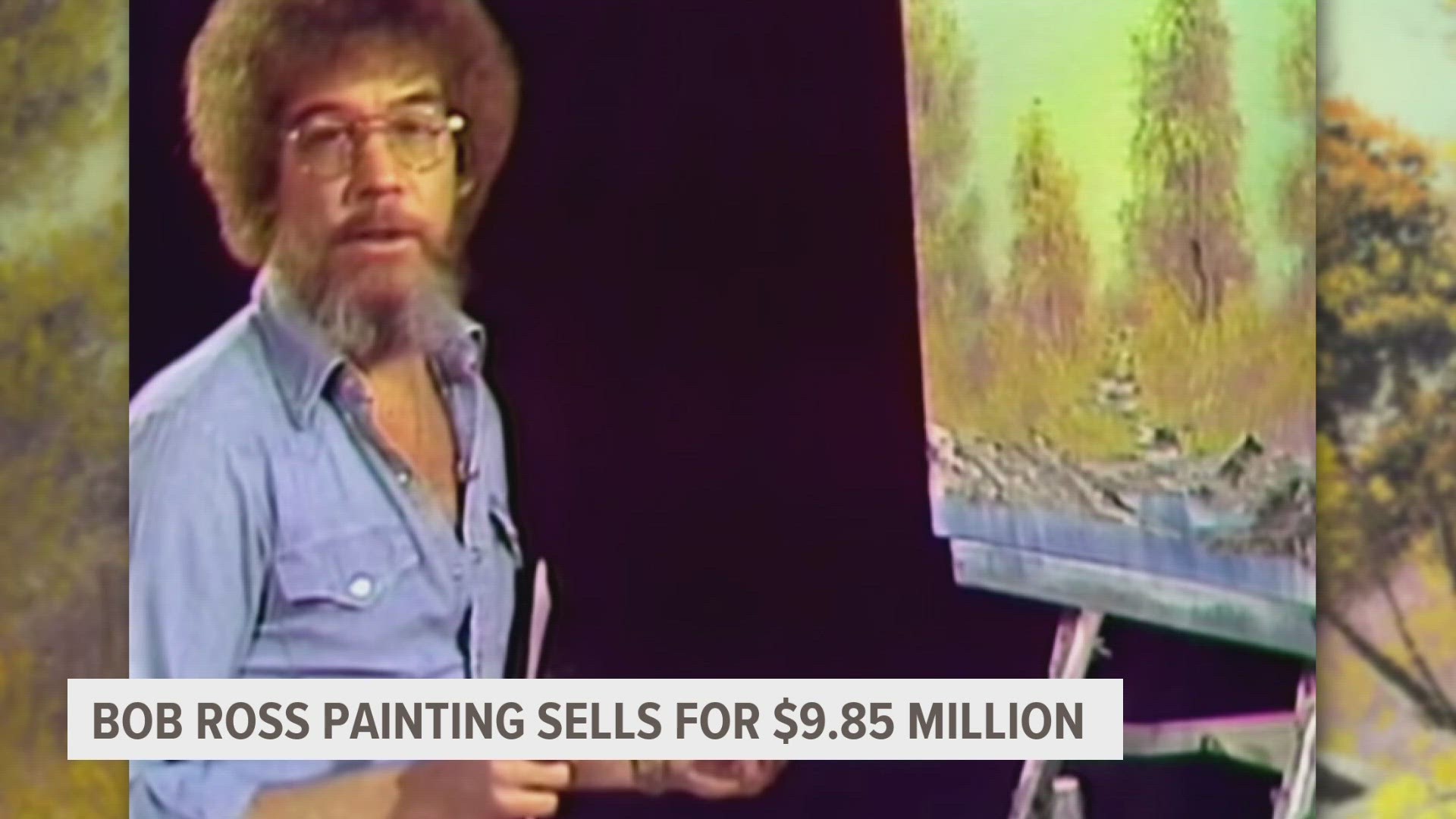
One of the most intriguing elements of Ross’s financial puzzle involves the thousands of original canvases he created. For every television episode, Ross painted three versions: one prior to taping as a reference guide, one during the live 26-minute taping, and a third, more detailed version for companion books.
Over his career, Ross produced well over 1,000 paintings for the show. If sold on the fine art market today, individual original canvases easily command $10,000 to $50,000 each. Yet Ross rarely sold them during his lifetime.
Today, the vast majority of these paintings sit carefully cataloged in cardboard boxes inside the climate-controlled headquarters of Bob Ross Inc. in Herndon, Virginia. Because Ross viewed them as instructional tools rather than fine art commodities, they were never actively liquidated to inflate his personal wealth.
Legacy, Redemption, and Modern Value
In 2021, the release of the documentary Bob Ross: Happy Accidents, Betrayal & Greed brought global attention to the bitter corporate struggle behind the artist’s peaceful image. Public outcry sparked a re-examination of the licensing rights, eventually helping Steve Ross reach a confidential resolution that allowed him to use his father’s name, reclaim his legacy, and resume teaching the wet-on-wet technique publicly.
Bob Ross was indeed a millionaire, but his wealth was dwarfed by the corporate machine built around his talent. He achieved financial independence not through network paychecks or private art auctions, but through tireless instructional marketing. His ultimate legacy remains an inspiring paradox: a man who enriched the lives of millions worldwide while remaining largely detached from the cutthroat wealth his empire generated.