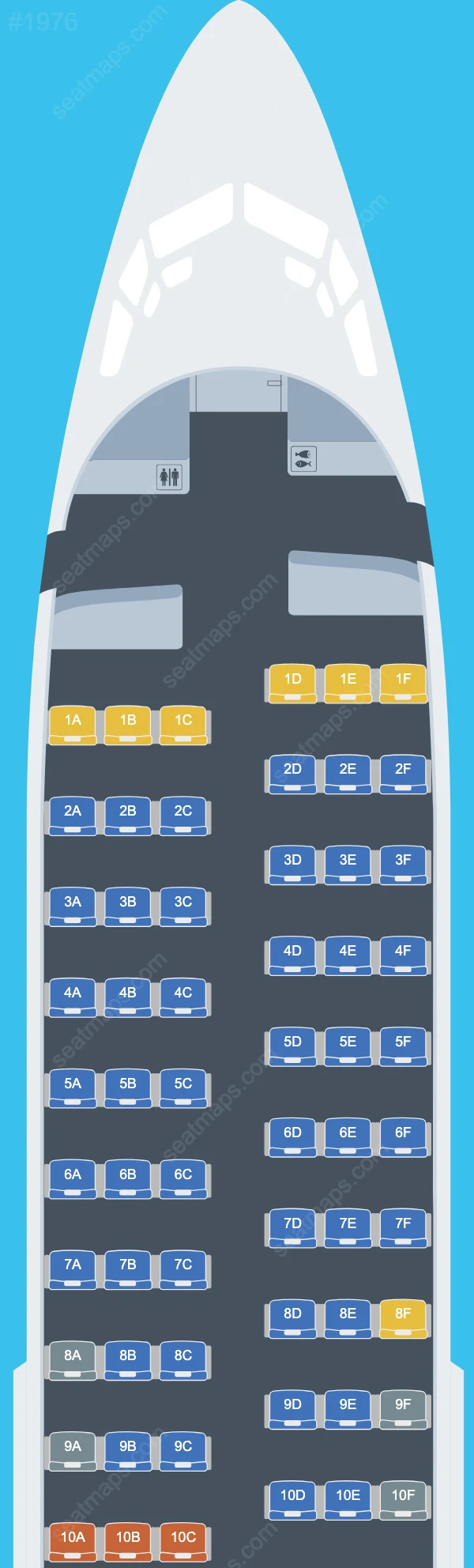
Boeing 737-700 Seat Map: Best Seats & Layout Guide
Planning your next flight and wondering where you will be sitting? Understanding the layout of your aircraft can make the difference between a cramped, exhausting journey and a comfortable flight. When flying on a narrow-body twinjet, reviewing the Boeing 737-700 seat map is one of the best ways to secure a superior spot before check-in opens.

While airlines like Southwest, United, and Alaska configure their Boeing 737-700 cabins differently, the fundamental architecture of the aircraft remains consistent. This guide breaks down the typical cabin configuration, highlights the best rows for legroom, and warns you about seats you might want to avoid.
Boeing 737-700 Cabin Layout Overview
The Boeing 737-700 is a staple of short-to-medium-haul domestic fleets. It typically seats between 120 and 143 passengers, depending on whether the airline operates a single-class or two-class configuration. Most legacy carriers feature a First Class or Economy Plus section up front, followed by standard economy seating.
In the standard economy cabin, the aircraft uses a 3-3 seating configuration. This means three seats on the left side (A, B, C) and three seats on the right side (D, E, F) separated by a single central aisle. Because there are no middle rows, every seat is either by the window, in the middle, or on the aisle.
Best Seats on the Boeing 737-700 Seat Map
Finding the right seat depends entirely on your personal travel priorities. Whether you value a quick exit after landing or maximum leg stretching room, certain rows stand out.
Exit Row Seats for Extra Legroom
If legroom is your top priority, look for the exit rows on the Boeing 737-700 seat map. Depending on the specific airline layout, Rows 10 and 11 often serve as the over-wing emergency exit rows.
- Pros: These rows typically offer significantly more pitch (legroom) than standard economy seats, allowing taller passengers to ride in comfort.
- Cons: Passengers seated in exit rows must meet FAA safety requirements, meaning you must be willing and able to assist in an emergency. Additionally, tray tables are often built into the armrests, making the seat slightly narrower, and personal items cannot be stored under the seat in front of you during takeoff and landing.
Bulkhead Seats
Video: Boeing 737 seating chart

Bulkhead seats are located immediately behind the galley, lavatories, or partition walls, usually starting at Row 1 or the front of the economy cabin.
- Pros: No one will recline into your personal space, and you will be among the first passengers to disembark upon arrival.
- Cons: These rows often lack under-seat storage for takeoff and landing. Furthermore, bulkhead rows near the front galley or lavatories can experience higher foot traffic and ambient noise.
Seats to Avoid
Not all seats on the Boeing 737-700 are created equal. Depending on your sensitivity to noise and motion, you may want to steer clear of specific areas.
The Last Row
The final row of the aircraft is almost universally considered the least desirable spot on the plane.
- Limited Recline: The seatbacks in the last row often have restricted recline because they back directly up against the rear galley or bulkhead wall.
- Proximity to Lavatories: Constant foot traffic, door slamming, and waiting passengers lingering in the aisle can disrupt your peace.
- Engine and Galley Noise: Being at the very back exposes you to the sounds of flight attendants preparing service and the hum of the aircraft systems.
Mismatched Window Seats
Aircraft manufacturers design windows to align with seat rows, but cabin retrofits and high-density layouts mean some window seats miss out on the view entirely. On the Boeing 737-700 seat map, certain rows—often near the middle of the cabin or over the wings—may feature a blank wall or only a partial window view. If looking outside is important to you, check review sites like SeatGuru before locking in your seat.
Tips for Selecting Your Seat
Securing the ideal spot on a Boeing 737-700 requires a bit of strategy:
- Check Your Airline App: Carrier layouts vary. Always view the specific seating chart provided by your airline during booking or check-in.
- Monitor for Changes: Equipment swaps happen. Keep an eye on your reservation in case the airline changes the aircraft type.
- Pay for Status or Priority: If you desire extra legroom, paying a small upgrade fee for economy plus or priority boarding is often well worth the investment on a full flight.
By reviewing the Boeing 737-700 seat map ahead of time, you can bypass the middle-seat blues and tailor your flight experience to your exact preferences.