Boost Social Work Skills With This Practical Theory Guide
Every day, social workers face complex crises, heavy caseloads, and emotionally draining environments. When you are in the thick of a crisis, trying to remember dusty textbook frameworks from graduate school can feel impossible. However, anchoring your practice in solid conceptual models is the best way to maintain professional boundaries, make ethical decisions, and truly help your clients.

If you want to improve your social work skills instantly with this theory guide, you are in the right place. We are cutting through the academic jargon to bring you actionable, real-world applications of the most powerful frameworks used in the field today.
Understanding the Power of Applied Social Work Theory
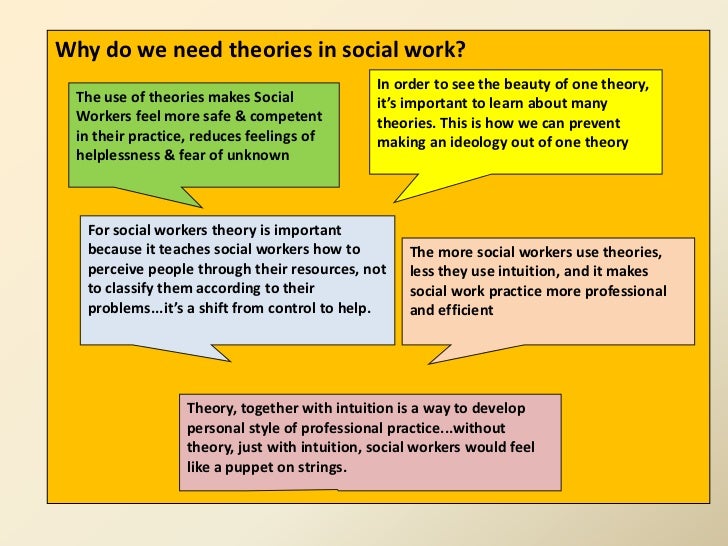
Theory is often dismissed as academic busywork, but in reality, it is a practical roadmap. Without theory, social work becomes mere guesswork. Theories give us a lens to understand human behavior, environmental stressors, and systemic barriers.
When you actively integrate frameworks into your sessions, you benefit in several ways:
- Faster Assessment: Quickly identify the root causes of client distress rather than just treating surface-level symptoms.
- Objective Decision-Making: Rely on proven models to justify your interventions to supervisors, courts, and multidisciplinary teams.
- Client Empowerment: Shift the focus from fixing the client to helping the client mobilize their own internal and external resources.
Core Theories and How to Use Them Today
You do not need to memorize a 500-page textbook to use theory effectively. Here are three major social work frameworks and how you can apply them to your caseload right now.
1. Systems Theory: Looking Beyond the Individual
Created initially by Ludwig von Bertalanffy and heavily adopted by social workers like Gordon Hartley, Systems Theory posits that human behavior cannot be understood in isolation. Individuals are part of larger interconnected systems—families, workplaces, schools, and communities.
How to apply it instantly: The next time a client presents a behavioral issue or emotional outburst, resist the urge to focus solely on their internal psychology. Instead, draw an informal eco-map during your session. Ask yourself:
- What systems are currently stressing this client?
- Where is there a breakdown in communication between the client and their environment (e.g., school, employer, family)?
- Which system can we leverage to provide immediate support?
By shifting the lens from "What is wrong with *you*?" to "What is happening in your *system*?", you instantly reduce client shame and open up new avenues for intervention.
2. Strengths Perspective: Focusing on Assets, Not Deficits
Developed by Dennis Saleebey, the Strengths Perspective turns traditional pathology-based models on their head. Instead of asking what is broken, this framework asks what is working. Every client possesses skills, resilience, and survival mechanisms, no matter how chaotic their current life appears.

How to apply it instantly: Revamp your intake assessments and progress notes by incorporating these two questions into every client interaction:
- "Given everything you have been through, how have you managed to survive up to this point?"
- "What is one thing that went well for you this week, even if it was tiny?"
When you highlight a client’s past resilience, you instantly boost their self-efficacy. This makes them much more likely to engage actively in treatment plans rather than passively receiving services.
3. Cognitive Behavioral Theory (CBT): Connecting Thoughts and Actions
While often used by therapists, micro-social workers can easily utilize foundational CBT principles. The core premise is simple: our thoughts influence our feelings, which in turn drive our behaviors.
How to apply it instantly: When a client is overwhelmed by anxiety or anger, use the "Thought-Feeling-Behavior" triangle to guide a quick de-escalation:
- Identify the specific situation that triggered the client.
- Ask: "What exact thought ran through your head when that happened?"
- Help the client examine whether that thought is an objective fact or an unhelpful cognitive distortion (such as catastrophic thinking or black-and-white thinking).
- Brainstorm a more balanced alternative thought.
This quick cognitive shift can prevent impulsive behaviors, outbursts, or compliance failures in community settings.
Overcoming Common Implementation Challenges
Even with a great guide, translating abstract concepts into bustling daily routines can be tough. Social workers often report two main barriers: lack of time and client resistance.
To overcome time constraints, stop viewing theory application as an extra step. Think of it as a shortcut. Using a structured framework actually saves time because it keeps sessions focused and prevents conversational rabbit holes. If a client starts veering off-topic, use your chosen framework to gently steer them back.
When facing client resistance, remember that theoretical models like the Transtheoretical Model (Stages of Change) remind us to meet clients where they are. If a client is in the pre-contemplation stage regarding their substance use or housing plan, trying to force a cognitive-behavioral intervention will fail. Instead, validate their ambivalence and focus on building rapport.
Conclusion: Your Next Steps in Professional Growth
Mastering social work is a journey of continuous learning. By intentionally integrating frameworks like Systems Theory, the Strengths Perspective, and basic CBT into your daily casework, you elevate your practice from routine administration to transformational intervention. Pick just one of these theories to focus on this week, notice how it shifts your client dynamics, and watch your professional confidence grow.