Breaking Down IRS Schedule D Tax Rates
When you sell stocks, real estate, or other capital assets for a profit, the IRS wants its share. Reporting these transactions requires Form 8949 and Schedule D of Form 1040. Understanding how these forms work together begins with Breaking Down IRS Schedule D Tax Rates, which dictate how much of your investment profit you actually get to keep.
Navigating capital gains can feel overwhelming, especially with different tax brackets and special asset categories. This guide simplifies the process, explaining how holding periods, income levels, and specific asset types determine your final tax liability.
What is IRS Schedule D?
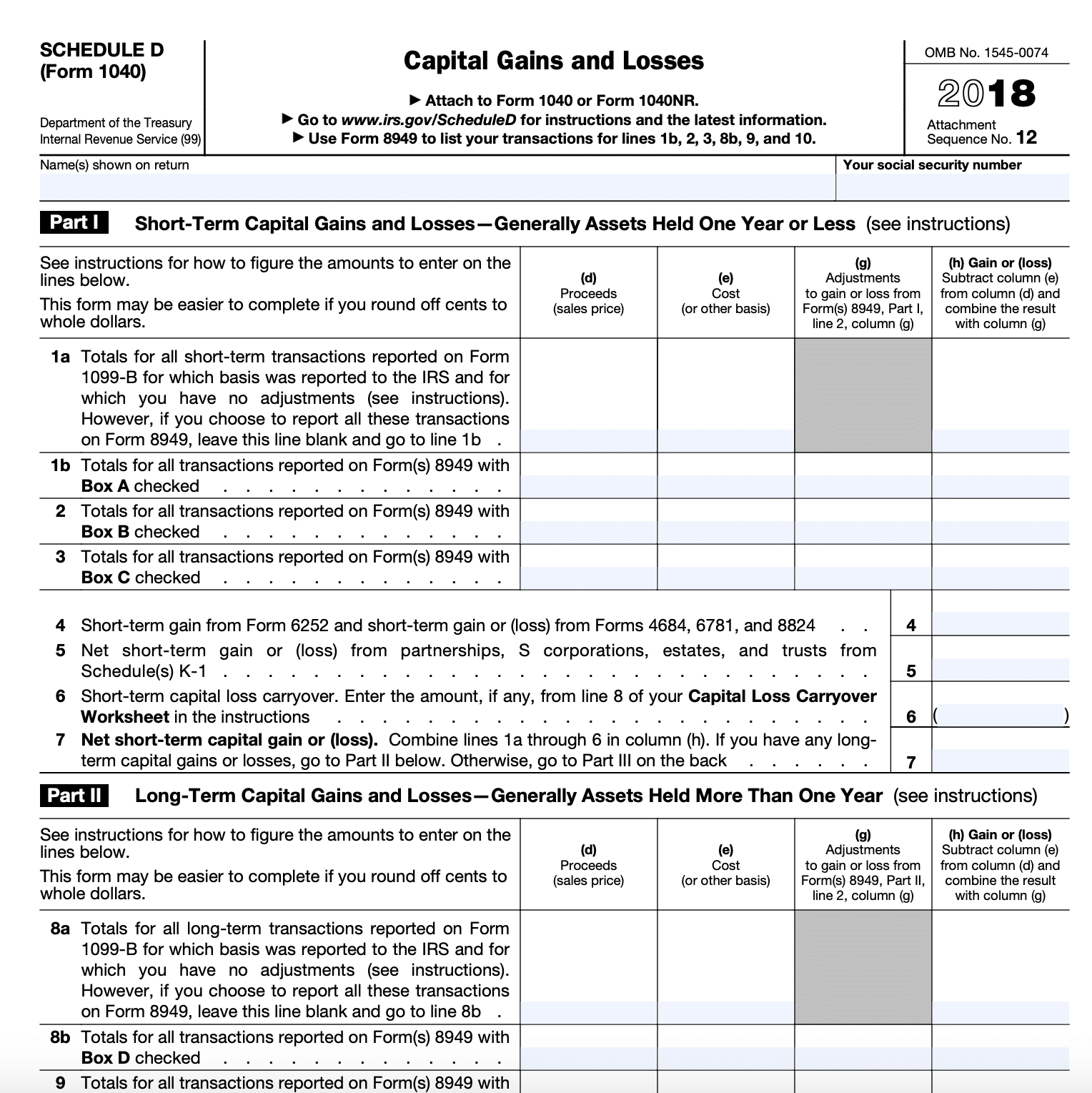
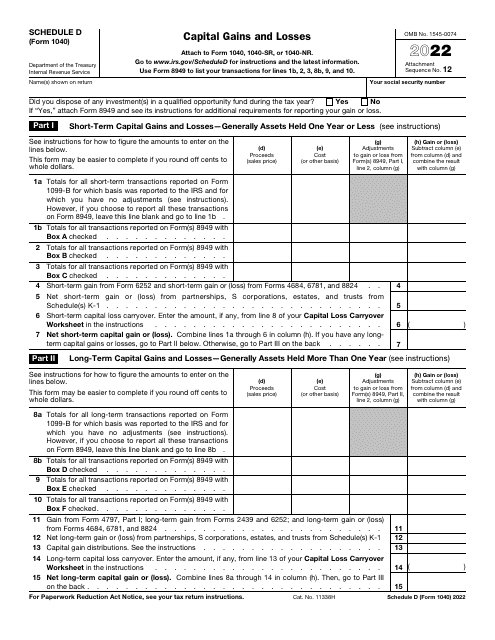
Schedule D is titled "Capital Gains and Losses." It serves as the summary sheet where you compile all the capital transactions you reported on Form 8949. Whether you made money or suffered a loss, Schedule D consolidates your investment activity to determine your net capital gain or deductible capital loss for the tax year.
The form is split into two primary sections: Part I for short-term capital transactions and Part II for long-term capital transactions. At the end of the form, you net these figures together to see your overall investment performance for tax purposes.
Short-Term vs. Long-Term Capital Gains
Before looking at specific percentages, you must understand the distinction between short-term and long-term gains. The tax rate applied to your profits depends heavily on how long you held the asset before selling it.
Short-Term Capital Gains
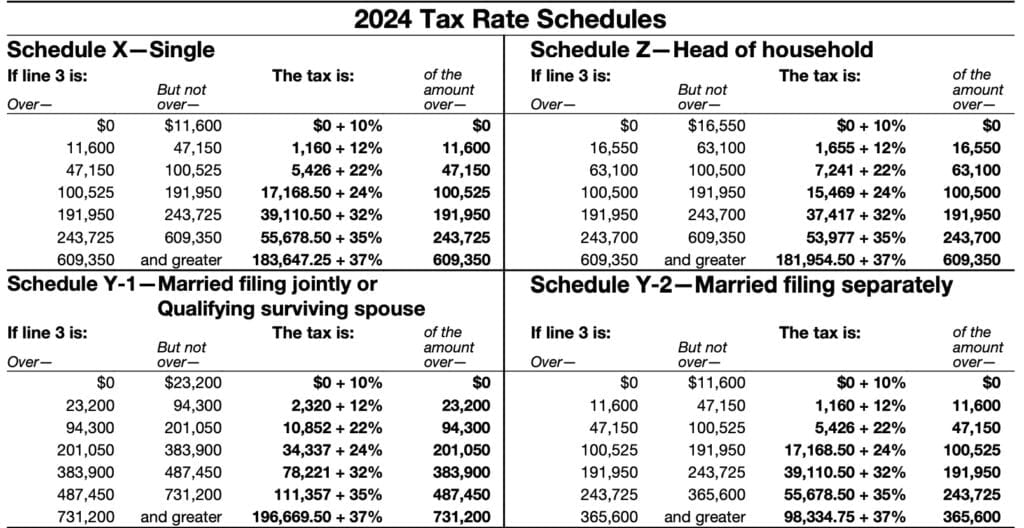
An asset held for one year or less before being sold generates a short-term capital gain (or loss). The IRS taxes short-term gains at your ordinary income tax rate. Depending on your total taxable income, these rates can range from 10% all the way up to 37%. Because they are taxed at ordinary income rates, short-term gains are generally much less tax-efficient than long-term investments.
Long-Term Capital Gains
If you hold an asset for more than one year before selling it, any profit qualifies as a long-term capital gain. The federal government incentivizes long-term investing by taxing these profits at much lower preferential rates: 0%, 15%, or 20%, depending on your filing status and taxable income.
Breaking Down IRS Schedule D Tax Rates by Bracket
The exact tax rate you pay on long-term capital gains depends on where your total taxable income falls within specific thresholds. These thresholds are adjusted annually for inflation. For the 2023 and 2024 tax years, the long-term capital gains brackets break down as follows:
- 0% Rate: Applies to individuals with taxable income up to $44,625 (single) or $89,250 (married filing jointly) in 2023. For 2024, these thresholds rise to $47,025 for single filers and $94,050 for joint filers.
- 15% Rate: Applies to individuals with taxable income between the 0% threshold and $492,300 (single) or $553,850 (married filing jointly) in 2023. For 2024, the range extends up to $518,900 for single filers and $583,750 for joint filers.
- 20% Rate: Applies to any taxable income exceeding the 15% threshold limits listed above.
Keep in mind that your capital gains are stacked on top of your ordinary income. This means your ordinary income fills up the lower tax brackets first, and your capital gains sit on top, potentially pushing a portion of your gains into a higher bracket.

Special Tax Rates on Schedule D
Not all long-term capital gains qualify for the standard 0%, 15%, or 20% rates. Certain asset classes carry unique tax rules that are calculated directly on Schedule D.
Unrecaptured Section 1250 Gain
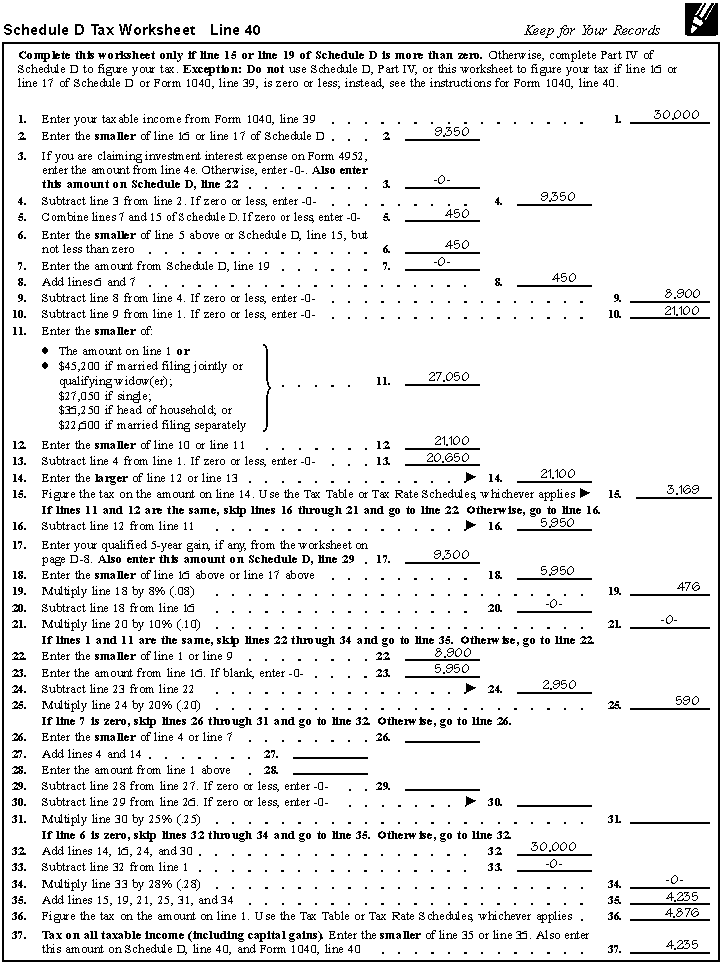
If you sell depreciable real estate (like rental property), the portion of the gain attributable to depreciation you previously claimed does not qualify for standard capital gains rates. Instead, this "unrecaptured Section 1250 gain" is taxed at a maximum rate of 25%.
Collectibles Tax Rate
Profits from selling collectibles—such as art, antiques, gold, silver, stamps, and rare coins—are subject to a maximum long-term capital gains rate of 28%. Even if your normal tax bracket would put you in the 15% or 20% tier, collectibles are capped at this higher 28% rate.
Net Investment Income Tax (NIIT)
High-income earners must also account for the Net Investment Income Tax when reporting gains on Schedule D. The NIIT adds a 3.8% surtax on investment income (including capital gains, dividends, and interest) for individuals with a modified adjusted gross income (MAGI) above certain thresholds:
- Married Filing Jointly: $250,000
- Single or Head of Household: $200,000
- Married Filing Separately: $125,000
How to Handle Capital Losses
Investment losses reported on Schedule D are just as important as gains. You can use capital losses to offset your capital gains dollar-for-dollar. If your losses exceed your gains, you can use up to $3,000 of those losses ($1,500 if married filing separately) to offset your ordinary income.
If your net losses exceed the $3,000 limit, the remaining balance carries forward to the next tax year, where you can apply it indefinitely until the loss is fully exhausted.
Conclusion
Filing Schedule D correctly ensures you do not overpay on your investment earnings. By paying close attention to holding periods, asset types, and income thresholds, you can accurately calculate your tax liability and take advantage of preferential long-term capital gains rates. When in doubt, consult a qualified certified public accountant (CPA) or use reputable tax software to ensure your Schedule D calculations align with current IRS guidelines.