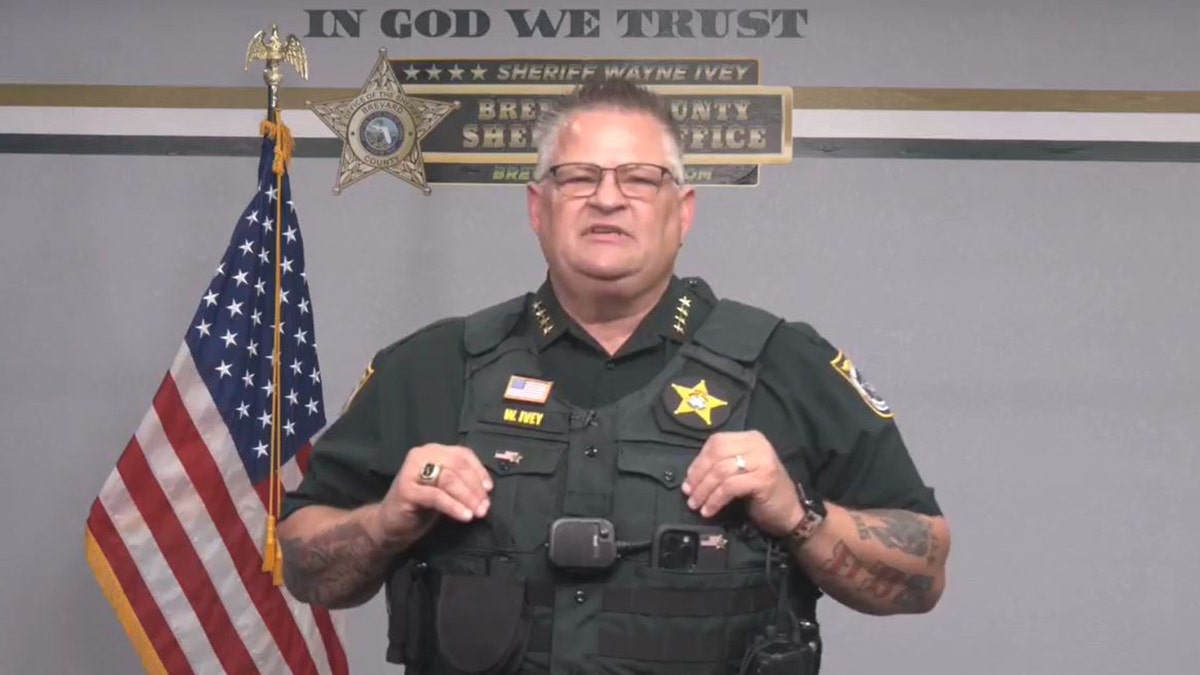
Brevard Sheriff Florida Scandal: Did He Just Cross the Line?
Few local law enforcement officials command national attention quite like Brevard County Sheriff Wayne Ivey. Known across Florida for his aggressive rhetoric, theatrical social media productions, and unapologetic hardline stance on crime, Ivey has built a devoted political following. Yet for critics, legal scholars, and civil liberties advocates, his tenure has represented a continuous test of institutional boundaries. When evaluating the latest Brevard Sheriff Florida scandal: did he just cross the line? To answer that question, one must look closely at the controversies defining his office, the legal challenges they invite, and the deepening divide across the Space Coast.

The Making of Florida’s Most Outspoken Sheriff
Elected in 2012, Wayne Ivey quickly transitioned the Brevard County Sheriff’s Office (BCSO) from a standard regional department into a viral public relations machine. Through regular video broadcasts, direct-to-camera monologues, and distinct public campaigns, Ivey embraced an explicitly provocative style of community policing.
His supporters see him as an indispensable shield against crime—a leader willing to say what other public figures avoid. His detractors, however, view his communications as political theater designed to inflame tensions, bypass traditional accountability mechanisms, and intimidate those who challenge his authority. Over the years, this blend of politics and law enforcement has repeatedly pushed Brevard County into the headlines.
Flashpoints in the Brevard Sheriff Florida Scandal
Controversy is not new to the BCSO, but several key incidents have escalated scrutiny from local residents and national civil rights organizations alike.
1. The 'Wheel of Fugitive' and Legal Fallout
Perhaps Ivey’s most widely recognized creation was the "Wheel of Fugitive," a weekly social media broadcast modeled after a television game show where the sheriff spun a wheel displaying the faces of local suspects. While the program generated millions of views and enthusiastic engagement from loyal followers, it drew harsh condemnation from legal defense attorneys.
The controversy culminated in formal legal challenges when the broadcast featured individuals who were not actually fugitives, including citizens who had already resolved their warrants or were merely on standard probation. Lawsuits filed against the department argued that turning criminal justice proceedings into viral entertainment violated due process, subjected individuals to public humiliation, and cost innocent residents their employment.
2. The In-Custody Death of Gregory Edwards
Few events have sparked as much sustained outrage in Brevard County as the 2018 death of Gregory Edwards, a combat veteran suffering from post-traumatic stress disorder. Following an arrest outside a local store, Edwards became combative during booking at the Brevard County Jail and was subjected to physical restraint, pepper spray, and a stun gun. He ultimately lost consciousness and died.
For months, Ivey adamantly refused to release the internal jail surveillance footage, citing security exemptions under Florida public records law. The refusal triggered demonstrations, lawsuits from media outlets, and accusations of an institutional cover-up. When the video was finally released following intense public pressure, it intensified demands for external oversight of the sheriff's correctional facilities.
3. School Discipline and Juvenile Crackdowns

In late 2022 and 2023, Ivey inserted his office directly into the public school system, publicly criticizing the local school board’s disciplinary practices. In a widely shared press conference held outside a juvenile facility, he warned disorderly students that deputies would use every available tool to punish them, famously promising that disruptive students would experience harsher environments.
While many frustrated parents welcomed his intervention, educators and child advocacy groups warned that criminalizing routine school behavior fosters the school-to-prison pipeline and infringes upon established educational policies.
Did Wayne Ivey Cross Legal and Ethical Lines?
Determining whether a sheriff has crossed the line requires examining both statutory legality and ethical governance standards. In Florida, county sheriffs possess vast constitutional authority. They manage massive budgets, supervise county detention facilities, and exercise broad discretion in patrolling their jurisdictions.
- First Amendment Concerns: Critics point to social media moderation policies employed by the agency, alleging that dissenting comments on official BCSO channels have been deleted, raising potential First Amendment violations under established public-forum case law.
- Qualified Immunity and Liability: Repeated lawsuits stemming from public misidentifications and jail conditions test the legal protections typically granted to municipal officers, potentially exposing local taxpayers to costly settlements.
- Electoral Discretion: Ivey has frequently engaged in political endorsements and conservative advocacy while in uniform. Although state ethics rules establish limits on the use of official resources for partisan campaigning, enforcement mechanisms are often slow and open to interpretation.
Legal analysts note that while Ivey often pushes boundaries to their constitutional edge, his maneuvers are frequently crafted to exploit ambiguities in Florida law, making direct legal sanctions difficult to secure.
A Divided Space Coast Community
Public reaction to Wayne Ivey’s leadership remains polarized along political and cultural lines throughout Brevard County.
To his base—which includes business owners, conservative community organizers, and residents frustrated by rising national crime reports—Ivey represents an uncompromising defender of public order. For these citizens, his theatrical tactics are viewed as practical deterrents that keep neighborhoods secure.
Conversely, civil rights leaders, defense attorneys, and families affected by jail conditions argue that his tenure has created an environment of fear and diminished transparency. They emphasize that effective policing depends on mutual trust across the entire community, not merely among ideological allies.
The Road Ahead: Scrutiny and Accountability
As Brevard County continues to grow, so does the demand for oversight. Community coalitions and civil rights groups are organizing more aggressively, demanding independent audits of jail operations, clearer rules for social media public relations, and increased accountability for public statements.
Whether Wayne Ivey has permanently crossed the line depends on who you ask: to his supporters, he is a model lawman; to his critics, he exemplifies unchecked executive authority. What remains undeniable is that the controversies surrounding the Brevard County Sheriff’s Office continue to influence the broader debate on the true role, limits, and responsibilities of modern American sheriffs.