Brookhaven Recycling Made Easy: A Beginner's Guide
Living in the Town of Brookhaven comes with scenic South Shore waterways, quiet North Shore hamlets, and an extensive municipal waste system designed to manage the refuse of nearly half a million residents. However, navigating local waste guidelines can feel daunting for new homeowners or renters. That is why we created Brookhaven Recycling Made Easy: A Beginner's Guide—to demystify the town's alternating collection schedule, explain local sorting policies, and keep contamination out of Long Island landfills.

Unlike municipalities that rely on single-stream recycling (where everything gets tossed into one bin), Brookhaven uses a dual-stream system. Understanding how this system works is the single most important step toward smooth, rejection-free waste disposal.
Brookhaven Recycling Made Easy: A Beginner's Guide to the Alternating Schedule
In Brookhaven, residential recycling is picked up curbside on Wednesdays across almost all town collection routes. However, you do not put out every type of recyclable each week. The town operates on an alternating dual-stream calendar, alternating every other Wednesday between two distinct categories:
- Paper & Cardboard Week: Clean paper products, flattened cardboard, and mixed paper.
- Commingled (Plastics & Metal) Week: Rigid plastics numbered 1 and 2, along with clean metal cans and foils.
Placing commingled containers at the curb during paper week—or vice versa—will result in an orange or yellow rejection tag on your can, leaving your materials on the curb. You can consult the Town of Brookhaven Waste Management Department calendar online or print a refrigerator copy at the start of each year to track the alternating cycle.
What Goes in the Bin on Commingled Week?
During commingled collection weeks, you can place acceptable plastics and metals into your town-issued blue recycling can or any standard container marked with a town recycling sticker.
Acceptable Plastics: Numbers 1 and 2 Only
Not all plastic items displaying a chasing-arrows symbol can be recycled curbside in Brookhaven. The town accepts only plastics stamped with resin codes #1 (PETE) and #2 (HDPE) that have a bottle-neck or screw-top profile:
- Water, soda, and sports drink bottles
- Milk jugs and juice bottles
- Laundry detergent and fabric softener containers
- Shampoo and conditioner bottles
Make sure to rinse bottles clean. You can screw the plastic caps back on tightly, but pump dispensers containing metal springs should be discarded in regular household trash.
Acceptable Metals
- Aluminum cans (soda, seltzer, beer)
- Tin and steel food cans (soup, tuna, canned vegetables)
- Clean aluminum baking tins and pie plates
- Clean aluminum foil (balled up to roughly the size of a tennis ball)
What to Keep OUT of Commingled Bins
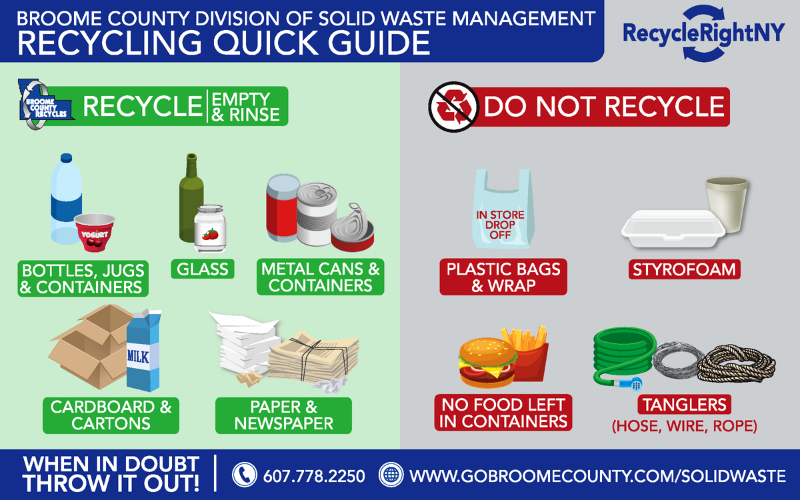
Putting non-recyclables into the blue bin leads to "wish-cycling," which can damage machinery at sorting facilities. Never include:
- Plastics #3 through #7: Yogurt tubs, margarine tubs, clamshell takeout boxes, and disposable cups must go into your regular trash.
- Plastic bags and film: Plastic grocery bags wrap around facility gears and shut down operations. Bring these back to local grocery store drop-off bins.
- Styrofoam: Regardless of markings, expanded polystyrene belongs in the household garbage.
- Garden hoses, wire hangers, and cords: These items jam sorting equipment.
Mastering Paper and Cardboard Week
Cardboard and fiber items represent a massive portion of the residential waste stream. During paper weeks, Brookhaven makes it easy to divert clean fiber from local incinerators and landfills.
Acceptable Paper Items

- Corrugated cardboard (shipping boxes, appliance boxes)
- Paperboard boxes (cereal, snack, and tissue boxes with plastic liners removed)
- Newspapers, magazines, and glossy mail flyers
- Office paper, school paper, and non-metallic greeting cards
- Paper bags
How to Prepare Your Paper and Cardboard
Cardboard must be broken down flat. Large shipping boxes should be cut down to approximately 2 feet by 2 feet and bundled securely with twine, or neatly nested inside another unflattened box or your blue bin. Never leave cardboard out in soaking rain uncovered if possible, as wet, pulp-degraded paper fibers cannot be recycled by paper mills.
Avoid the pizza box mistake: Any cardboard heavily saturated with cooking grease, cheese, or food debris cannot be recycled. Tear off the clean top lid for the recycling bin and toss the greasy bottom section into the standard trash.
The Glass Exception: Why Glass is Not Curbside
One of the biggest surprises for newcomers to Brookhaven is that glass is strictly prohibited from curbside recycling bins.
When glass breaks inside collection trucks or mixing drums, microscopic shards embed themselves into cardboard and plastic bales, downgrading the value of those materials and creating safety hazards for collection crews. If you place glass bottles or jars in your curbside bin, your collection will likely be skipped.
Where Does Glass Go in Brookhaven?
Brookhaven maintains an independent drop-off glass recycling network. You can take clean bottles and jars to designated drop-off bins located across the town, including:
- The Brookhaven Town Hall parking complex (Farmingville)
- Town of Brookhaven Landfill and Recycling Facility (Yaphank)
- Holtsville Ecology Site
- Designated town parks and community centers featuring marked green glass bins
The glass collected at these drop-off points is crushed and used locally for municipal civil engineering projects, road sub-bases, and aggregate fill, creating a closed-loop system.
Hazardous Materials and Electronics: The S.T.O.P. Program
Paints, automotive fluids, batteries, and electronic scrap do not belong in your curbside cans or regular trash. Brookhaven manages these hazardous substances through its S.T.O.P. (Stop Throwing Out Pollutants) collection events.
Throughout the spring, summer, and fall, the town hosts free Saturday S.T.O.P. events across various municipal facilities. You can safely drop off:
- Oil-based paints, thinners, and varnishes
- Pesticides, weed killers, and chemical fertilizers
- Pool chemicals and household cleaners
- Lithium, button-cell, and lead-acid car batteries (standard alkaline batteries can go in household trash)
- E-waste: computers, monitors, printers, and televisions
Electronics can also be brought year-round to the Town Landfill facility in Yaphank or the Holtsville Ecology Center during normal business hours.
5 Quick Rules for Flawless Brookhaven Recycling
- Never bag your recyclables: Place all materials loose directly inside your recycling can. Recyclables contained inside plastic trash bags are automatically discarded by waste processors.
- Follow the neck rule: If a plastic item is not marked #1 or #2, or does not have a narrower neck than its base, put it in the regular household trash.
- Rinse before binning: A quick rinse removes food residue and prevents insects or rodents from invading your outdoor bins during hot Long Island summers.
- Keep glass separate: Store your glass jars and beer bottles in a designated crate inside your garage or pantry and drop them off at a town site once a month.
- When in doubt, throw it out: Contamination threatens the economic viability of municipal recycling programs. If you are unsure whether an item is accepted, placing it in the trash is safer for the municipal stream than guessing.
By learning the Wednesday rhythm and honoring the basic rules of dual-stream sorting, you play a direct part in protecting the natural environment of Long Island while keeping Brookhaven's municipal services running efficiently.