CA Form 3853 Instructions: Filing Guide
California law requires state residents and their dependents to maintain qualifying healthcare coverage throughout the entire year. If you or someone in your tax household lacked qualifying coverage for even a single month, understanding the ca form 3853 instructions is essential to properly report your status to the Franchise Tax Board (FTB) and avoid or minimize financial penalties.
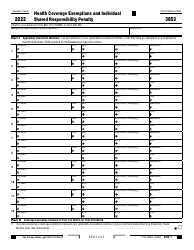
Form 3853 (Health Coverage Exemptions and Individual Shared Responsibility Penalty) serves two primary purposes: claiming valid exemptions from the state's coverage requirement and calculating the Individual Shared Responsibility Penalty if no exemption applies.
Who Must File California Form 3853?
Not every California taxpayer needs to submit this form. You are generally required to complete and attach Form 3853 to your California resident return (Form 540) or non-resident/part-year resident return (Form 540NR) if:
- You, your spouse/RDP (if filing jointly), or any dependents did not maintain Minimum Essential Coverage (MEC) for every month of the tax year.
- You or an eligible household member qualifies for a healthcare coverage exemption.
- You owe an Individual Shared Responsibility Penalty for uncovered months.
If you and everyone in your tax household had full-year qualifying coverage documented on Form 1095-A, 1095-B, 1095-C, or FTB Form 3895, you simply check the "Full-Year Health Care Coverage" box on your main California return (Form 540 line 88 or Form 540NR line 98) and skip Form 3853 entirely.
Step-by-Step CA Form 3853 Instructions
Form 3853 is split into three main sections. Follow these instructions row by row to ensure your return processes smoothly.
Part I: Marketplace-Granted Coverage Exemptions
Part I is designated for individuals who applied for and received an exemption directly from Covered California (the state health exchange) prior to filing taxes.
- Line 1: Enter the legal name, Social Security Number (SSN) or Individual Taxpayer Identification Number (ITIN), and the unique Exemption Certificate Number (ECN) issued by Covered California.
- Ensure the 16-character ECN is entered accurately. If Covered California has not finalized your application before the filing deadline, you can claim a pending exemption or report the months in Part II instead.
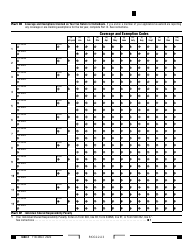
Part II: Coverage Exemptions Claimed on Return
Most taxpayers claim exemptions directly on their tax return through Part II without needing prior approval from Covered California. This section uses specific exemption reason codes.
- Line 2: Enter the name and SSN/ITIN of each individual in your tax household claiming an exemption.
- Exemption Code: In column (c), write the corresponding single-letter exemption code (e.g., Code A for lack of affordable coverage).
- Months Eligible: Check the box in column (d) for "Full Year" if the exemption applied for all 12 months, or check the individual month boxes (columns e through p) for partial-year gaps.
Part III: Individual Shared Responsibility Penalty
If you or your dependents spent one or more months without qualifying health coverage and without an approved exemption, you must calculate your penalty here.
Video: "Notice of Tax Return Change" for California Tax Filing 2024 | Form 3853 | International students
The penalty is calculated using one of two methods, and you pay whichever amount is higher:
- Flat Dollar Amount: A set baseline fee per uninsured adult (and half that amount per child under age 18), subject to an overall family cap.
- Percentage of Income: Approximately 2.5% of your California gross household income above the state filing threshold.
The total penalty is capped at the average annual cost of a Covered California Bronze plan for the applicable household size. Once computed on the Form 3853 worksheet, transfer the final penalty amount to Form 540, line 91 (or Form 540NR, line 101).
Common Health Coverage Exemption Codes
Familiarizing yourself with common Part II exemption codes can save you hundreds of dollars in penalties:
- Code A (Unaffordable Coverage): The lowest-cost bronze plan through Covered California (or employer coverage) would have cost more than 8.09% to 8.2% of your household income (indexed annually).
- Code B (Short Coverage Gap): You went without coverage for less than three consecutive months. (Under California rules, a gap of one or two months is exempt. Once a gap hits three full months, the entire gap becomes taxable unless another exemption applies).
- Code C (Citizens Living Abroad / Certain Noncitizens): You were a nonresident alien, not lawfully present, or living outside the United States.
- Code D (Health Care Sharing Ministry): You were a verified member of a recognized health sharing ministry.
- Code F (Incarcerated): The individual was detained in a jail, prison, or juvenile facility for the months claimed.
- Code G (General Hardship): You faced extraordinary circumstances—such as homelessness, eviction, bankruptcy, domestic violence, or a natural disaster—that prevented you from buying coverage.
Key Rules to Keep in Mind
The "Full-Month" Rule
In California, health insurance rules operate on an all-or-nothing basis per calendar month. If you held coverage for even one day during a specific month, you are treated as having coverage for that entire month. You do not need to claim an exemption or calculate a penalty for that month.
Dependents and Split Returns
If you claim a child or relative as a dependent on your tax return, you are legally responsible for their healthcare coverage status. Even if the dependent is an adult child who files their own return, if you claim them as a dependent on your return, you must report their coverage or pay the penalty on your Form 3853.
Records Retention
You do not need to attach proof (such as eviction notices, insurance payment receipts, or Form 1095) to your Form 3853 when filing. However, the FTB routinely audits exemption claims. Keep all supporting records, insurance forms, and hardship documentation with your tax files for at least four years.
Summary
Filing California Form 3853 requires careful attention to your household's insurance timeline. By identifying months without minimum coverage early and evaluating whether you qualify for affordability or short-gap exemptions, you can avoid unnecessary assessments and remain fully compliant with California's individual health insurance mandate.