Can I Take Mucinex and Antibiotics Together?
When you are sick with a severe respiratory infection, dealing with thick mucus and coughing can make a miserable week feel even longer. Often, a doctor will prescribe an antibiotic to fight off a bacterial infection, while you might reach over-the-counter for a chest congestion reliever like Mucinex. This frequently leads people to ask: can I take Mucinex and antibiotics together?
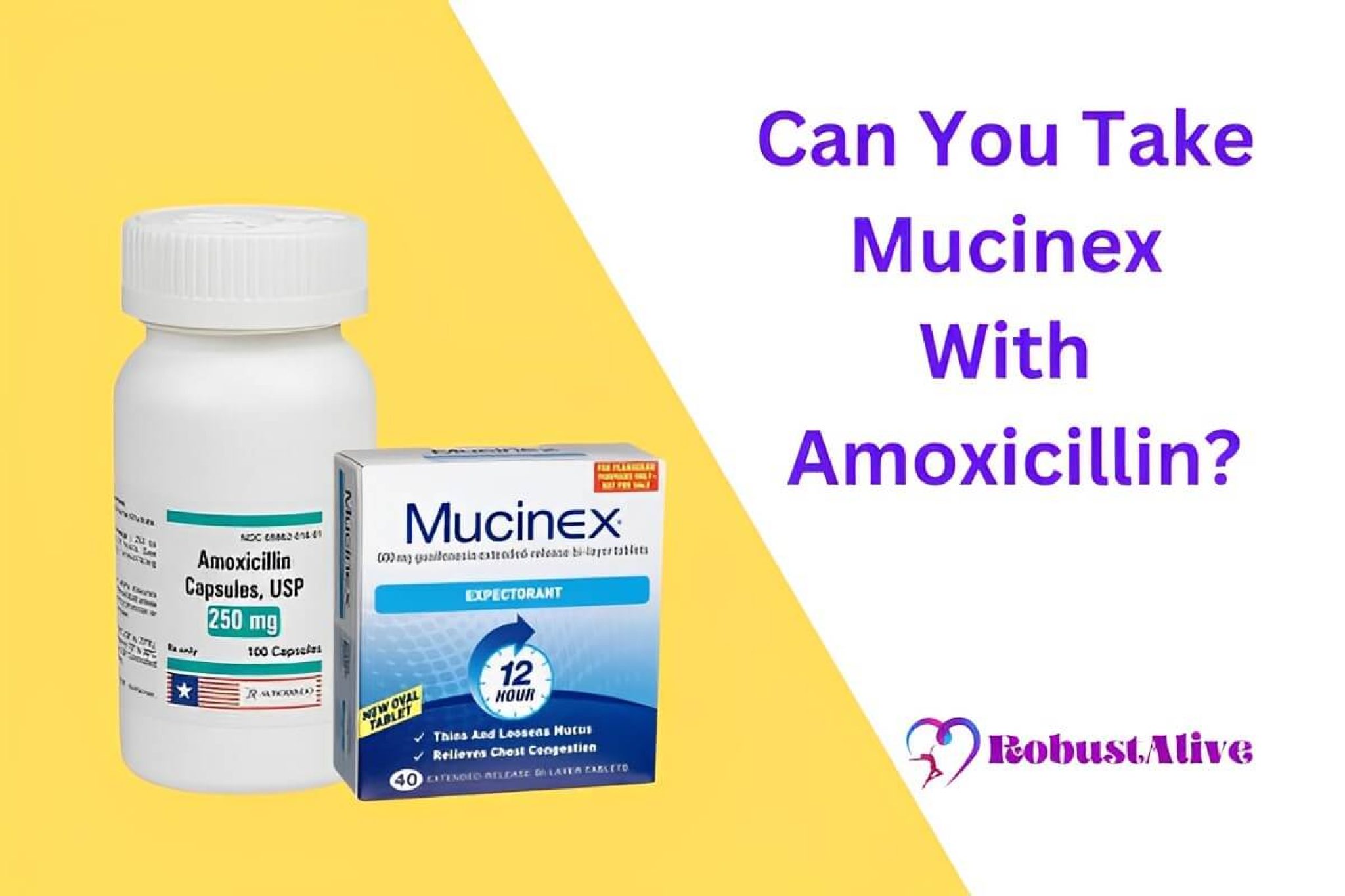
The short answer for most people is yes. However, safety depends heavily on the specific active ingredients in the medications you are taking. Here is a comprehensive guide to understanding how these drugs interact, what to watch out for, and how to use them safely to find relief.
Understanding Mucinex and Antibiotics
Before combining any medications, it helps to understand what each one does in your body. They treat completely different aspects of an illness.
What is Mucinex?
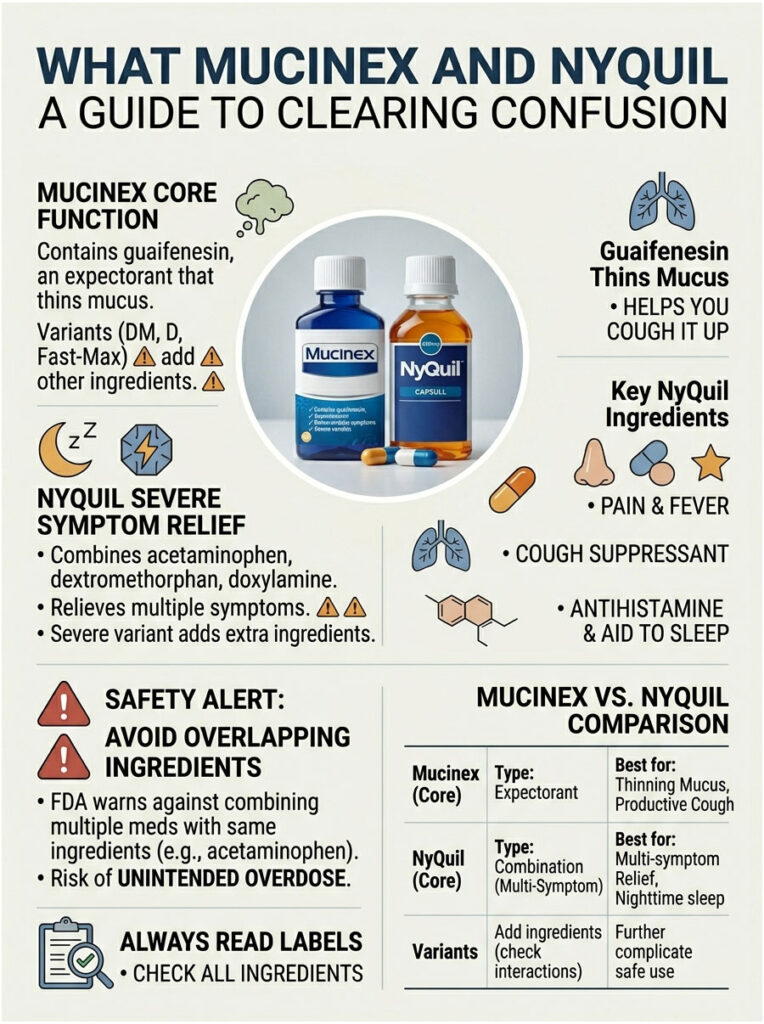
The active ingredient in standard Mucinex is guaifenesin. Guaifenesin is an expectorant. It works by thinning and loosening mucus in your airways, making it easier to cough up and clear out of your chest. Standard Mucinex does not treat the underlying cause of an infection—it simply manages the symptom of thick mucus.
What are Antibiotics?
Antibiotics are prescription medications designed exclusively to kill or stop the reproduction of bacteria. They treat bacterial infections such as strep throat, certain sinus infections, and bacterial pneumonia. Antibiotics do not work against viral infections like the common cold or flu, and they do not directly thin mucus.
Can I Take Mucinex and Antibiotics Together Safely?
In general, guaifenesin does not negatively interact with common prescription antibiotics like amoxicillin, azithromycin, doxycycline, or ciprofloxacin. Because Mucinex targets the mucus and antibiotics target the bacteria, they typically complement each other when you are fighting a chest cold or a secondary bacterial sinus infection.
However, safety is not just about the plain guaifenesin formula. The biggest risk comes from combination cold and flu products.
Watch Out for Multi-Symptom Formulations
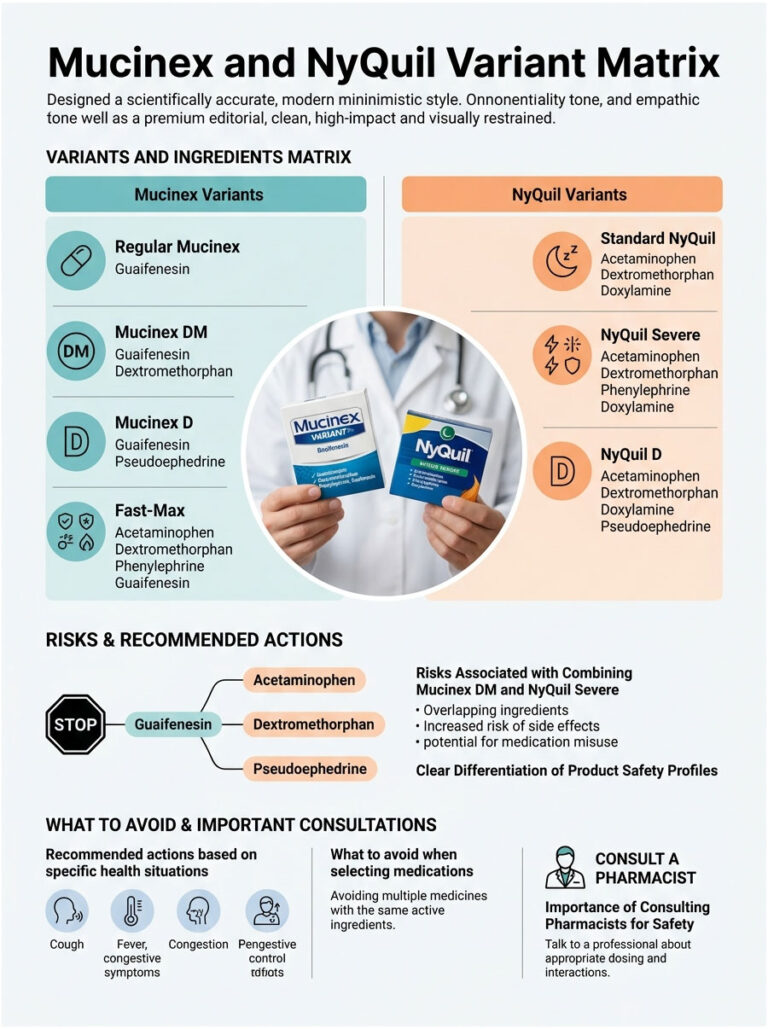
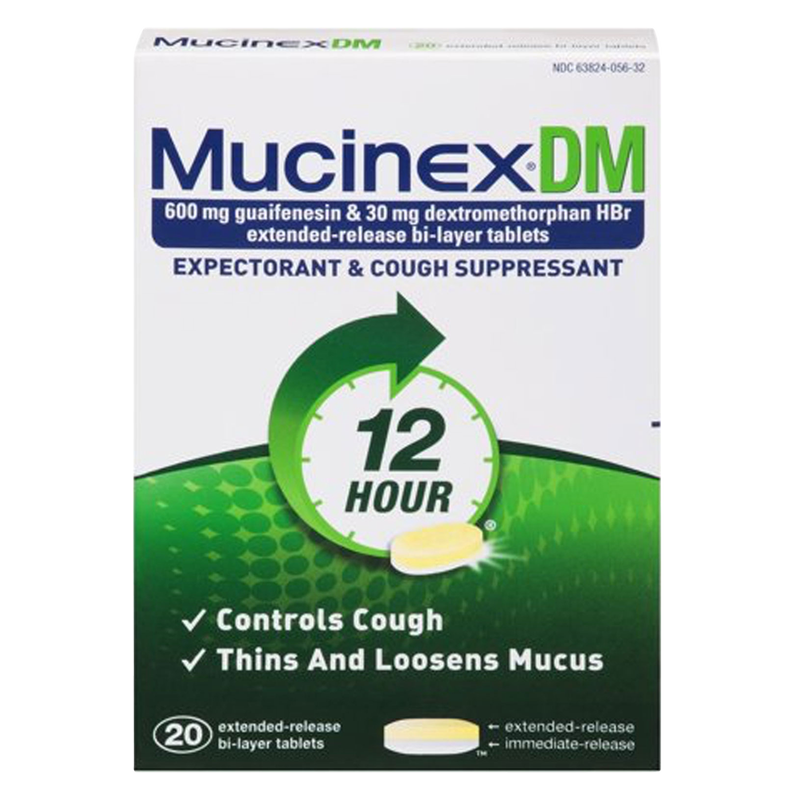
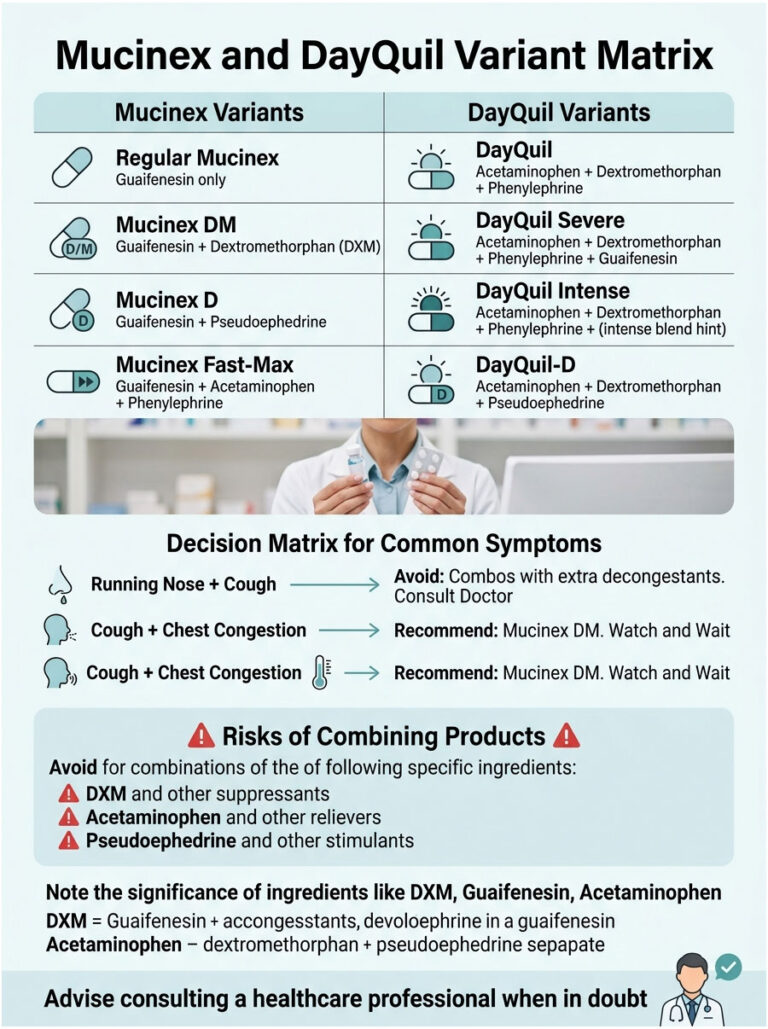
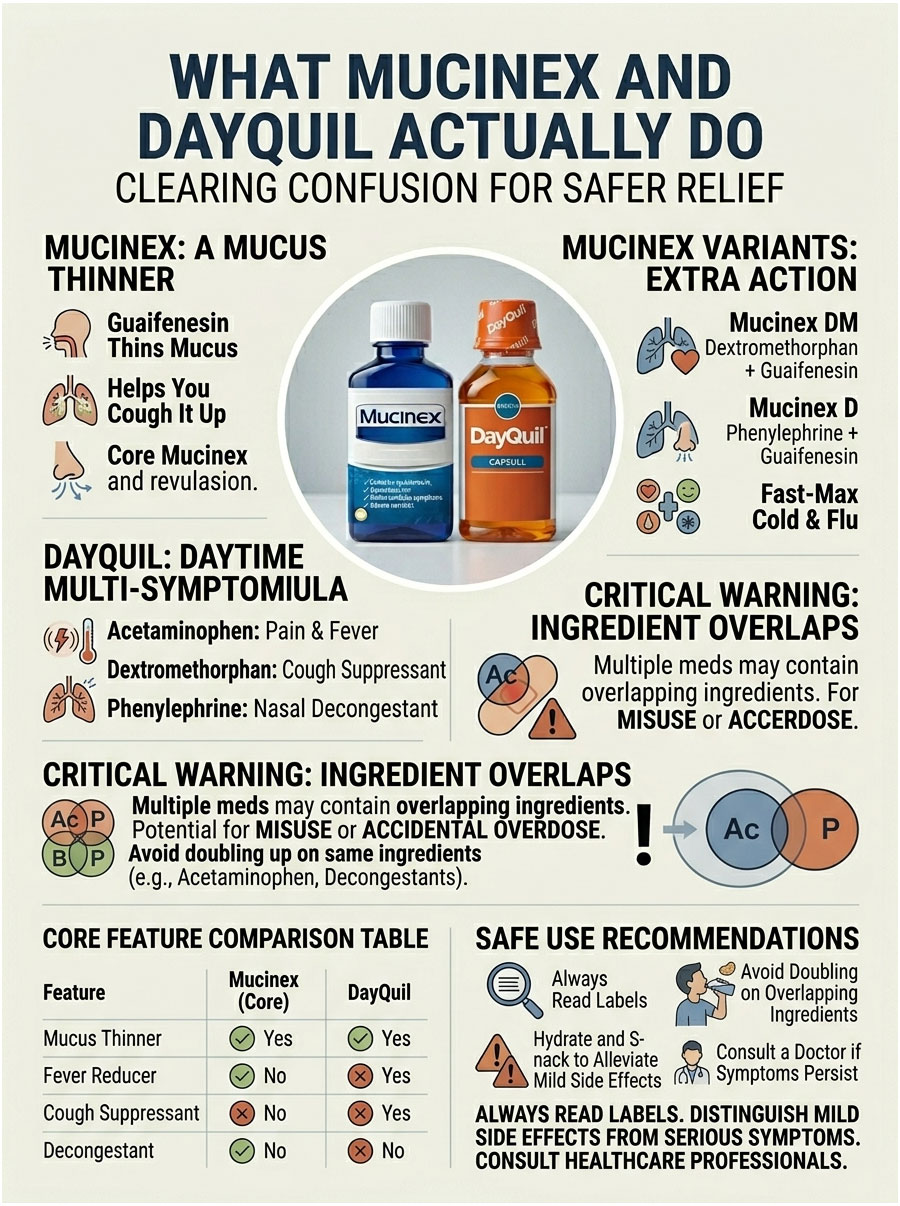
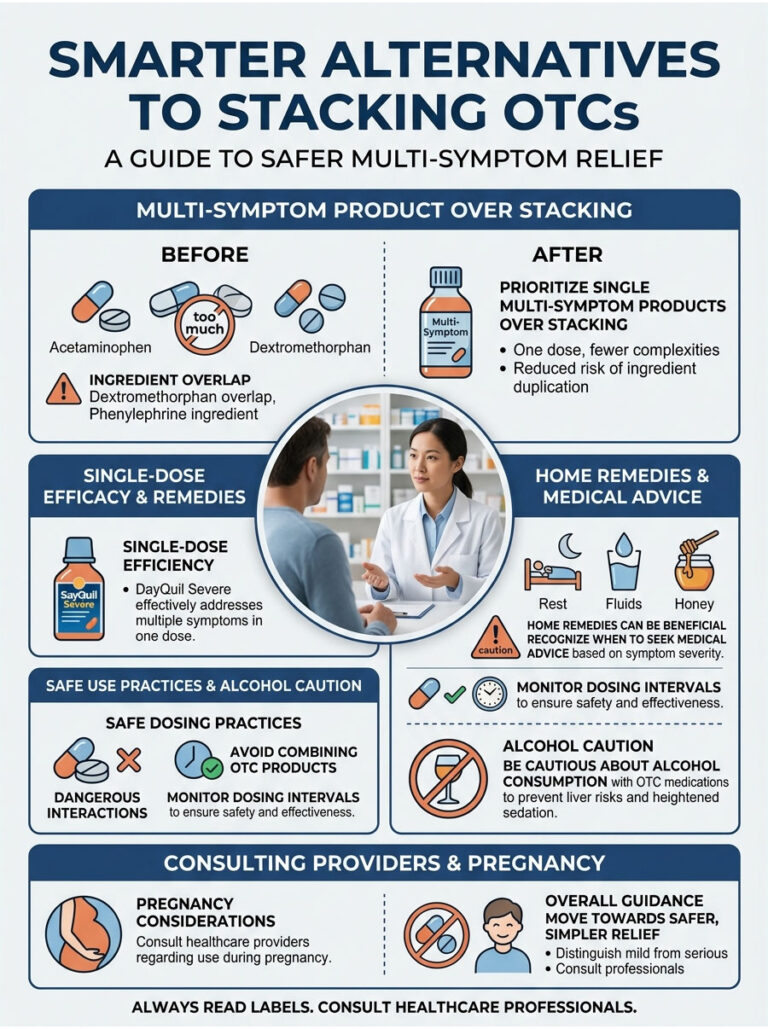
While plain Mucinex (guaifenesin only) is generally safe with antibiotics, many products on pharmacy shelves carry the "Mucinex" brand name while containing multiple active ingredients. These can include:
- Dextromethorphan (DM): A cough suppressant.
- Pseudoephedrine or Phenylephrine: Decongestants that can raise blood pressure or heart rate.
- Acetaminophen or Ibuprofen: Pain relievers and fever reducers.
Some of these extra ingredients may interact poorly with specific health conditions or other medications you might be taking alongside your antibiotic. Always read the Drug Facts label carefully to check every active ingredient.
Potential Side Effects to Monitor
Even though guaifenesin and antibiotics are generally safe to use concurrently, both types of medications can cause side effects on their own. When combined, you may experience overlapping gastrointestinal discomfort.
- Nausea and Upset Stomach: Many antibiotics require you to eat food to prevent nausea. Guaifenesin can also occasionally cause mild stomach upset in sensitive individuals.
- Dizziness or Drowsiness: If your antibiotic causes fatigue or if you are taking a multi-symptom Mucinex product containing antihistamines, you may feel unusually tired.
- Hydration Levels: Guaifenesin requires plenty of water to work effectively. If you are dehydrated from a fever or illness, both the illness and the medications can make you feel worse.
Best Practices for Taking Them Together
If your doctor has given you the green light to use an expectorant while on a round of antibiotics, follow these best practices to maximize effectiveness and minimize side effects:
- Read the Label: Ensure your Mucinex is plain guaifenesin unless your doctor specifically recommended a multi-symptom formula.
- Drink Plenty of Water: Guaifenesin thins mucus by drawing water into the respiratory tract. Drinking 8 to 10 glasses of water a day is essential for the medication to work.
- Take Antibiotics Exactly as Prescribed: Finish the entire course of antibiotics, even if your mucus clears up and you start feeling better within a few days. Stopping early can cause the infection to return stronger.
- Check with a Pharmacist: When in doubt, bring your antibiotic prescription bottle and the Mucinex box to your local pharmacist. They can instantly check for drug-drug interactions based on your complete medication history.
When to Contact Your Doctor
While over-the-counter cough and congestion remedies can make you more comfortable, they are not a cure. You should contact your healthcare provider immediately if you experience any of the following:
- Your symptoms do not improve after 5 to 7 days of starting antibiotics.
- Your cough produces bloody or rust-colored mucus.
- You develop a high, persistent fever that does not respond to fever reducers.
- You experience severe shortness of breath or chest pain.
The Bottom Line
So, can you take Mucinex and antibiotics together? Yes, plain Mucinex (guaifenesin) is generally considered safe to use alongside standard bacterial antibiotics. It helps clear the chest congestion while the antibiotic fights the infection. Just make sure to double-check the ingredient labels on combination cold medications, stay well-hydrated, and always consult your doctor or pharmacist if you have underlying health conditions.