Can the Intersection of Three Planes Be a Ray?
When studying three-dimensional geometry and linear algebra, students often analyze how planes interact in space. Usually, three planes intersect at a single point, form a line, or share no common points at all. However, a fascinating geometric edge case occurs when the intersection of three planes can be a ray. Understanding this unique phenomenon bridges the gap between algebraic equations and physical spatial intuition.
Understanding Plane Intersections in 3D Space
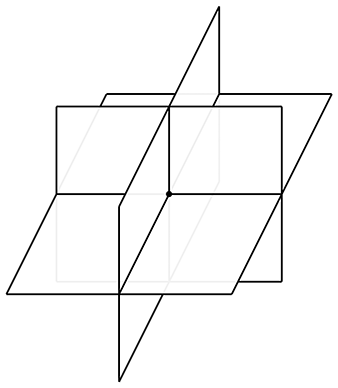
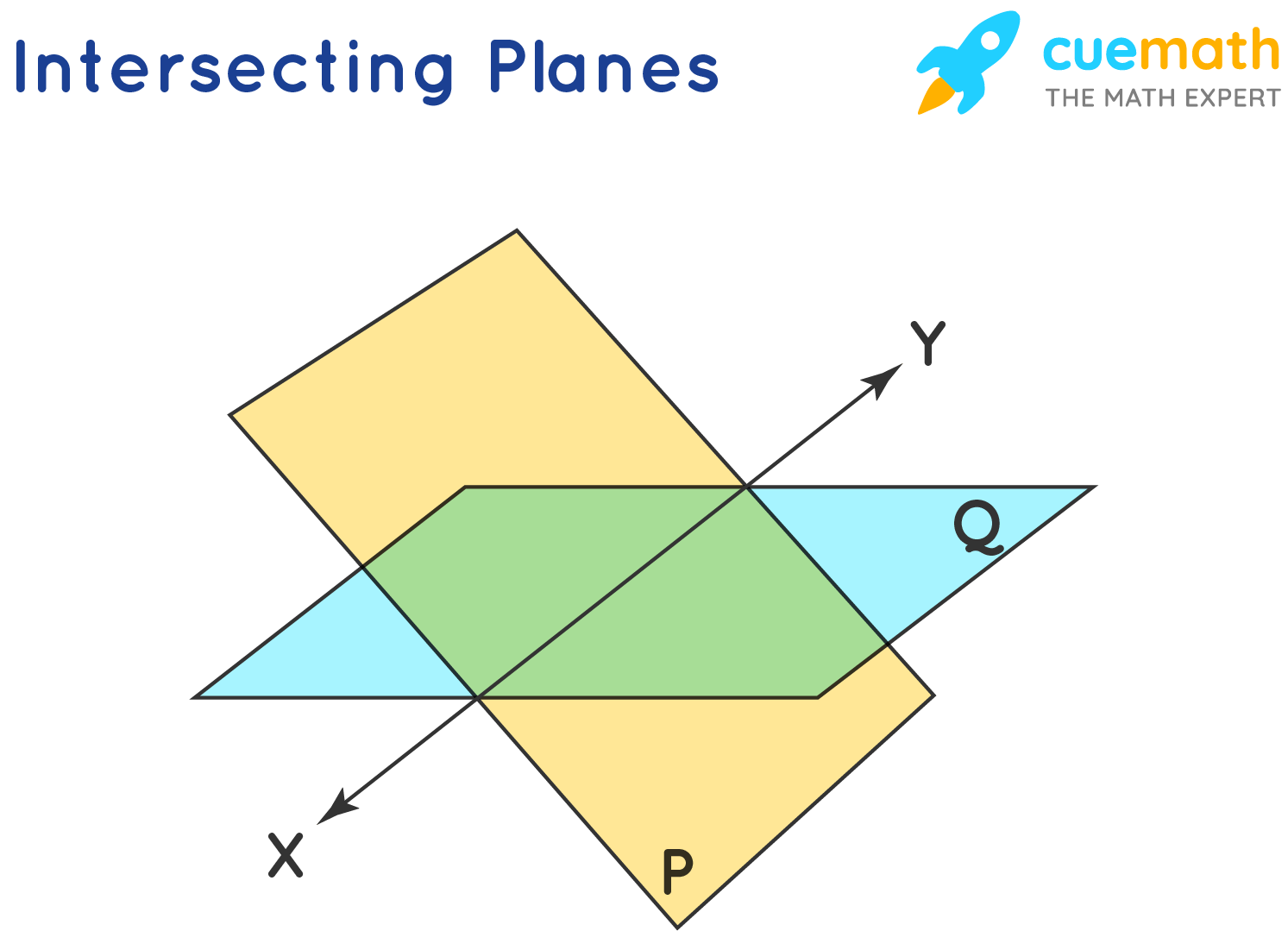
To visualize how planes interact, imagine the walls and floor of a room. Two non-parallel walls intersect to form a straight line (the corner of the room). If you introduce a third surface—such as the ceiling—it typically intersects the other two walls at a single specific corner point.
In analytical geometry, each plane is represented by a linear equation in three variables ($Ax + By + Cz = D$). A system of three such equations corresponds to three planes. Solving this system algebraically reveals the geometric relationship between the planes:
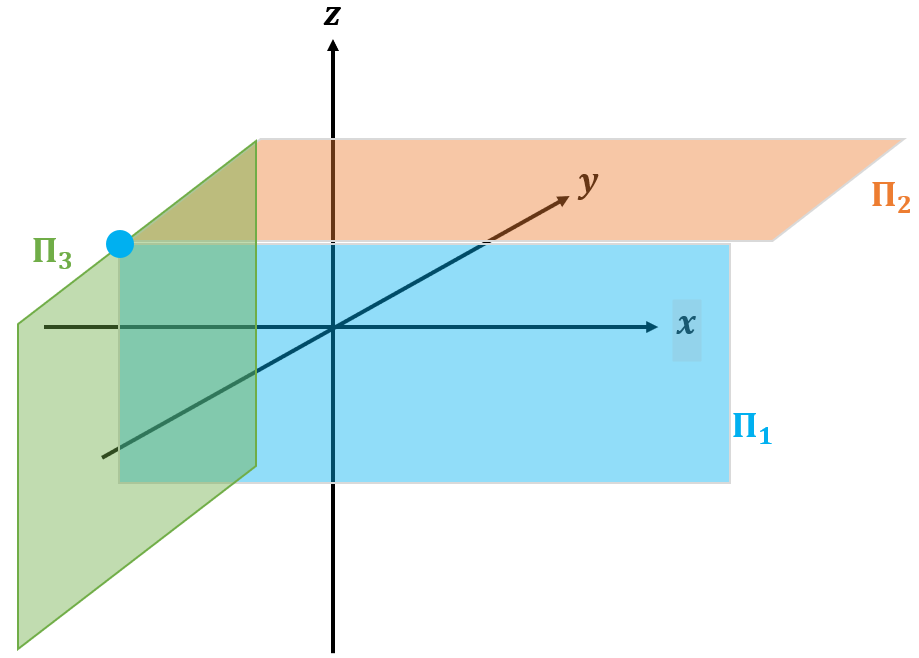
- A unique point: The system has one exact solution $(x, y, z)$.
- A line: The system has infinitely many solutions forming a 1D line.
- No solution: The planes are parallel or form a triangular prism with no common intersection.
- A ray or half-line: A specialized constrained case involving inequalities or specific domain restrictions.
When the Intersection of Three Planes Can Be a Ray
Strictly speaking, in standard linear algebra using infinite flat planes, the intersection of three planes is either the empty set, a single point, a line, or an entire plane. Infinite planes do not naturally terminate. Therefore, an infinite plane cannot produce a bounded endpoint unless we introduce boundaries, inequalities, or specific geometric definitions.
However, the statement "the intersection of three planes can be a ray" becomes true in specific contexts:
- Half-Spaces and Inequalities: If we transition from planes to half-spaces (defined by linear inequalities like $Ax + By + Cz \le D$), bounding surfaces can limit the intersection.
- Finite Planes or Polygonal Sheets: In computer graphics and computational geometry, planes are often modeled as finite polygons or bounded sheets. Three finite planes can intersect in a way that forms a half-line or ray.
- Degenerate Linear Systems with Constraints: When solving optimization problems like Linear Programming, feasible regions are bounded by constraint planes, frequently creating vertices, edges, and rays (extreme directions).
Algebraic Perspective
Consider a standard system of three linear equations. If the rank of the coefficient matrix is 2, and the augmented matrix also has a rank of 2, the intersection of the first two planes is a full infinite line. When the third plane contains that exact same line, all three planes intersect along that line.
To turn that line into a ray algebraically, we must apply a non-negative constraint to one of the variables or introduce a bounding inequality. For instance, if the intersection yields the line parameter $t$, adding the condition $t \ge 0$ truncates the line into a ray with a clear endpoint.

Geometric Visualization
Imagine two semi-infinite planes sharing an edge, much like the pages of an open book attached to a spine. That spine is a line. Now, bring in a third cutting plane that slices through this book. If the third plane is positioned so that it intersects the spine at a specific point and cuts across only one side of the open pages, the mutual intersection of all three boundaries creates a semi-infinite ray originating from that point.
Real-World Applications in Computer Graphics and CAD
This geometric concept is not just a theoretical puzzle for math classrooms; it plays a vital role in applied sciences.
Computer-Aided Design (CAD)
In CAD software, objects are constructed using Boundary Representation (B-rep), where 3D shapes are defined by bounded planar faces. When designers calculate the intersection of multiple bounding walls or structural plates, they frequently encounter bounded intersection lines and rays. Software algorithms must correctly identify whether an intersection extends infinitely or terminates at an edge.
Linear Programming and Optimization
In operations research, linear programming problems involve maximizing or minimizing an objective function subject to multiple linear inequality constraints. Each inequality represents a half-space bounded by a plane. The feasible region is a polyhedron. In unbounded feasible regions, the boundaries stretch outward, and the intersection of these bounding planes can form rays (often called extreme rays) that dictate the direction of optimal unbounded solutions.
Conclusion
While infinite mathematical planes typically intersect to form points, lines, or entire planes, the statement that the intersection of three planes can be a ray holds true when dealing with bounded planes, half-spaces, or constrained linear systems. Recognizing how algebraic equations translate into physical, truncated spatial boundaries is essential for advanced mathematics, computer graphics, and engineering design.