Canine Due Date Calculator: When Are Puppies Due?
Anticipating a litter of puppies is an exciting time for any dog owner or breeder. However, waiting out the canine pregnancy can also bring a lot of uncertainty. Knowing the exact whelping date helps you prepare the whelping box, schedule veterinary checks, and monitor the mother for any signs of distress. Using a reliable canine due date calculator is the best way to estimate when those puppies will finally arrive.
Understanding the Canine Gestation Period
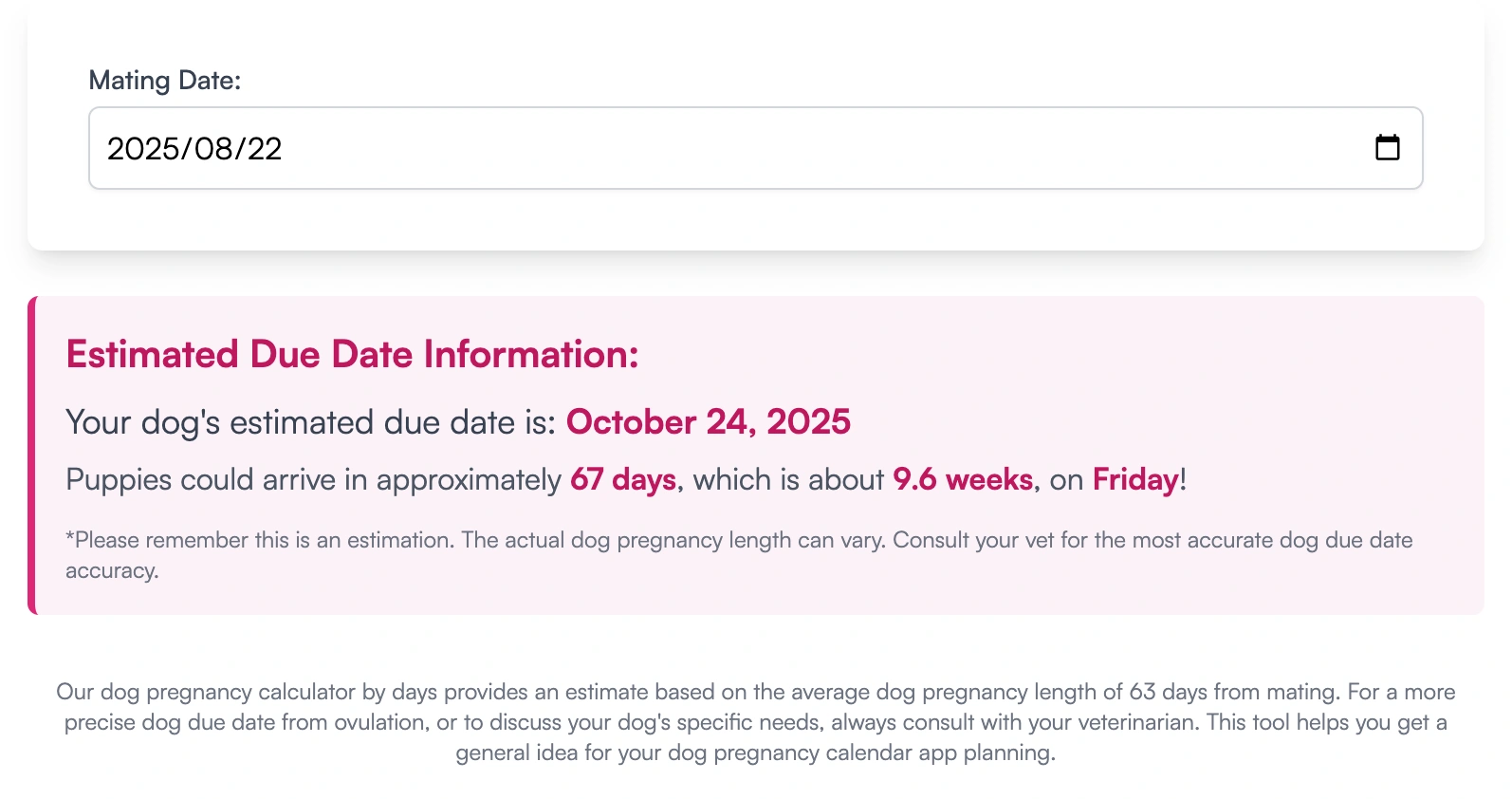
Before plugging numbers into a due date estimator, it helps to understand how long dogs are typically pregnant. The average canine gestation period is roughly 63 days, but this can range anywhere from 58 to 68 days from the day of ovulation. Counting from the exact day of mating can be misleading because sperm can survive inside the female's reproductive tract for up to seven days, meaning fertilization might not happen immediately after breeding.
Why Ovulation Timing Matters
To get the most accurate result from a canine due date calculator, veterinarians prefer to calculate based on ovulation rather than the breeding date. Ovulation marks the exact moment the eggs are released and ready to be fertilized. Veterinarians can pinpoint this through blood tests that measure progesterone levels or by performing vaginal cytology. When you base your calculation on the luteinizing hormone (LH) surge or ovulation, the gestation period is remarkably consistent at 63 days (give or take a day).
How to Use a Canine Due Date Calculator
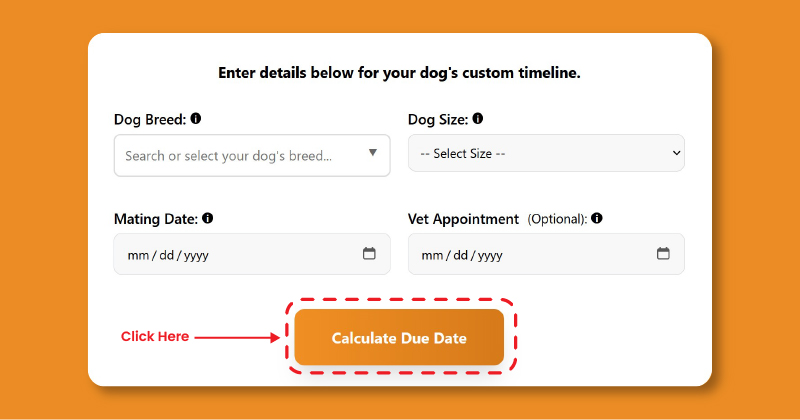
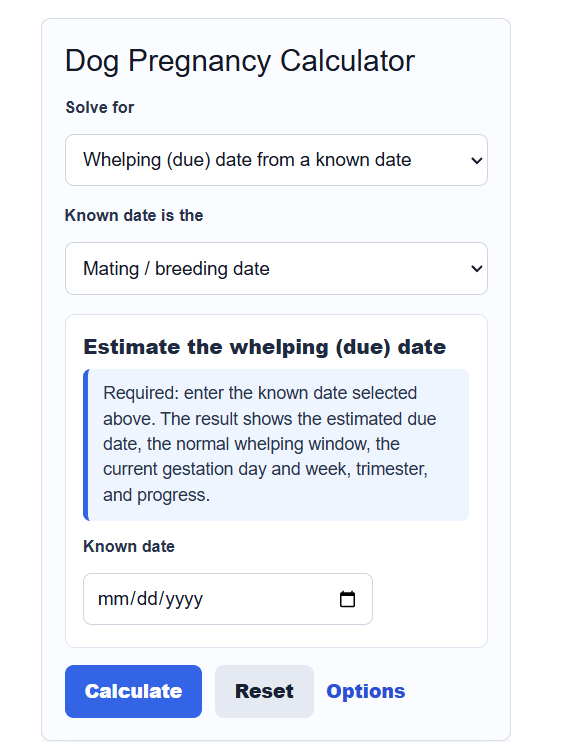
Online calculators simplify the math required to track a dog's pregnancy. Depending on the data you have available, you will usually need to input one of three reference points:
- The Mating Date: If you only know the date the dogs were bred, the calculator will typically provide a window of several days for the expected due date to account for sperm survival.
- The Ovulation Date: If your vet tracked progesterone levels, entering the specific ovulation date yields the highest accuracy, pinpointing day 63 as the target whelping date.
- The Ultrasound or X-ray Date: Sometimes veterinarians estimate gestational age based on fetal development seen during imaging.
Keep in mind that calculators provide an estimate. Litter size, breed size, and individual health factors can slightly shift the actual arrival date.
Key Milestones in Dog Pregnancy
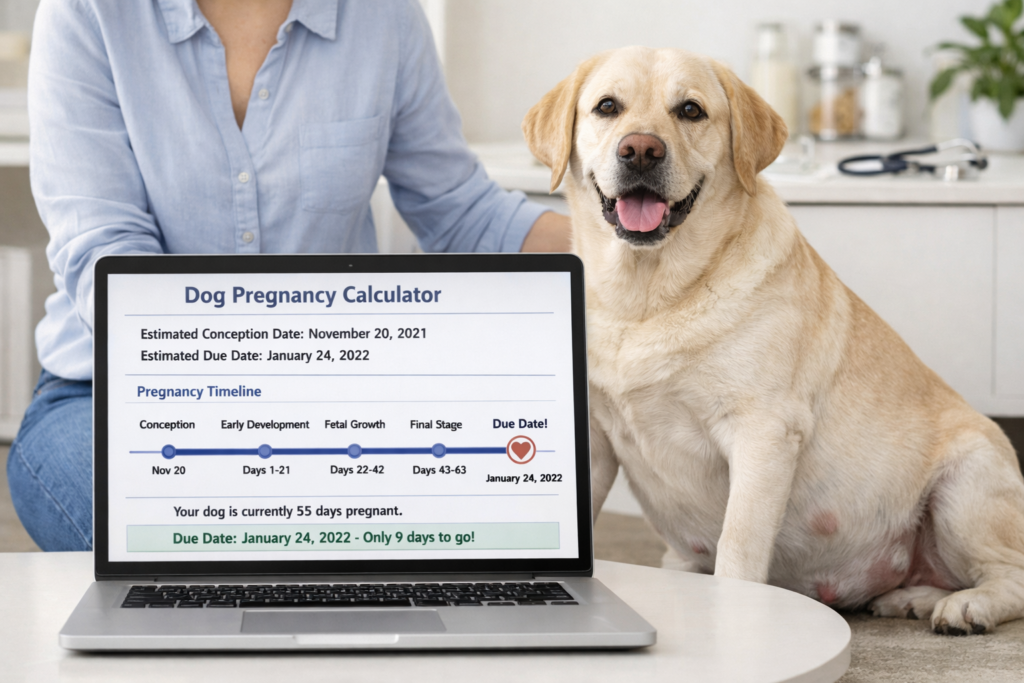
A dog pregnancy is divided into roughly three trimesters, each lasting about 21 days. Tracking these milestones helps ensure the mother remains healthy and receives proper nutrition.
First Trimester (Days 1 to 21)
During the first three weeks, the fertilized eggs travel down the uterine horns and implant themselves in the uterine lining. Outwardly, the mother will look and act completely normal. You do not need to change her diet yet, and she should avoid strenuous exercise, but her routine veterinary care should remain consistent. Avoid giving any medications or dewormers without explicit veterinary approval.
Second Trimester (Days 22 to 42)
This is a period of rapid fetal development. By day 30 or so, a veterinarian can often confirm pregnancy via ultrasound by detecting heartbeats. Around day 45, skeletal mineralization occurs, which means an X-ray can accurately count how many puppies to expect. The mother's appetite will begin to increase, and you may notice slight weight gain and mild nipple enlargement.
Third Trimester (Day 43 to Whelping)
The final stretch involves massive growth for the puppies. The mother's abdomen will expand visibly, and she may become easily fatigued. During this phase, transition her to a high-quality puppy food, which provides the extra calories and calcium necessary for lactation and fetal bone development. Feed her smaller, more frequent meals because the growing puppies leave less room in her abdomen for a full stomach.
Preparing for Whelping Day
Once your canine due date calculator gives you a target window, it is time to set up the nursery. About a week before the due date, prepare a warm, quiet, and draft-free whelping box lined with washable bedding or disposable pads.
Signs That Labor Is Imminent
Knowing when labor is about to begin is just as important as knowing the due date. Watch for these physical and behavioral changes in the final 24 to 48 hours:
- Temperature Drop: A normal canine body temperature is around 101°F to 102°F. Within 24 hours of labor, it typically drops below 99°F.
- Nesting Behavior: The mother may start digging at her bedding, pacing, panting, or acting restless and anxious.
- Loss of Appetite: Most females will refuse food completely on the day they are due to give birth.
- Drop in Abdomen: The puppies will shift backward into the birth canal, causing the mother's waistline to look slimmer from above.
When to Call the Veterinarian
While most dogs whelp naturally without human intervention, complications can arise. Contact your veterinarian immediately if you notice any of the following red flags:
- The mother strains heavily for more than 30 to 60 minutes without producing a puppy.
- More than two hours pass between the delivery of individual puppies without active labor resuming.
- Dark green or foul-smelling discharge appears before the first puppy is born.
- Active labor lasts longer than 24 hours total without completing the delivery.
- The mother displays extreme lethargy, fever, or pain.
Final Thoughts
Tracking a canine pregnancy requires patience, observation, and proper veterinary support. While a canine due date calculator gives you a fantastic starting point for planning, nature sometimes has its own timeline. Keep a close line of communication with your veterinarian, monitor the mother's health daily as the date approaches, and enjoy the wonderful journey of welcoming a new litter of healthy puppies into the world.