Capacity O2 Arena London: Full Seating Guide
When planning a night out at one of the world’s busiest entertainment venues, understanding the capacity O2 Arena London provides helps you gauge everything from crowd size to ticket availability. Located on the Greenwich Peninsula under the iconic Millennium Dome canopy, The O2 Arena is a landmark destination for music, comedy, and sports.
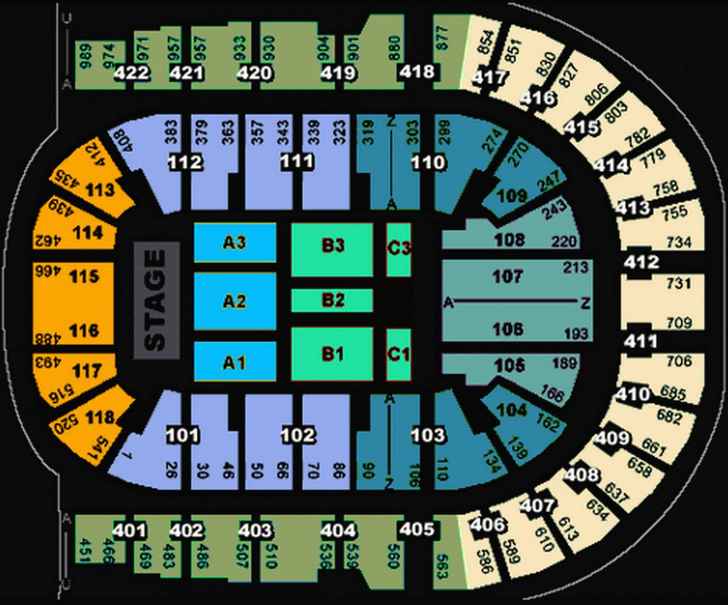
With a maximum capacity of 20,000 spectators, The O2 stands as the second-largest indoor arena in the United Kingdom, just behind Manchester's Co-op Live. However, the exact number of people inside on any given night shifts dramatically depending on the staging setup, production requirements, and security configurations.
Official Capacity O2 Arena London by Event Type
The arena is engineered with a flexible modular floor and retractable lower seating banks, allowing it to adapt to diverse productions. Here is how the capacity breaks down across common setups:
- End-Stage Concerts (General Admission Standing): Up to 20,000. In this configuration, the floor becomes a standing pit, accommodating thousands of fans close to the stage, complemented by the tiered seating bowls.
- End-Stage Concerts (All-Seated): Approximately 15,000 to 17,500. When floor seating is installed, total capacity drops because floor chairs require wider aisles and fixed exit paths compared to standing crowds.
- In-the-Round Productions: Up to 20,000. Placing the stage in the centre of the floor unlocks 360-degree seating across the lower and upper tiers, maximising attendance for artists who use circular or centre-aligned stages.
- Boxing and MMA: 18,000 to 20,000. Combat sports benefit from a central ring or cage, permitting full use of the lower bowl, upper tiers, and ringside floor seating.
- Basketball and Tennis: 17,500 to 18,000. Court dimensions for events like the ATP Finals or NBA London Games take up a substantial portion of the arena floor, reducing the number of floor-level spectator seats.
- Comedy and Theatre Shows: 12,000 to 15,000. Promoters frequently curtain off the upper tier (Level 4) to create a more intimate atmosphere for stand-up comedians or scaled-down theatrical shows.
A Common Misconception: The O2 Arena vs. Indigo at The O2
Visitors often confuse The O2 Arena with another entertainment venue housed under the same dome: Indigo at The O2. While the main arena holds 20,000 patrons, Indigo is a distinctly separate, intimate club and concert space with a capacity of just 2,800. If you are booking tickets for a show at The O2, always check whether your event takes place in the main arena or inside Indigo.
Understanding the Arena Seating Levels
The interior of The O2 Arena is divided into distinct zones. Choosing the right tier determines your perspective, comfort level, and overall acoustic experience.
Floor Level (Standing vs. Floor Blocks)
For high-energy rock, pop, and dance gigs, the floor is usually configured for General Admission (GA) standing. It provides the closest access to the stage, but sightlines depend entirely on your position in the crowd.
When an event is fully seated, the floor is divided into blocks usually labelled A, B, and C (closest to the stage), followed by D, E, and F behind them. While these seats put you near the performers, the floor has no rake (incline), meaning your view can sometimes be obstructed by taller attendees in front of you.
The Lower Tier (100 Level: Blocks 101–118)
The lower tier wraps around the arena floor and is widely regarded as offering the best balance of sightlines, acoustics, and atmosphere. The rows are built on a steady gradient, ensuring that spectators can see over the heads of those seated in front of them.
Blocks 101, 102, 111, and 112 flank the sides of a standard end-stage layout, providing side views that are exceptionally close to the performance area. Blocks 106 and 107 face the stage straight-on from the back of the arena, offering balanced, panoramic views of the entire stage production and lighting rigs.
The Upper Tier (400 Level: Blocks 401–422)
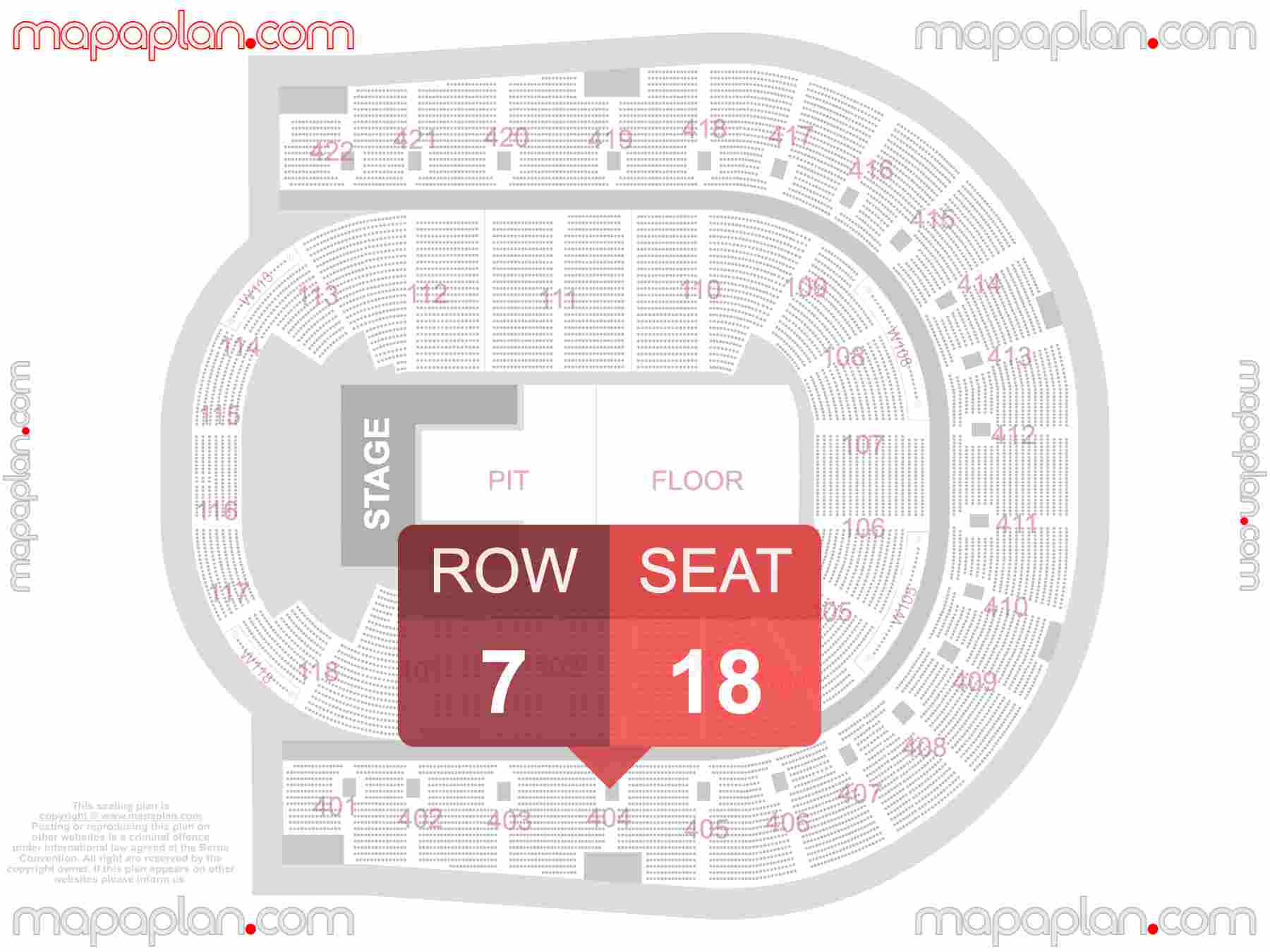
The 400-level tier sits high above the arena floor. Tickets here are typically the most affordable, making them popular for budget-conscious concertgoers. The rake in the upper tier is famously steep, designed to bring fans as close to the action as structurally possible.
If you experience vertigo or have mobility limitations, take caution when booking seats in the highest rows (Row Q and above). While the audio quality remains strong throughout the bowl thanks to acoustic baffling, performers on stage will look quite small without the help of the arena's giant video screens.
Premium Seating, Suites, and Lounges
Between the 100 and 400 tiers sit the luxury corporate suites and premium club levels. These VIP areas account for several thousand seats within the total capacity figure. They feature private bars, fast-track entrance lanes, and dedicated wait staff, catering to corporate entertaining and fans seeking high-end hospitality.
Best Views and Acoustic Sweet Spots
A venue of this scale requires careful engineering to maintain clean sound. Here are a few practical rules of thumb when selecting your seats:
- For Sound Purists: The sound mixing desk is typically situated on the floor between Blocks 106/107 and the stage. The audio engineer mixes the show to sound best from that specific vantage point; sitting in lower-tier blocks directly aligned with the sound desk ensures the best audio balance.
- For Visual Production: Arena shows now rely heavily on massive LED backdrops, lasers, and overhead kinetic lighting. Lower-tier central blocks (105, 106, 107) provide an uncompromised, head-on view of the artist's full visual design.
- For Stage Proximity: Blocks 101 and 112 offer the closest side views without paying for front-row floor tickets, though extreme side angles can occasionally clip backdrops or stage wings.
Accessibility and Special Assistance
The O2 Arena provides dedicated accessible viewing platforms for wheelchair users and guests with limited mobility. These platforms are elevated to ensure views remain unobstructed even when surrounding crowds stand up.
Accessible seating is situated primarily on the concourse levels of the lower tier, providing step-free entry directly from the arena concourses. Hearing loops are fitted across the venue, and assistance dogs are permitted with prior arrangement with the venue's accessibility team.
How The O2 Compares to Other UK Venues
To put the capacity into perspective, The O2 Arena is part of an elite tier of high-volume indoor entertainment venues across Britain:
- Co-op Live, Manchester: ~23,500 capacity (UK's largest indoor arena)
- The O2 Arena, London: ~20,000 capacity
- AO Arena, Manchester: ~21,000 capacity
- Utilita Arena, Birmingham: ~15,800 capacity
- OVO Arena Wembley, London: ~12,500 capacity
While open-air football venues like Wembley Stadium (90,000) or Tottenham Hotspur Stadium (62,850) hold far more attendees for summer stadium tours, The O2 remains London's primary year-round indoor destination for international headline acts.
Essential Visitor Tips for Sell-Out Events
With up to 20,000 people entering and exiting the venue, navigating event day requires a bit of forward planning:
- Arrive Early: Security screenings and ticket scanning can create queues, particularly at North Greenwich Underground station and the arena entrance gates 60 to 90 minutes before showtime.
- Watch the Bag Policy: The O2 enforces a strict bag policy. Large bags, backpacks, and luggage larger than an A4 piece of paper (approx. 21cm x 30cm x 19cm) are not permitted inside the arena seating bowl.
- Use Public Transport: The Jubilee line (North Greenwich station) is the most efficient transit route. Alternatively, the IFS Cloud Cable Car and the Uber Boat by Thames Clippers offer scenic, low-stress routes to and from the venue.


