Cape Town Monthly Weather Guide: Best Time to Visit
Understanding Cape Town Monthly Weather Patterns

Planning a trip to South Africa's Mother City requires a good understanding of cape town monthly weather trends. Located in the Southern Hemisphere, Cape Town experiences Mediterranean-style weather, meaning its seasons are the exact opposite of North America and Europe. Summers are warm and dry, while winters are cool, wet, and windy. However, because Cape Town is flanked by both the Atlantic Ocean and towering mountain ranges, microclimates play a huge role. You can experience blistering sunshine in Camps Bay while Table Mountain is entirely socked in by moisture-heavy clouds.
Whether you are hoping to hike up Lion's Head, lounge on Boulders Beach, or sip wine in the nearby winelands, timing your visit right makes all the difference. Here is a complete month-by-month breakdown of what to expect from the climate throughout the year.
Summer: December to February (Peak Season)
Summer in Cape Town is vibrant, hot, and largely dry. This is peak tourist season, attracting visitors looking to escape the Northern Hemisphere winter. Days are long, with sunshine often lasting until nearly 9:00 PM.
December
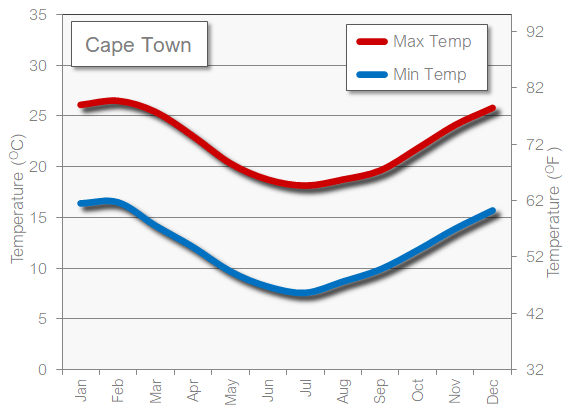
December marks the official kickoff of summer. Average daily high temperatures hover around 26°C (79°F), though heatwaves can push readings past 30°C (86°F). Rainfall is minimal, and the city buzzes with holiday energy. Be prepared for strong winds, particularly the notorious 'South-Easter' (locally known as the Cape Doctor), which sweeps the city clean of pollution but can make beach days breezy.
January
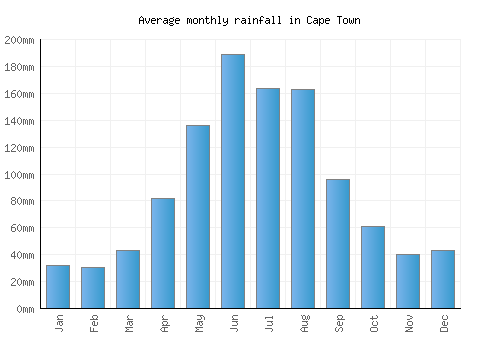
January is typically the warmest and driest month of the year. Daytime temperatures average 27°C (81°F) or higher. Rainfall is practically nonexistent. This is the ultimate month for outdoor activities, beach hopping, and late-night dinners. Because of the peak holiday rush, popular attractions and restaurants require advance booking.
February
February mirrors January with consistently warm, dry weather and abundant sunshine. The ocean water reaches its peak temperature—though at around 18°C to 20°C (64°F to 68°F), it remains bracingly refreshing due to the Atlantic currents. Vineyard valleys like Stellenbosch and Franschhoek are in full harvest mode, making this an ideal month for wine enthusiasts.
Autumn: March to May (The Shoulder Season)
Autumn brings a noticeable shift in the cape town monthly weather profile. The frantic energy of summer begins to fade, replaced by mild days, cooling evenings, and stunning golden foliage.
March
March is widely considered one of the absolute best months to visit Cape Town. The scorching summer heat softens into comfortable daytime highs of around 25°C (77°F), and the infamous summer winds begin to die down. Sea temperatures remain pleasant, and tourist crowds thin out significantly.
April
April brings gorgeous autumn weather with average highs of 22°C (72°F). Rainfall increases slightly toward the end of the month, but crisp, clear days dominate. The Easter holidays bring local travelers, but international crowds are manageable. It is an exceptional month for hiking and exploring Kirstenbosch National Botanical Garden.
May
May signals the transition into winter. Daytime highs drop to around 19°C (66°F), and evenings become distinctly chilly, averaging 11°C (52°F). Rain showers become more frequent as cold fronts start rolling in from the Atlantic Ocean. However, calm, sunny 'window' days still occur frequently.

Winter: June to August (Low Season & Rainy Period)
Winter in Cape Town is cool, wet, and dramatic. While it is the low season for general tourism, it is prime time for whale watching along the coast and dramatic storm-watching from cozy indoor cafes.
June
June is the official start of the rainy season. Average temperatures range from 11°C to 18°C (52°F to 64°F). Storms can roll in quickly, bringing heavy downpours and gale-force winds. On the flip side, when the clouds part, Table Mountain is often capped with fresh winter snow, offering striking photography opportunities.
July
July is typically the coldest and wettest month of the year. Daytime highs rarely exceed 17°C (63°F), and nights drop to a chilly 9°C (48°F). This is the time to embrace Cape Town's indoor culture—exploring world-class museums, art galleries, and indulging in the city's vibrant culinary scene.
August
August retains winter's chill and wet weather, but signs of spring begin to emerge toward the end of the month. Temperatures start a gradual climb, and the first bursts of indigenous fynbos wildflowers bloom across the reserves and mountain slopes.
Spring: September to November (Blossom & Whale Season)
Spring is a magical time when Cape Town bursts back to life. The landscape transforms into a vibrant carpet of wildflowers, and outdoor enthusiasts return to the trails.
September
September marks a dramatic seasonal turnaround. Days become noticeably longer and sunnier, with average highs reaching 19°C (66°F). Rainfall decreases substantially. This month is legendary for the West Coast wildflower superblooms and peak southern right whale watching along the Walker Bay coastline.
October
October brings delightful spring weather. Daytime temperatures average 21°C (70°F), offering comfortable conditions for exploring without the intense heat of mid-summer. Garden routes and nature reserves are lush and green from winter rains.
November
November acts as the bridge back to summer. Temperatures climb toward 24°C (75°F), days are long and sunny, and rainfall is minimal. Tourists beat the December holiday rush, making November a fantastic hidden-gem month for a holiday.
Summary: When Should You Visit?
Choosing the right time to visit depends entirely on your travel style:
- For Beach Lovers & Sun Seekers: December to February offers the hottest, driest weather.
- For Sightseers & Hikers: March, April, October, and November provide comfortable temperatures with fewer crowds.
- For Budget Travelers & Nature Lovers: June to August offers lower accommodation rates, dramatic landscapes, and whale sightings, provided you pack a sturdy raincoat.