Capital One Cashier's Check Verification Guide
Receiving a cashier's check often feels like the safest way to accept a large payment. Because funds are drawn directly against the issuing bank rather than an individual's personal checking account, buyers and sellers treat them almost like physical cash. However, fraudulent cashier's checks have become one of the most widespread tools used by online scammers. If you have received a payment drawn on Capital One, performing a thorough capital one cashier's check verification before depositing the item or releasing your merchandise is essential to protecting your finances.

Counterfeit checks can look remarkably convincing. High-resolution color printers, genuine watermarks, and accurate bank routing codes can easily fool an untrained eye. Here is an actionable guide on how to verify a Capital One cashier's check, how to confirm its legitimacy through official channels, and the major warning signs to watch out for.
Step-by-Step Capital One Cashier's Check Verification
Verifying a cashier's check requires contacting the issuing bank directly. Never assume a check is authentic simply because it printed cleanly or has a valid routing transit number. Follow these steps to verify the check properly:
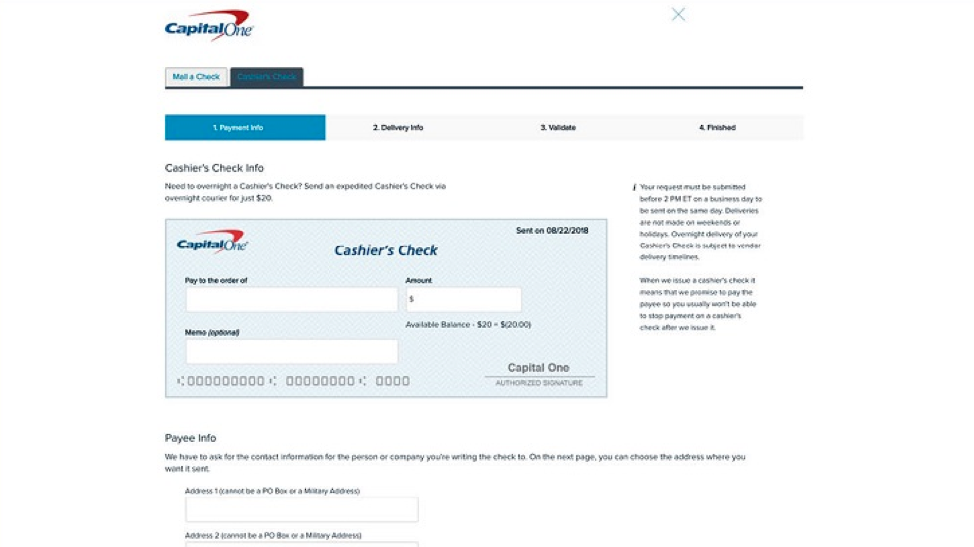
- Gather the check details: Before reaching out to Capital One, have the check in front of you. You will need the exact check number, issue date, payable amount, the payee name (your name or business), the remitter name (the purchaser), and the routing number printed at the bottom left.
- Find Capital One's contact details independently: Never call the telephone number printed on the face of the check or on any accompanying correspondence. Fraudulent checks frequently list a working phone number that connects directly to the scammer or an accomplice posing as a bank representative. Instead, go to the official Capital One website (capitalone.com) or use their general customer support line at 1-877-383-4802.
- Request check verification: When connected to a customer service agent, state clearly that you have received an official cashier's check drawn on Capital One and need to verify that it was legitimately issued. The agent will ask for the serial number, dollar figure, and payee information to cross-reference their database.
- Visit a Capital One branch in person (if available): If you live near a full-service Capital One branch, taking the physical check to a teller is one of the safest methods. A teller can inspect the document and inspect internal records to determine whether the check matches an active, authorized transaction. Note that Capital One Cafés focus on digital banking and community spaces; check whether your local location handles full teller services or visit a traditional branch.
Why You Should Never Trust the Check's Printed Information
Modern check fraud relies heavily on psychological manipulation. Scammers know that most recipients are aware of fake checks, so they print realistic customer service numbers directly above or below the bank logo. When you call, a professional-sounding operator answers, asks for the check number, and confirms that the funds are "cleared and legitimate."
By pulling the contact number from an independent, verified source like Capital One's public directory, you eliminate the risk of speaking with a conspirator. If the number printed on the check does not match any official Capital One directory, you are almost certainly looking at a forgery.
Common Scams Involving Fake Capital One Cashier's Checks
Cashier's checks are the payment method of choice for several well-documented fraud schemes. Recognizing the context of the transaction is often enough to determine whether a check is real:
- Overpayment scams: You sell an item online (such as a vehicle, electronics, or furniture). The buyer sends a Capital One cashier's check for an amount significantly higher than the agreed price, claiming it was an error or meant to cover "shipping/handling fees." They ask you to deposit the check and wire back the difference. Once the fake check bounces, you lose the item, the wired money, and the check amount.
- Remote employment and secret shopper checks: You receive an offer for a work-from-home position or a mystery shopping assignment. The "employer" sends a cashier's check to cover home office supplies or testing money transfers. They instruct you to buy prepaid cards or transfer funds before the check clears.
- Lottery and sweepstakes notifications: You are informed you have won a foreign lottery or prize draw. A cashier's check is enclosed to help you pay the "taxes and administrative fees." In reality, no legitimate sweepstakes requires you to pay upfront fees to claim a prize.
- Apartment rental or roommate scams: A prospective tenant claims to be moving from out of state and sends a cashier's check for several months of rent in advance, followed shortly by an emergency cancellation request demanding a partial refund via wire or peer-to-peer apps.
Funds Available vs. Cleared: The Critical Difference
Video: How to get a cashier's check from Capital One

One of the most dangerous misconceptions about cashier's checks is the difference between funds availability and actual check clearance.
Under federal banking regulations (specifically Regulation CC), banks are legally required to make funds from cashier's and certified checks available quickly—usually within one business day after deposit. Because your bank account balance increases, you might assume Capital One has reviewed the check and sent the money.
This is not the case. Availability simply means your bank has provided temporary credit while the check moves through the clearing house. It can take anywhere from a few days to several weeks for a fraudulent check to travel back to Capital One, be identified as invalid, and get returned to your bank.
If the check is returned as fraudulent, your bank will reverse the deposit immediately. If you have already withdrawn the cash or transferred funds elsewhere, your account will fall into a negative balance, and you will be held legally and financially responsible for the full deficit.
Physical Signs of Check Alteration
While telephone verification with Capital One is the definitive test, physical inspection can reveal glaring defects. Genuine Capital One cashier's checks feature professional security features:
- Security paper: Official checks are printed on thick, distinct security stock. If the paper feels like ordinary 20 lb copier paper, handle it with extreme suspicion.
- Watermarks and microprinting: Hold the check up to the light to look for built-in security watermarks. Examine border lines closely with a magnifying glass; on genuine bank checks, lines often consist of continuous microprinted words rather than solid ink.
- Smudged or irregular ink: Authentic checks use standardized, high-quality MICR (Magnetic Ink Character Recognition) ink along the routing and account bands at the bottom. Smudged characters or shiny printer toner indicate a desktop forgery.
- Mismatched details: Verify that the bank's routing number actually matches Capital One. You can verify routing numbers online using the Federal Reserve Bank Services database.
What to Do If You Receive a Suspicious Check
If your Capital One cashier's check verification process reveals that the check is counterfeit, take decisive action to protect yourself:
- Do not deposit the check: Depositing a known fraudulent check can lead to frozen accounts, bank administrative fees, and potential investigation for check fraud.
- Cut off communication: Block the sender immediately. Do not attempt to negotiate or confront the scammer, as they may attempt retaliatory harassment.
- File a report with law enforcement: Report the incident to your local police department, especially if you exchanged physical merchandise or personal identification.
- Notify federal consumer protection agencies: File an online report with the Federal Trade Commission (ReportFraud.ftc.gov) and the FBI's Internet Crime Complaint Center (IC3.gov). You can also report check fraud directly to the United States Postal Inspection Service if the document arrived via USPS.
Patience and diligence are your best defenses against financial fraud. Before handing over goods, titles, or services, take the extra twenty minutes to dial Capital One directly and confirm that the funds on the check actually exist.