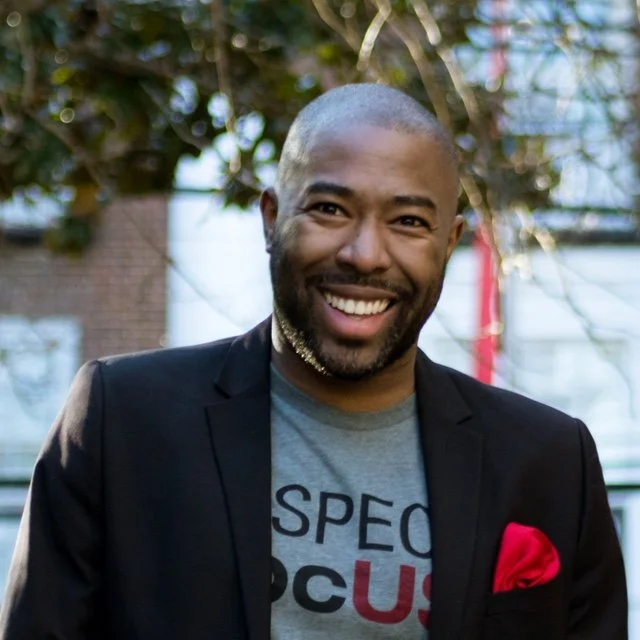
Carron J. Phillips: Career, Writing, and Impact
In contemporary sports media, few voices focus as sharply on the collision of athletics, race, culture, and politics as Carron J. Phillips. Throughout his career as an investigative reporter, columnist, and essayist, Phillips has challenged traditional sports reporting by insisting that games cannot be separated from the societal systems in which they exist. Whether writing about institutional inequities in collegiate sports or examining structural racism in professional leagues, his work regularly sparks national conversations.

While his unapologetic commentary has earned him critical acclaim and major journalism honors, it has also placed him at the center of fierce media debates. Understanding his background, career trajectory, and editorial philosophy provides valuable insight into the evolving landscape of modern cultural journalism.
Early Life and Academic Background
Carron J. Phillips developed an interest in journalism and storytelling early in life. A native of Saginaw, Michigan, he pursued his undergraduate education at Morehouse College, a historically Black men's college in Atlanta, Georgia. At Morehouse, Phillips immersed himself in an environment steeped in civil rights history, leadership, and social advocacy—elements that would later become cornerstones of his reporting style.
After earning his bachelor’s degree from Morehouse, Phillips went on to attend the prestigious S.I. Newhouse School of Public Communications at Syracuse University. There, he earned a master’s degree in journalism, refining his reporting fundamentals, media ethics, and analytical skills. Syracuse's rigorous communications curriculum provided the technical foundation that allowed him to move fluidly between daily beat reporting and long-form opinion writing.
Career Trajectory Across Major Newsrooms
Following graduate school, Phillips built his career across regional papers, national outlets, and digital platforms. His career reflects the changing patterns of modern sports writing, shifting from local print publications to high-traffic digital publications.
- The News Journal (Wilmington, Delaware): Phillips served as an enterprise reporter and sports columnist, covering local athletic programs while increasingly addressing broader cultural concerns within high school and college athletics.
- The New York Daily News: Moving to one of the country's most competitive tabloid markets, Phillips contributed columns addressing the intersection of race, urban politics, and sports culture.
- The Shadow League: Writing for a site dedicated to exploring sports and race, he further established his brand of cultural criticism and athlete profile features.
- Deadspin: Joining the digital sports and culture outlet as a senior writer, Phillips became one of the platform’s primary voices on civil rights, race relations in the NFL and NBA, and corporate governance in athletics.
The Journalism of Carron J. Phillips: Themes and Style
To understand the reporting of Carron J. Phillips, one must examine the specific lens through which he analyzes sports stories. Unlike traditional beat reporters who focus predominantly on box scores, tactical schemes, and roster moves, Phillips treats sports as a mirror of American society.
Race, Power, and Institutional Accountability
A recurring theme in Phillips’s work is the dynamic between Black athletes and the predominantly white leadership structures governing professional and collegiate sports. He has written extensively on the lack of Black head coaches in the National Football League, the dynamics surrounding the Rooney Rule, and the historical exploitation of collegiate athletes prior to Name, Image, and Likeness (NIL) legislation.
Direct and Unapologetic Commentary
Phillips’s prose is characterized by directness. He rarely relies on cautious hedging, instead naming what he perceives as systemic injustice directly. His columns often ask difficult questions of team owners, league executives, and media peers, arguing that neutrality in sports journalism often preserves the status quo at the expense of marginalized groups.
Awards and Professional Recognition

Phillips’s work has been widely recognized within the journalism community, particularly among organizations dedicated to diversity and advocacy in the press.
His most notable honor came from the National Association of Black Journalists (NABJ), which named him the Sports Columnist of the Year in 2019. The award honored his consistent, high-impact commentary on sports culture, particularly during an era when athletes were taking increasingly public stands on social justice issues such as police reform and voting rights.
High-Profile Media Controversies
Writing on sensitive cultural issues at a fast-paced digital publication inherently carries risks, and Phillips’s career has seen significant public pushback.
The 2023 Deadspin Column
The most scrutinized incident of Phillips’s career occurred in November 2023 while writing for Deadspin. Following a Kansas City Chiefs game, Phillips authored an article criticizing the NFL for its handling of cultural sensitivity, using a broadcast image of a young fan wearing a Native American headdress and face paint as the focal point.
The column immediately provoked intense controversy across social media and mainstream news networks:
- The Image Context: Critics pointed out that the single-angle broadcast image used in the article showed only the side of the child's face painted black, whereas the full face was painted half-red and half-black, representing the Chiefs' team colors.
- Public and Legal Backlash: The fan’s family demanded a retraction and public apology, arguing that the piece unfairly targeted a minor. In early 2024, the family filed a defamation lawsuit against Phillips and Deadspin’s parent company, G/O Media.
- Media Ethics Debate: The incident led to extensive discussions among journalism ethicists regarding editorial oversight, the use of minors in opinion columns, and the pressures of click-driven digital media environments.
The episode remains a notable case study in contemporary sports media, highlighting the tension between rapid-response opinion writing and rigorous editorial verification.
Influence on Modern Cultural Sports Writing
Despite controversies, Phillips represents a distinct generation of sports commentators who entered the industry determined to broaden the scope of athletic coverage. Rather than viewing sports as an escape from real-world issues, this school of thought insists that sports are directly intertwined with civic life, politics, and human rights.
His writing has pushed audiences and media institutions to engage with challenging topics, including:
- The ethical responsibilities of professional sports leagues toward their predominantly minority player bases.
- The treatment of Black athletes in mainstream press coverage compared to their white counterparts.
- The role of historically Black colleges and universities (HBCUs) in developing athletic and journalistic talent.
Conclusion
Carron J. Phillips remains an influential and debated figure in American sports commentary. From his training at Morehouse and Syracuse to national recognition by the NABJ, his body of work reflects a commitment to interrogating power and race within athletics. As sports journalism continues to navigate the complex territory between entertainment and socio-political analysis, Phillips's career serves as both an illustration of the power of advocacy journalism and a reminder of the scrutiny that comes with addressing sensitive cultural fault lines.