CET to EST Conversion: Time Zone Guide & Calculator
Understanding CET to EST Conversion

Mastering CET to EST conversion is essential for anyone coordinating across the Atlantic. Whether you are scheduling a business meeting between Paris and New York, joining an international webinar, or keeping in touch with family abroad, knowing the exact time difference prevents missed appointments and scheduling confusion.
Time zones can be notoriously tricky because of seasonal shifts and regional naming conventions. This guide breaks down the math, the rules, and the exact hour differences so you can convert between Central European Time and Eastern Standard Time with complete confidence.
What Are CET and EST?
Before diving into the conversion math, it helps to define what these two acronyms actually stand for and when they are active.
Central European Time (CET)
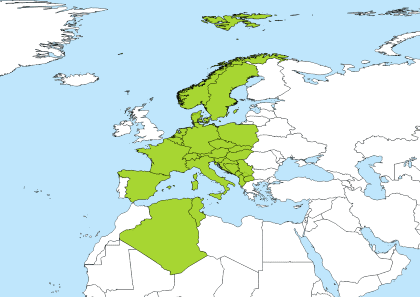
CET is UTC+1. It is used by many European countries during the winter months, including France, Germany, Italy, Spain, and Poland. When Europe is observing standard time, their clocks are set one hour ahead of Coordinated Universal Time.
Eastern Standard Time (EST)
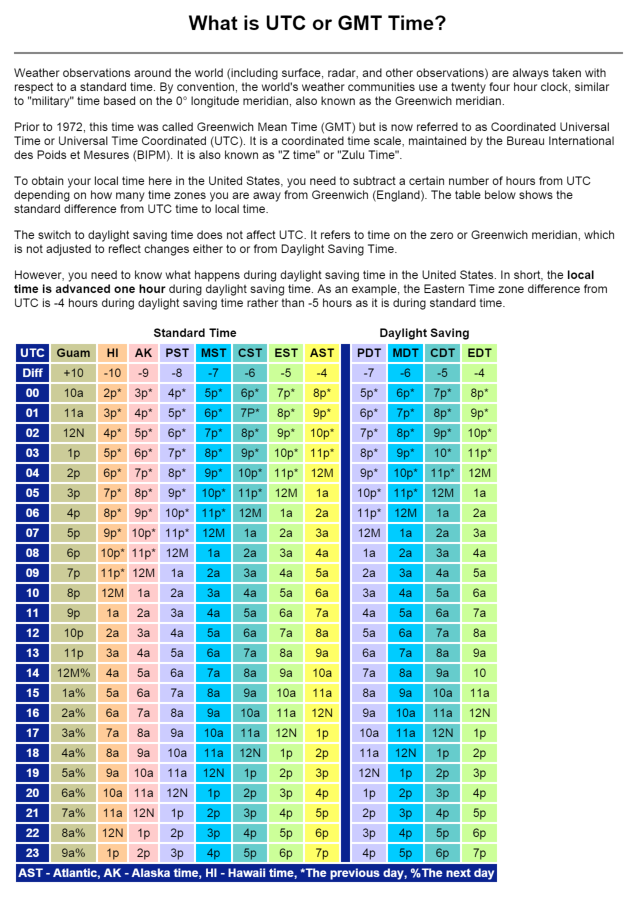
EST is UTC-5. It is used during the winter months in parts of North America, including major eastern hubs like New York, Washington D.C., Toronto, and Miami. When North America is on standard time, clocks are set five hours behind Coordinated Universal Time.
The Standard Time Difference
During the standard winter months—from late November to mid-March—the standard math applies:
- CET is UTC+1
- EST is UTC-5
- The difference between UTC+1 and UTC-5 is exactly 6 hours.
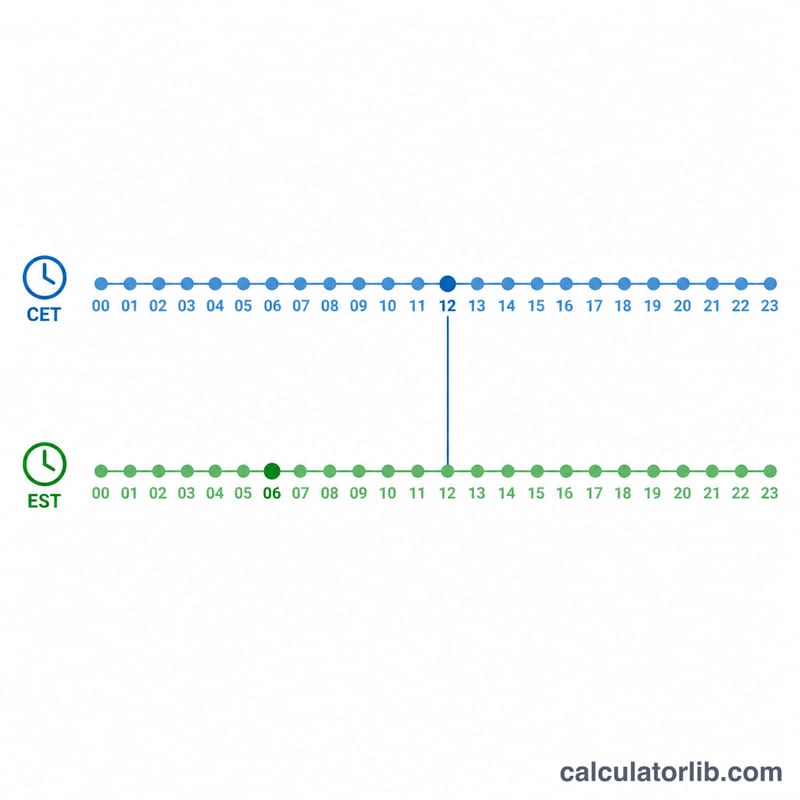
Because CET is ahead of EST, CET is 6 hours ahead of EST. For example, if it is 12:00 PM (noon) EST in New York, it is 6:00 PM CET in Paris.
Conversely, to go from CET to EST, you subtract 6 hours. If it is 9:00 PM CET in Berlin, it is 3:00 PM EST in Boston.
The Daylight Saving Time Complication

The biggest trap in time conversion is Daylight Saving Time (DST). Europe and North America do not start or end daylight saving time on the same dates, which creates brief windows where the time difference changes.
Summer Time (CEST vs. EDT)
During the summer months, both regions shift their clocks forward by one hour:
- Europe uses CEST (Central European Summer Time), which is UTC+2.
- North America uses EDT (Eastern Daylight Time), which is UTC-4.
Despite the name change, the mathematical difference remains 6 hours (UTC+2 to UTC-4). However, using the strict acronyms CET and EST during summer is technically incorrect, as those specific standard times are not active.
The Transition Gap Weeks
The real confusion happens in March and October/November during the transition periods:
- Spring Forward (March): North America usually shifts to Daylight Saving Time two to three weeks earlier than Europe. During this short window, the time difference shrinks from 6 hours to 5 hours.
- Fall Back (October/November): Europe switches back to standard time before North America does. During this autumn window, the time difference temporarily shrinks to 5 hours again.
Always double-check your calendar apps during these transition weeks to ensure your international meetings land at the correct local hour.
Quick Reference Conversion Table
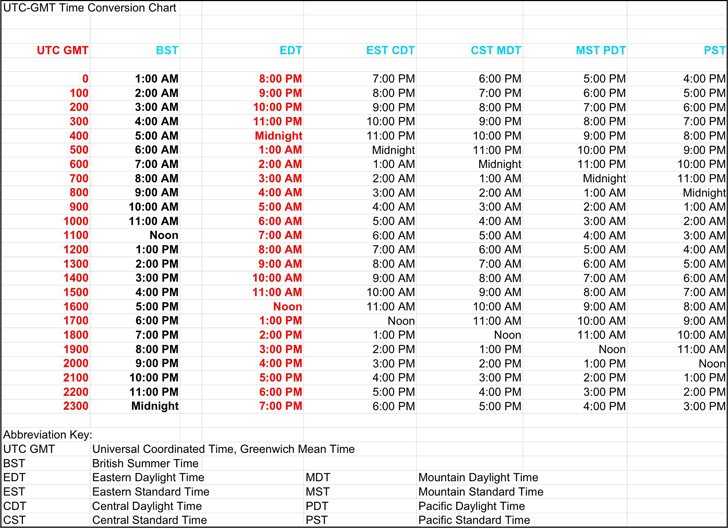
To make quick lookups easy, use this reference table showing standard CET times matched against their corresponding EST times:
- CET 06:00 AM = EST 12:00 AM (Midnight)
- CET 09:00 AM = EST 03:00 AM
- CET 12:00 PM (Noon) = EST 06:00 AM
- CET 03:00 PM = EST 09:00 AM
- CET 06:00 PM = EST 12:00 PM (Noon)
- CET 09:00 PM = EST 03:00 PM
- CET 12:00 AM (Midnight) = EST 06:00 PM
Tips for Scheduling Across Time Zones
Managing meetings across continents requires strategy to avoid burning out your team members or waking clients up in the middle of the night. Follow these best practices:
- Identify the overlap window: The ideal window for a live call is typically between 8:00 AM and 11:00 AM EST. This translates to 2:00 PM to 5:00 PM CET, allowing both parties to work within normal business hours.
- Use world clock tools: Rely on tools like World Time Buddy, Google Calendar, or built-in smartphone world clocks that automatically adjust for daylight saving changes.
- Specify the city, not just the zone: Instead of writing "let's meet at 3 PM CET," write "3 PM CET (Paris time)" to eliminate any ambiguity for your invitees.
- Confirm dates during transition weeks: If you are scheduling a meeting in mid-March or late October, verify the exact date each region shifts its clocks.
Conclusion
Converting CET to EST comes down to a reliable 6-hour difference during standard winter months, with minor adjustments during seasonal transition periods. By keeping the 6-hour rule in mind—and watching out for daylight saving time shifts in spring and autumn—you can seamlessly manage your transatlantic schedules and communication.