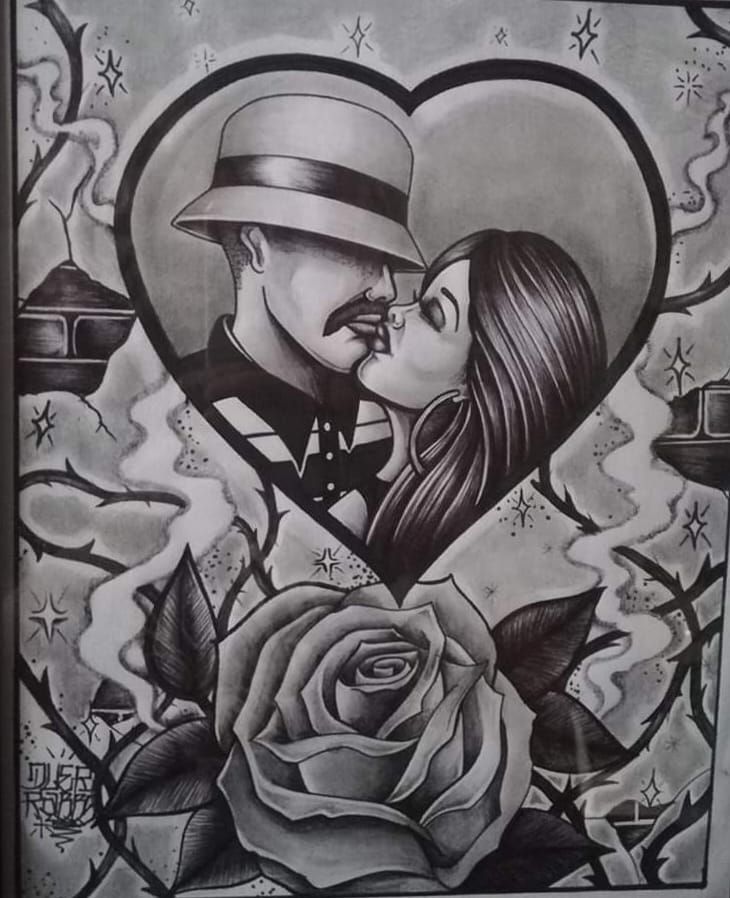
Cholo Love Drawings: Art, Meaning, and History
Across the American Southwest and Southern California, a distinct visual language emerged from the pavement, the car clubs, and the neighborhood corners. Among the most recognizable expressions of this aesthetic are cholo love drawings. These artworks depict tender, cinematic portraits of Chicano couples—often rendered in smooth black-and-grey tones, featuring sharply creased workwear, iconic hairstyles, and symbols of eternal devotion. Far from simple street sketches, these drawings represent a deeply rooted artistic tradition that speaks to love, loyalty, resilience, and identity under pressure.

The Cultural Origins of Chicano Romance Art
To understand these drawings, one must understand the evolution of Chicano culture over the last century. The aesthetic roots trace back to the Pachuco and Pachuca subcultures of the 1930s and 1940s. Mexican-American youth embraced the Zoot Suit as an act of cultural rebellion and dignity, developing an unmistakable swagger and stylized visual presence.
By the late 1960s and 1970s, as the Chicano Civil Rights Movement took hold, this visual identity transformed into what is recognized today as the "Cholo" aesthetic. Artists in barrios like East Los Angeles began documenting everyday life, including neighborhood romance. The imagery received widespread circulation through publications like Lowrider Magazine (founded in 1977) and underground zines like Teen Angels, created by the artist David Holland. Teen Angels in particular gave voice to street poets and self-taught artists, printing countless sketches of couples holding each other against neighborhood backdrops.
The Role of Paño Art
A crucial branch of this tradition is paño art (from the Spanish word pañuelo, meaning handkerchief). Inmates in southwestern penitentiaries with limited access to traditional art supplies used ballpoint pens, cigarette ashes, and colored fruit juices to draw on white cotton handkerchiefs. Many of these handkerchiefs were mailed home to wives, girlfriends, and family members.
These prison paños frequently featured romantic compositions: a man in sunglasses and a fedora holding a woman with feathered hair, surrounded by script proclaiming "In Memory of Love" or "Por Vida" (For Life). This medium turned an everyday, utilitarian piece of fabric into an intimate token of connection that defied steel bars and razor wire.
Core Motifs in Classic Cholo Love Drawings
While every artist brings a personal touch, classic cholo love drawings rely on a shared lexicon of symbols and visual cues that convey narrative depth and emotional gravity.
- The Stylized Couple: The male figure is typically drawn wearing classic barrio staples: a crisp Pendleton plaid shirt buttoned only at the collar, a white undershirt (tank top or crew neck), a tilted fedora, a beanie, or a folded bandana. The female figure—the Chola—is drawn with equal power and elegance, characterized by feathered or teased hair, razor-sharp winged eyeliner, carefully arched brows, and dark lip liner with lighter gloss.
- The Streetlamp Backdrop: A recurring romantic setting is the solitary streetlight glowing against a dark city silhouette. The lamp acts as a spotlight, framing the couple in an intimate oasis carved out of an often harsh urban environment.
- Classic Lowriders: A gleaming 1964 Chevy Impala or 1939 Fleetline parked along the curb underscores values of pride, craftsmanship, and leisure. The car is rarely just a backdrop; it is an extension of the couple's shared identity.
- "Smile Now, Cry Later" Theater Masks: The classic comedy and tragedy masks represent the dual nature of street life—maintaining outward composure and joy despite inner struggle and pain. In love drawings, they often signify enduring hardship together.
- Roses and Barbed Wire: A blossoming rose entwined in barbed wire serves as a direct metaphor for beauty flourishing in hostile conditions, symbolizing love that survives environmental hardship.
- Old English Lettering: Intricate, calligraphic Old English or gothic script often frames the drawing, spelling out names, neighborhood affiliations, or vows like Amor Eterno (Eternal Love) and Ride or Die.
Visual Techniques: The Black-and-Grey Fine-Line Aesthetic
Video: Cholo Love Poems

One defining characteristic of these drawings is the technique used to render them. Heavily influenced by the single-needle, fine-line tattoo style pioneered in East Los Angeles and California correctional facilities (often associated with legends like Jack Rudy and Charlie Cartwright), the drawing style relies on meticulous gradation rather than heavy, blunt linework.
Smooth Graphite and Ink Wash Shading
Traditional illustrations are made using soft-lead graphite pencils (such as 2B through 6B), mechanical drafting pencils for sharp details, or black ballpoint pens. Artists master the art of "feathering" ink or using paper blending stumps (tortillons) to create velvety transitions from stark highlights to deep, charcoal shadows. This creates a soft-focus, dreamlike effect that elevates the emotional warmth of the subject matter.
Dramatic Lighting and Contrast
High-contrast chiaroscuro lighting is standard. Artists frequently highlight the planes of the faces, the reflective sheen on sunglasses, the metallic gleam of lowrider chrome, and the delicate folds of fabric. This dramatic lighting gives the portraits a cinematic, almost mythic presence.
Creating Cholo Love Art: Practical Tips for Artists
If you are exploring this artistic tradition in your own sketchbook, keeping a few foundational practices in mind will elevate your work from an amateur sketch to an authentic homage.
- Study Vintage Reference Photos: Avoid modern caricatures. Study genuine vintage photographs from the 1970s, 80s, and 90s across Chicano communities. Pay attention to how bandanas were folded, how jewelry sat, and how hair was actually styled.
- Focus on Emotional Expression: Despite the tough exterior implied by street clothes or sunglasses, the core of the piece is vulnerability. Focus on the tenderness of a hand on a cheek, the tilt of a head, or soft eye contact.
- Build Tones Gradually: Avoid pressing hard with dark pencils immediately. Lay down light cross-hatching or circular pencil strokes, slowly building depth layer by layer. Smooth blending is key to capturing the signature airbrushed look on paper.
- Master Lettering Separately: The typography is an art form in itself. Practice gothic and blackletter alphabets on grid paper before adding text banners to your main illustration.
The Modern Legacy and Cultural Respect
Today, the aesthetic of cholo romance has broken past regional borders. It inspires contemporary gallery exhibitions, international tattoo conventions from Tokyo to Berlin, high-fashion references, and modern graphic design. Contemporary Chicana and Chicano illustrators continue to reinterpret these motifs, incorporating modern themes while honoring the elders who turned ballpoint pens and cheap paper into enduring cultural heritage.
Appreciating this art form requires recognizing the community from which it grew. It is not an arbitrary costume or an internet trend; it is the visual record of Mexican-American working-class life, honoring relationships that held communities together through adversity.