Choosing the Best 8x14 Sun Shade for Patios
Outdoor living spaces often suffer from intense afternoon heat, turning a beautiful deck or patio into an unusable hot zone during the summer months. An 8x14 sun shade provides roughly 112 square feet of targeted coverage, striking an ideal balance between generous shade and compact proportions. Whether you want to cover an elongated dining table, shade a side-yard dog run, or replace a worn pergola canopy, this rectangular dimension offers versatile relief from harmful ultraviolet rays.

Why the 8x14 Foot Dimension Works Well
While square shade sails (such as 10x10 or 12x12) are common, rectangular layouts frequently match real-world architectural footprints far better. Most residential decks, patio seating arrangements, and townhome courtyards are long and narrow.
An 8x14 footprint fits comfortably over standard outdoor dining sets, poolside loungers, and walkways where a wider shade might collide with rooflines, trees, or property boundaries. It also matches the interior framing dimensions of many standard residential pergolas, making it a popular choice for replacement fabric covers.
Comparing Fabric Materials
The performance, longevity, and weather resistance of your sun shade depend heavily on the textile. Most 8x14 models fall into one of two fabric categories:
1. High-Density Polyethylene (HDPE)
HDPE is the industry standard for tensioned shade sails. It features an open-weave knit that blocks between 90% and 95% of UV radiation while allowing ambient air to circulate freely. This breathability creates a cooling chimney effect, dropping the temperature underneath by up to 15 degrees Fahrenheit.
- Pros: Excellent wind dissipation, rot-proof, tear-resistant, prevents water pooling.
- Cons: Permeable to rain; water will mist through during moderate to heavy storms.
2. Coated Polyester (Oxford Fabric)
Polyester shades treated with a polyurethane (PU) coating are designed to be water-resistant or fully waterproof. They offer effective sun protection alongside reliable shelter from light rainfall.
- Pros: Keeps outdoor furniture dry during showers, offers crisp color options.
- Cons: Traps hot air beneath the fabric, susceptible to sagging or tearing if rain pools on top.
Installing an 8x14 Sun Shade: Step-by-Step
Proper installation ensures your shade withstands gusty winds, looks clean, and avoids premature wear. Follow these essential steps to install your shade securely.
Step 1: Account for Hardware Clearance
Video: Retractable Wave Sun Shade Sail Installation Method(Custom sizes available)
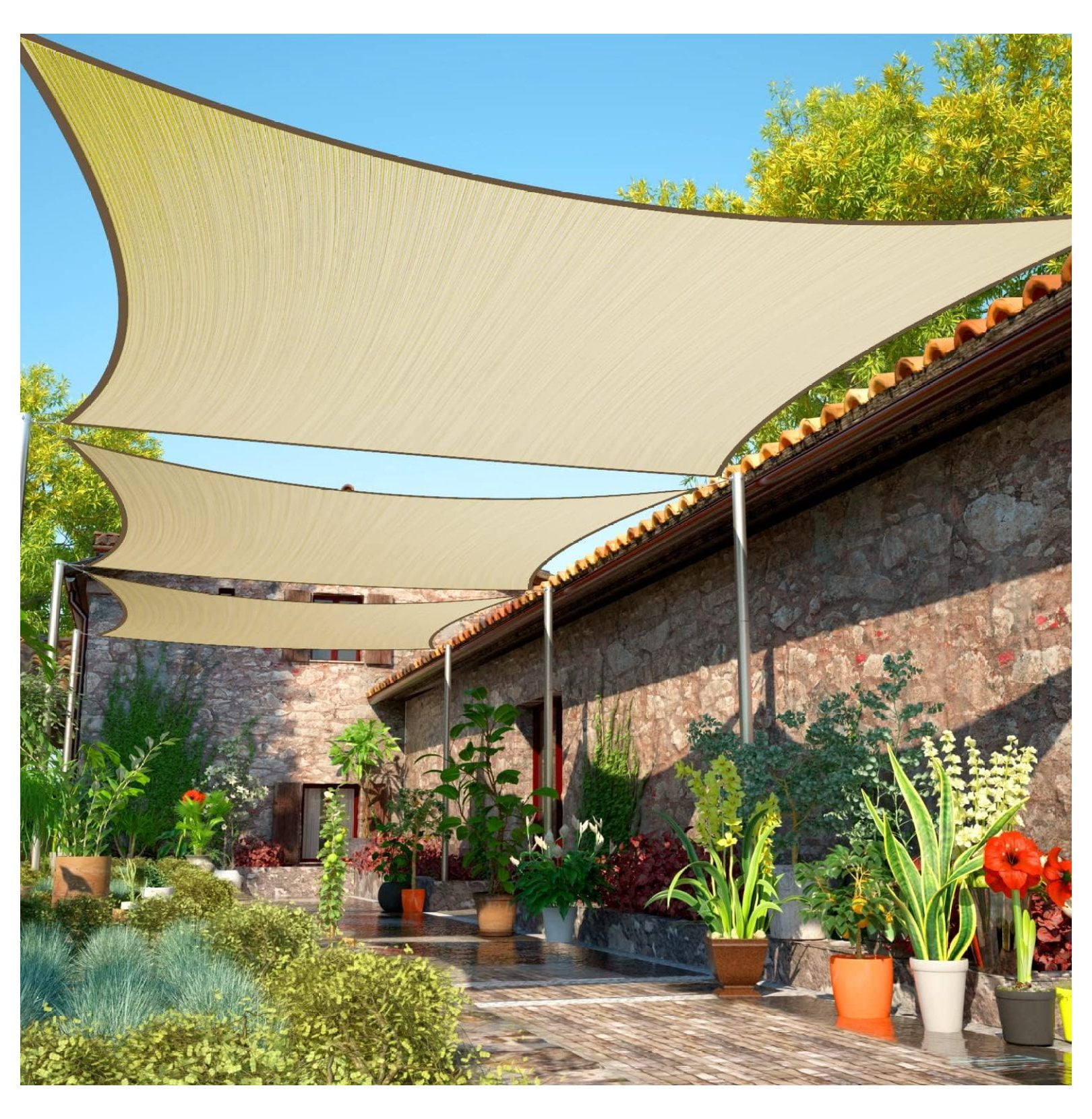
A frequent DIY mistake is anchoring mounting points at the exact 8x14 dimension. An 8x14 shade sail requires an extra 1 to 1.5 feet of space at every corner to accommodate turnbuckles, D-rings, and cable extensions. Your anchor points should ideally measure roughly 10 to 11 feet wide by 16 to 17 feet long.
Step 2: Choose Sturdy Anchor Points
Tensioned shade sails exert immense pull under wind load. Anchor only into structural elements:
- House Walls: Fasten pad eyes directly into wall studs or solid masonry, never into vinyl siding or fascia boards alone.
- Poles: If setting standalone posts, use steel pipe (minimum 3-inch diameter, schedule 40) or 6x6 pressure-treated wood posts buried at least one-third of their length in concrete.
Step 3: Create Elevation Variation
Never mount an 8x14 canopy completely flat. A flat sail catches wind like a parachute and, if water-resistant, collects rainwater until the anchors fail. Create a height differential by setting two diagonal corners higher and the opposite two lower, creating a gentle twist (hyperbolic paraboloid). For simple slope installations, ensure at least a 20-to-30-degree incline to facilitate water runoff and aerodynamic stability.
Step 4: Tension with Quality Hardware
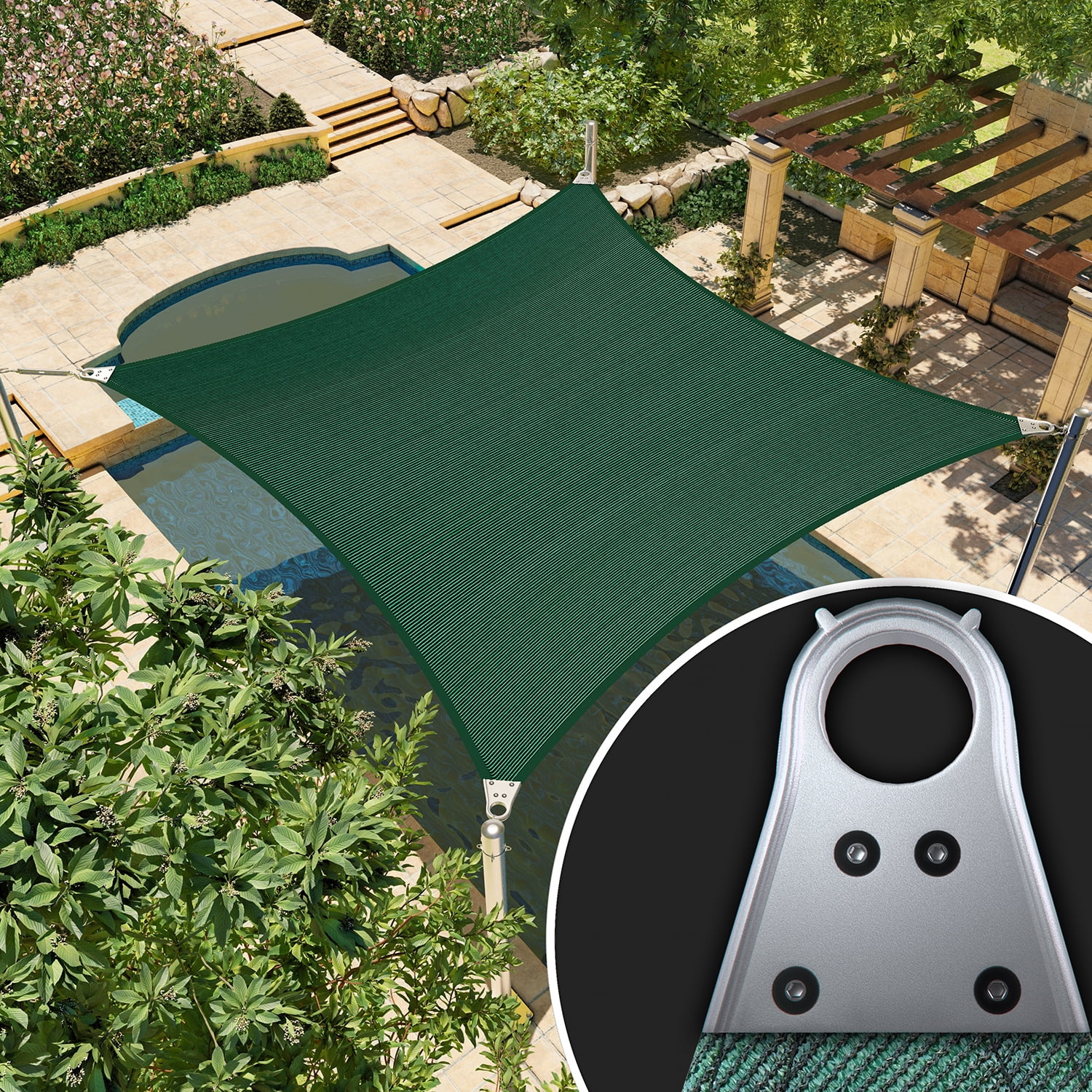
Use marine-grade 316 stainless steel hardware. Zinc-plated hardware corrodes quickly outdoors. Attach turnbuckles at two or four corners and tighten them until the center of the fabric has no visible sag and the curved perimeter webbing feels drum-tight.
Curved Edges vs. Straight Edges
When shopping for an 8x14 shade, pay attention to the edge profile:
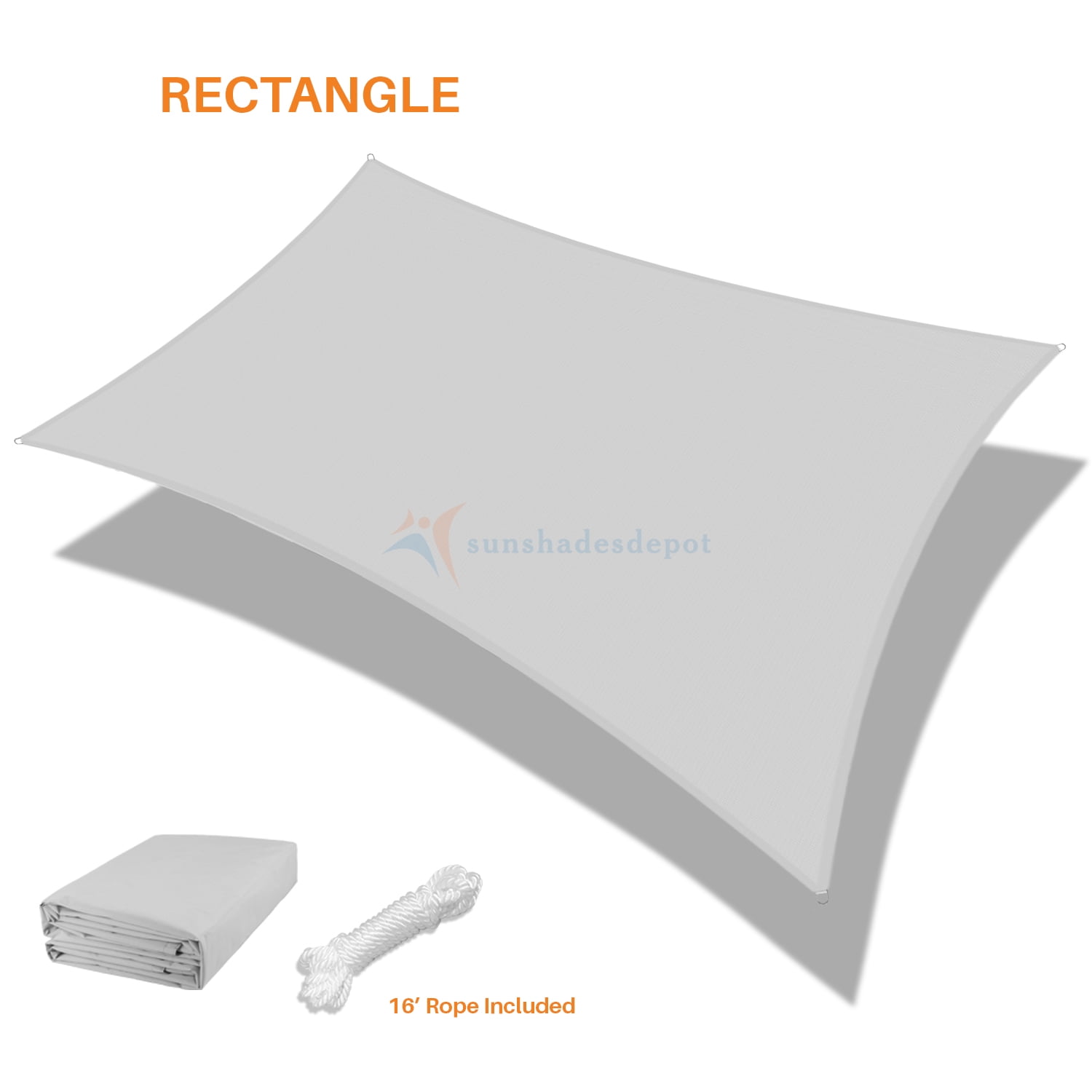
- Curved Edges: True tensioned shade sails have concave curved edges. As you pull the corners, the tension distributes into the center of the fabric, eliminating wrinkles and flapping. Note that the actual shaded area in the middle will be slightly less than 8 feet by 14 feet due to these perimeter cutouts.
- Straight Edges: Shades with straight edges usually feature grommets spaced every 1 to 2 feet. These are designed to be attached flat against a pergola frame or suspended via wire cables rather than pulled corner-to-corner.
Care and Seasonal Maintenance
With basic maintenance, a high-quality shade canopy can last 5 to 10 years:
- Cleaning: Wash the fabric annually using a soft brush, warm water, and mild dish soap. Avoid bleach, pressure washers, and harsh chemical cleaners, which strip UV-protective coatings.
- Winterization: Remove your shade before the first winter freeze or heavy snowfall. Wet snow is exceptionally heavy and can snap hardware or rip mounting brackets out of exterior walls.
- Wind Precautions: While well-tensioned commercial sails handle sustained winds up to 35-40 mph, unhook portable or residential-grade sails ahead of major storm warnings or gale-force winds.
Final Thoughts
An 8x14 shade canopy delivers immediate outdoor relief, turning an overheated patio into a functional, comfortable extension of your home. By selecting the right textile for your climate and mounting it with adequate tension and slope, you can enjoy dependable shade season after season.