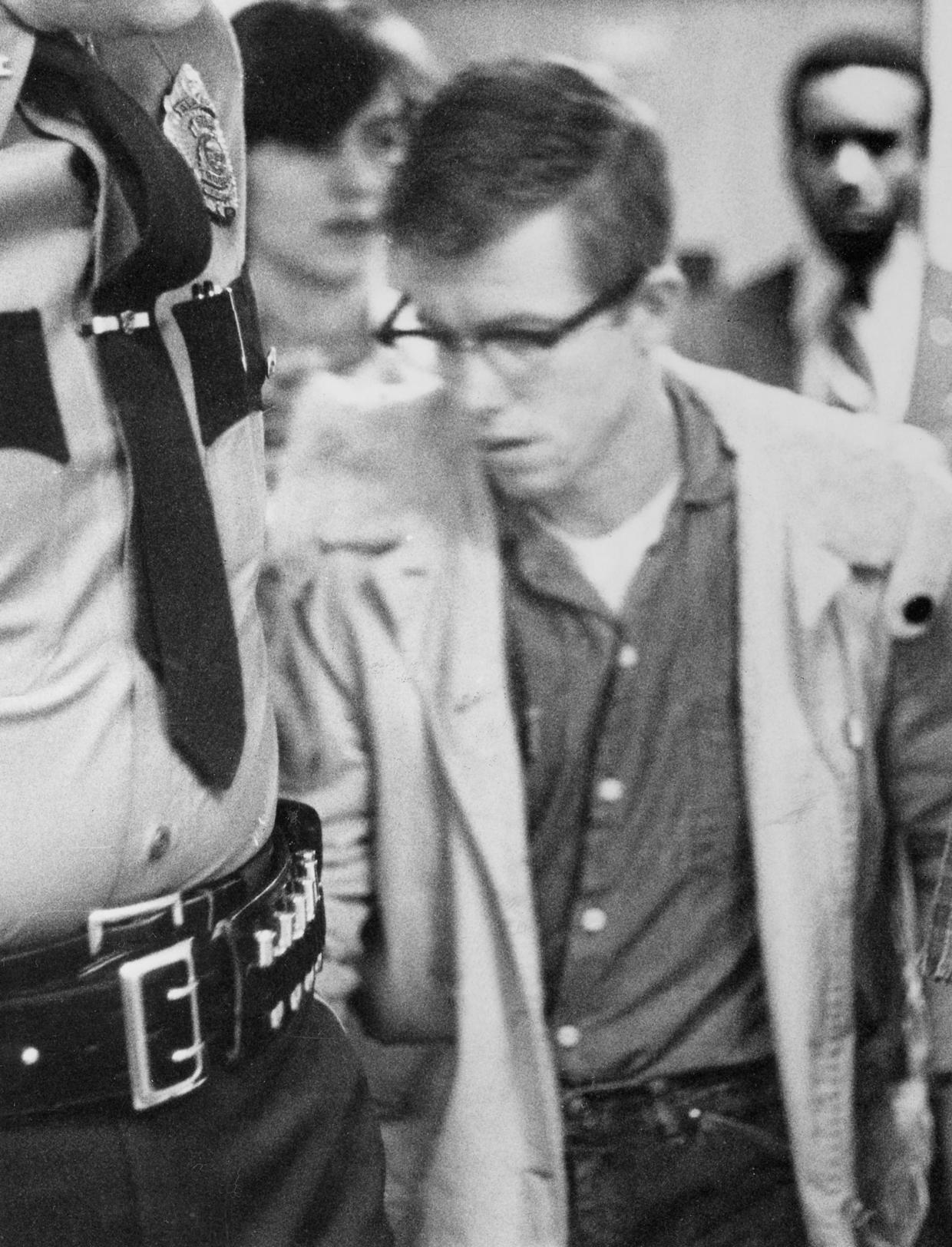
Cindy Paulson and Robert Hansen: The Shocking Case
Introduction to a Chilling Alaskan Nightmare

In the late 1970s and early 1980s, the frontier city of Anchorage, Alaska, seemed like a quiet place where people could reinvent themselves. Beneath the snowy landscape and bustling oil-boom economy, however, a terrifying predator operated in plain sight. Robert Hansen, a seemingly mild-mannered bakery owner and family man, was quietly abducting, torturing, and murdering dozens of women. For years, law enforcement remained entirely oblivious to his reign of terror. That changed forever when a desperate 17-year-old managed to pull off a miraculous escape. The Case That Shocked America: Cindy Paulson and Robert Hansen remains one of the most compelling stories of survival, police tenacity, and the eventual unmasking of a monster.
Who Was Robert Hansen? The Quiet Baker of Anchorage
To his neighbors, customers, and acquaintances, Robert Hansen was nothing out of the ordinary. He owned a local bakery, was married, had children, and was an active member of the community. He was known as an avid hunter who spent long hours alone in the Alaskan wilderness with his small airplane and firearms. This hobby provided him with the exact tools and cover he needed to carry out his dark compulsions.
Hansen had a long criminal record that included arrests for arson, larceny, and assault, but local authorities frequently categorized these as minor infractions. He had a deep-seated hatred and insecurity regarding women, stemming from severe stuttering and a childhood filled with rejection. When his early petty crimes escalated into kidnapping and sexual assault in the 1970s, the justice system repeatedly failed to stop him, allowing him to target vulnerable women—many of whom were dancers, runaways, or sex workers who fell through the cracks of society.
The Escape: Cindy Paulson's Incredible Courage
The turning point in Hansen's killing spree occurred on June 13, 1983. Cindy Paulson, a 17-year-old living in Anchorage, was walking down a downtown street when Hansen approached her. Posing as a potential employer offering modeling work, he lured her into his vehicle. Instead of a job interview, Paulson was driven to Hansen’s home, where she was handcuffed, beaten, and threatened with a firearm.
Hansen forced Paulson into the back of his pickup truck, intending to fly her out to a remote cabin in the wilderness where he had murdered previous victims. As Hansen briefly parked at an Anchorage hotel to check his small plane's flight plan, Paulson saw her window of opportunity. She kicked open the truck door, leaped out onto the busy street, and ran toward safety while still wearing handcuffs. Despite her frantic pleas for help, multiple passersby initially ignored her, assuming she was a runaway involved in a domestic dispute. Finally, a truck driver stopped, and police were called.
The Investigation and Breakthroughs

When Cindy Paulson reported her ordeal to the Anchorage Police Department, she faced immediate skepticism from investigators who were conditioned to dismiss the claims of marginalized youths. However, Sergeant Glenn Flothe took her seriously. Flothe recognized the chilling parallels between Paulson’s statement and several unsolved missing persons and homicide cases plaguing the region.
Connecting the Evidence
- Detailed Description: Paulson provided a remarkably accurate description of Hansen, his home, his vehicles, and the gun he used.
- Geographic Profiling: Sergeant Flothe began mapping out unsolved murders of women whose bodies had been discovered in remote areas outside Anchorage, often near airstrips.
- The Search Warrant: Armed with Paulson's testimony and corroborating evidence, police obtained a search warrant for Hansen's home and airplane hangar.
During the search, officers recovered a piece of crucial physical evidence: a pair of handcuffs that matched the exact specifications of the ones Paulson described wearing. Furthermore, they found jewelry belonging to some of the missing women, along with a map containing small X marks that pinpointed where Hansen had buried his victims.
The Dark Legacy of Robert Hansen
Cornered by overwhelming forensic evidence and the unwavering testimony of Cindy Paulson, Robert Hansen ultimately confessed to a portion of his crimes as part of a plea deal. He admitted to the kidnapping, rape, and murder of 17 women, though investigators strongly suspect the actual death toll was much higher, potentially reaching upwards of 30 victims between 1971 and 1983.
Hansen led authorities to the shallow graves scattered across the Knik River valley, bringing a measure of closure to families who had spent years wondering what happened to their loved ones. In 1984, Hansen was sentenced to 461 years in prison plus life without the possibility of parole, ensuring he would never walk free again. He died in a state correctional facility in April 2014 at the age of 75.
Conclusion: Honoring the Survivor
The terror inflicted by Robert Hansen forever changed the community of Anchorage and left a permanent mark on American true crime history. Yet, above the darkness of the murders, the story is defined by the extraordinary bravery of Cindy Paulson. Without her quick thinking, resilience, and willingness to stand up against her abuser, Hansen likely would have continued his horrific spree indefinitely. Cindy Paulson's survival stopped a serial killer and ensured that justice finally caught up with one of America's most elusive predators.