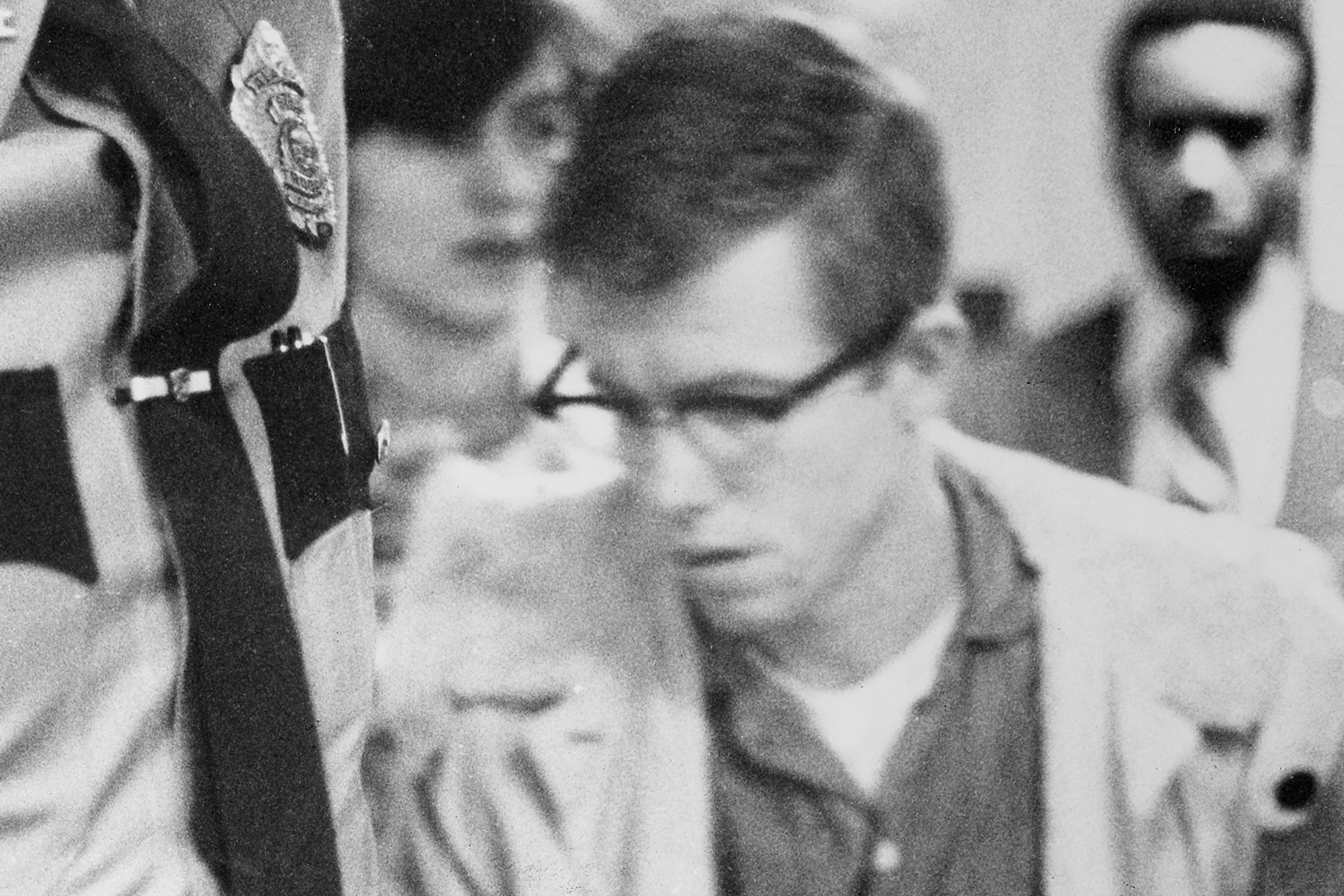
Cindy Paulson: The Survivor Who Stopped a Killer
In the early 1980s, Anchorage, Alaska, was a rapidly expanding frontier city fueled by the Trans-Alaska Pipeline boom. Beneath the surface of this economic prosperity lay an escalating crisis: young women, many of them dancers and sex workers from the city’s downtown district, were vanishing without a trace. Law enforcement struggled to connect the disappearances until a seventeen-year-old girl named Cindy Paulson made a desperate leap for freedom on June 13, 1983. Her survival and unyielding testimony broke open the investigation into Robert Hansen, one of the most prolific serial killers in American history.

The Abduction: A Night of Terror
In the summer of 1983, Cindy Paulson was working as an exotic dancer and sex worker along Anchorage’s Fourth Avenue strip. That night, she accepted an offer from a quiet, mild-mannered local baker named Robert Hansen. To the community, Hansen was a respected small-business owner, an avid hunter, and an award-winning archer. Behind closed doors, he was a calculated predator who had been kidnapping women, flying them into the Alaskan wilderness in his private plane, and hunting them like game.
Hansen drove Paulson to his home in South Anchorage. Once inside, the facade dissolved. He held her at gunpoint, chained and bound her, and subjected her to hours of brutal assault. Rather than keeping her at his residence, Hansen planned to transport her to his remote bush cabin—a location accessible only by air—where he executed his victims.
The Daring Escape at Merrill Field
In the early morning hours, Hansen forced Paulson into his car and drove toward Merrill Field, a bustling general aviation airport in Anchorage where his single-engine Piper Super Cub was tied down. Paulson remained handcuffed, wearing only a pair of socks and an oversized coat.
As Hansen began loading supplies and preparing the aircraft, he momentarily turned his back. Recognizing this as her only opportunity to live, Paulson took an extraordinary risk:
- She quietly opened the passenger door of the vehicle.
- Disregarding the gravel and freezing morning chill, she ran barefoot across the tarmac toward the nearby highway.
- She hid behind a parked truck, watching to ensure Hansen was not immediately pursuing her with a firearm.
- She flagged down an oncoming vehicle driven by a local resident, who saw her handcuffs and immediately transported her to safety before contacting authorities.
Her instinct, timing, and sheer courage prevented her from becoming another unmarked grave in the Knik River valley.
Facing Skepticism: The Struggle to Be Believed
Despite surviving an ordeal that would have paralyzed most adults, Paulson faced immediate institutional bias. When initial patrol officers interviewed her, they doubted her account. Because of her profession, her age, and Hansen’s spotless reputation as an upstanding family man and community baker, some investigators dismissed her story as a dispute over money or a fabrication.
Hansen was brought in for questioning, during which he projected a calm, cooperative demeanor. He provided an alibi supported by friends and claimed Paulson was attempting to extort him. Initial investigators declined to press charges, leaving Hansen free. However, Paulson refused to recant. She provided a remarkably detailed account of Hansen’s vehicle, his home layout, the specific path he took to Merrill Field, and the interior of his private plane.
How Cindy Paulson Cracked the Hansen Investigation
Video: Cindy Paulson Ran For Her Life | People Magazine Investigates: Surviving a Serial Killer | ID
Paulson’s detailed statement caught the attention of Alaska State Trooper Glenn Flothe. Flothe had been quietly heading an informal task force investigating the suspicious disappearances of multiple women across Southcentral Alaska, including Sherry Morrow and Paula Goulding.

Flothe immediately noticed that Paulson’s description of her captor matched the physical description of Robert Hansen, whose name had surfaced tangentially in earlier missing-persons files. Recognizing the credibility of her memory, Flothe reached out to the FBI’s newly formed Behavioral Science Unit.
The FBI Profile and the Search Warrant
FBI profiler John Douglas analyzed the cases and constructed a criminal profile of the killer: an experienced hunter with a stutter or social insecurities, an obsession with trophy-taking, and access to a private airplane. Hansen matched the profile precisely.
Armed with Douglas’s profile and Cindy Paulson’s sworn affidavit—which contained intimate, verifiable physical details of Hansen’s house and aircraft—Flothe secured a sweeping search warrant for Hansen’s properties on October 27, 1983. The search yielded definitive evidence:
- Stolen Jewelry: Troopers found watches and jewelry belonging to missing women hidden in Hansen’s attic.
- Aviation Map: Investigators discovered an aeronautical flight chart marked with dozens of handwritten “X” marks, which corresponded to body burial sites along the Knik and Matanuska river systems.
- Firearms: Ballistics confirmed that Hansen’s .223-caliber rifle matched shell casings recovered from victims’ remains.
Without Paulson’s initial report, investigators would not have had the probable cause necessary to obtain that warrant.
Justice and Hansen’s Confession
Confronted with the overwhelming evidence discovered in his home, Robert Hansen’s defense collapsed. In early 1984, he entered a plea agreement. In exchange for serving his sentence in a federal facility rather than an Alaskan prison, Hansen confessed to kidnapping, raping, and murdering at least 17 women over a twelve-year span, leading troopers to numerous hidden grave sites across the wilderness.
Hansen was sentenced to 461 years plus life imprisonment without the possibility of parole. He remained behind bars until his death in 2014.
The Enduring Legacy of a Survivor
The story of Cindy Paulson serves as a powerful case study in the evolution of modern law enforcement and victim advocacy. Her experience illuminated critical failures in how the justice system historically treated marginalized victims, particularly youth involved in survival sex work.
Trooper Glenn Flothe consistently credited Paulson’s intelligence and bravery as the single catalyst that ended Hansen’s murder spree. In popular culture, her ordeal was depicted in the 2013 feature film The Frozen Ground, where she was portrayed by Vanessa Hudgens, bringing renewed attention to her role in solving the case.
Paulson chose to step away from the public spotlight following Hansen's conviction, working to build a private life away from the trauma of 1983. Her legacy, however, remains permanent: a seventeen-year-old survivor whose refusal to stay silent outsmarted Alaska’s most notorious predator and saved an untold number of lives.