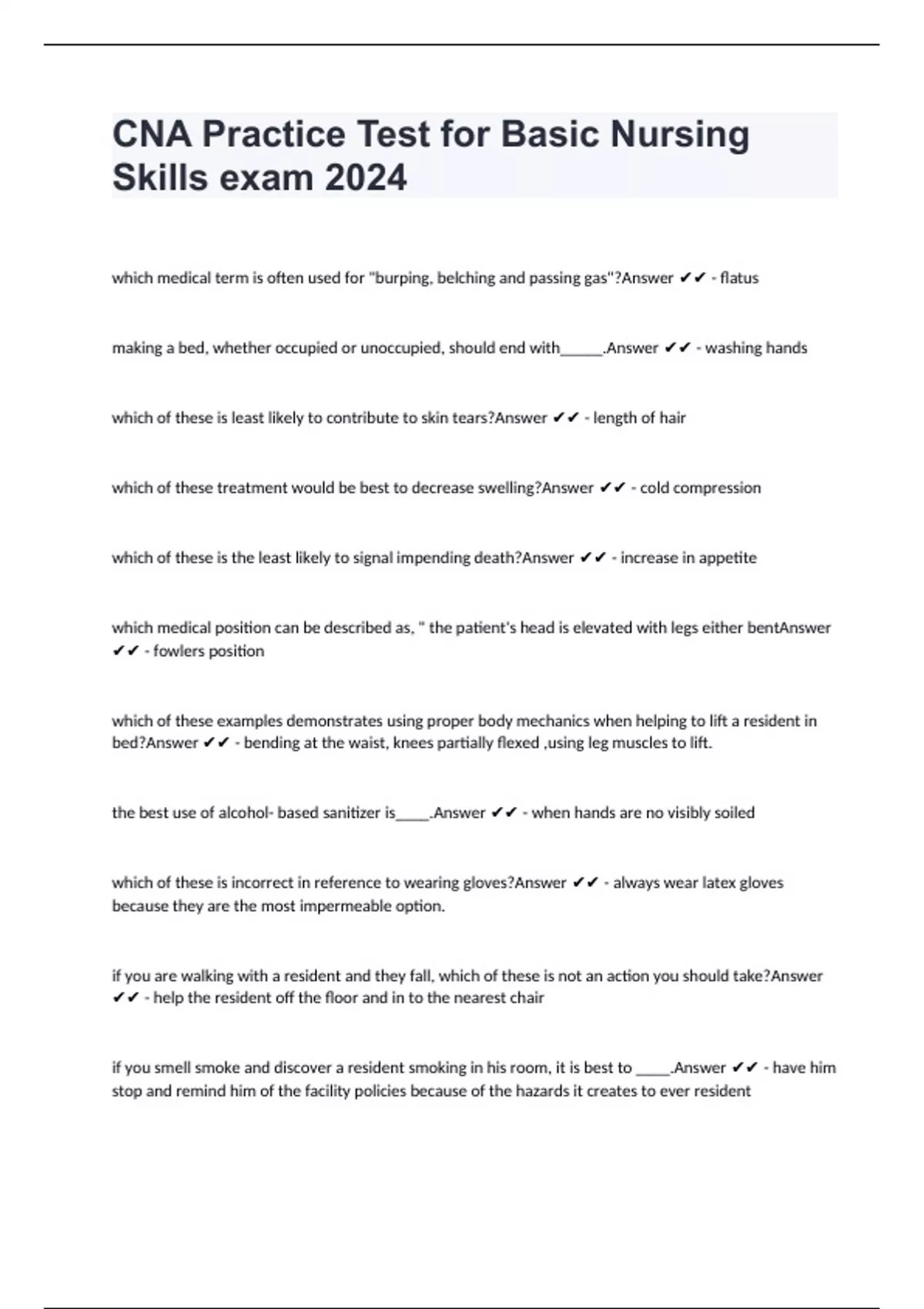
CNA Practice Test 2024: Study Guide & Exam Prep
Earning your Certified Nursing Assistant (CNA) credential opens doors to a rewarding career in healthcare. However, before stepping onto the floor of a hospital, long-term care facility, or rehabilitation center, you must pass your state’s competency evaluation. Incorporating a realistic cna practice test 2024 into your study routine is the single most reliable way to assess your readiness, build test-taking stamina, and pinpoint the specific clinical areas where you need further review.

Understanding the CNA Certification Exam Structure
Most state nursing boards administer exams developed by credentialing organizations such as Credentia (NNAAP), Prometric, or Headmaster (D&S Diversified Technologies). Regardless of which testing vendor your state uses, the CNA examination consists of two distinct components:
- The Written (or Oral) Knowledge Test: Typically comprises 60 to 70 multiple-choice questions administered over a 90-to-120-minute period. This test assesses your grasp of safety protocols, infection control, resident rights, and basic nursing duties.
- The Clinical Skills Evaluation: Requires you to perform 3 to 5 randomly selected nursing tasks on a mannequin or standardized actor within 25 to 35 minutes, under the close observation of an evaluator. Hand hygiene is universally evaluated as part of this process.
Core Topics Covered in a CNA Practice Test 2024
Modern CNA exams emphasize person-centered care, safety culture, and holistic patient well-being. Practicing across these core categories ensures you avoid surprises on exam day.
1. Physical Care Skills
Physical care forms the largest portion of the written exam—often accounting for 50% to 60% of all questions. Essential topics include:
- Activities of Daily Living (ADLs): Assisting with bathing, oral hygiene, dressing, grooming, and perineal care.
- Nutrition and Hydration: Tracking intake and output (I&O), monitoring fluid restrictions, recognizing signs of dehydration, and preventing aspiration in residents with dysphagia.
- Vital Signs: Measuring and documenting blood pressure, radial pulse, respiratory rate, and temperature, along with recognizing abnormal parameters.
- Infection Control: Maintaining standard precautions, correctly donning and doffing Personal Protective Equipment (PPE), and breaking the chain of infection.
2. Psychosocial and Mental Health Needs
Nurse aides care for the whole individual, not just their physical ailments. Expect questions focused on:
- Interacting effectively with residents experiencing dementia, Alzheimer's disease, or delirium.
- Supporting individuals dealing with grief, loss of independence, or major life transitions.
- Recognizing changes in mood, behavior, or cognitive status and reporting them promptly to the charge nurse.
3. Legal, Ethical, and Communication Standards
This category tests your awareness of professional boundaries and resident protections:
- Resident Rights: Protecting dignity, privacy, confidentiality (HIPAA), and the right to refuse care.
- Mandatory Reporting: Identifying and reporting suspected abuse, neglect, exploitation, or abandonment.
- Chain of Command: Operating strictly within the nurse aide scope of practice and knowing when tasks must be referred to a Registered Nurse (RN) or Licensed Practical Nurse (LPN).
Sample Practice Questions with Rationales
To help you gauge your current knowledge level, here are several typical questions drawn from current testing standards.
Question 1: Infection Control
Scenario: You are preparing to leave the room of an isolated resident who has a Clostridioides difficile (C. diff) infection. What is the correct protocol for hand hygiene?

- A) Apply alcohol-based hand rub for 20 seconds.
- B) Wash hands thoroughly with soap and water for at least 20 seconds.
- C) Rinse hands under warm water without soap to avoid drying the skin.
- D) Wipe hands with an antibacterial disinfectant wipe.
Correct Answer: B
Rationale: C. diff produces bacterial spores that are resistant to alcohol-based hand sanitizers. The mechanical action of washing hands with antimicrobial soap and warm running water for at least 20 seconds is necessary to physically remove the spores from your skin.
Question 2: Resident Rights & Safety
Scenario: A resident who is legally competent refuses to take a shower, stating they are too tired. How should the CNA respond?
- A) Insist they shower immediately because the facility schedule requires it.
- B) Inform the resident's family that the resident is being uncooperative.
- C) Respect the resident's choice, offer a bed bath or to reschedule, and report the refusal to the nurse.
- D) Turn on the water and begin undressing the resident to encourage them.
Correct Answer: C
Rationale: Residents have the legal right to refuse treatment and care. A nurse aide must respect autonomy, offer reasonable alternatives (such as a sponge bath or bathing later), and document/report the refusal to the supervising nurse.
Question 3: Basic Nursing Skills
Scenario: When taking an adult resident's radial pulse, you count 48 beats in 60 seconds. What is your immediate course of action?
- A) Document the pulse as normal and proceed to breakfast.
- B) Lay the resident flat on their back and elevate their feet.
- C) Report the reading immediately to the supervising nurse as bradycardia.
- D) Wait two hours and re-check the pulse.
Correct Answer: C
Rationale: The normal adult resting pulse rate is between 60 and 100 beats per minute. A heart rate below 60 bpm indicates bradycardia. Any abnormal vital sign must be communicated promptly to the licensed nurse on duty.
How to Ace the Clinical Skills Evaluation
While the written test requires memorization and analytical thinking, the skills examination tests execution, safety awareness, and composure under pressure. Keep these practical rules in mind:
- Master Indirect Care: You are continuously graded on indirect care practices throughout every skill. Always introduce yourself by name, confirm the resident’s identity, explain the procedure before starting, provide privacy by drawing the curtain, and ensure the call light is within reach before leaving.
- Watch Your Critical Steps: Each skill contains non-negotiable "critical steps." Missing a single critical step—such as failing to lock the wheelchair brakes before a transfer, or letting a soiled sheet touch your uniform—results in an automatic failure for that skill.
- Correct Mistakes in Real Time: If you realize you forgot a step (for example, you forgot to put on gloves before emptying a urinary drainage bag), immediately say: "Evaluator, I would like to correct a mistake." As long as you vocalize and perform the corrective action before ending the skill, evaluators will usually award you the credit.
A Proven 3-Week Study Plan
A systematic approach prevents cramming and reduces anxiety. Follow this structured schedule in the weeks leading up to your exam date:
- Week 1: Fundamentals and Vocabulary. Review medical terminology, abbreviations (e.g., NPO, ad lib, PRN), infection control steps, and body mechanics. Take an untimed diagnostic practice test to evaluate your baseline score.
- Week 2: Focused Review and Skills Drill. Review weak subject areas identified in your diagnostic test. Practice your physical skills hands-on with a friend or family member, reciting your actions aloud as you perform them.
- Week 3: Timed Practice Tests and Mock Skills. Complete two or three full-length, timed CNA practice tests under simulated conditions (no notes, quiet room, 90-minute timer). Aim for a consistent practice score of 85% or higher to ensure a comfortable passing cushion.
By blending deliberate written prep with tactile skills practice, you will walk into your test center with confidence, pass your exam on the first attempt, and begin your career as a qualified, compassionate caregiver.