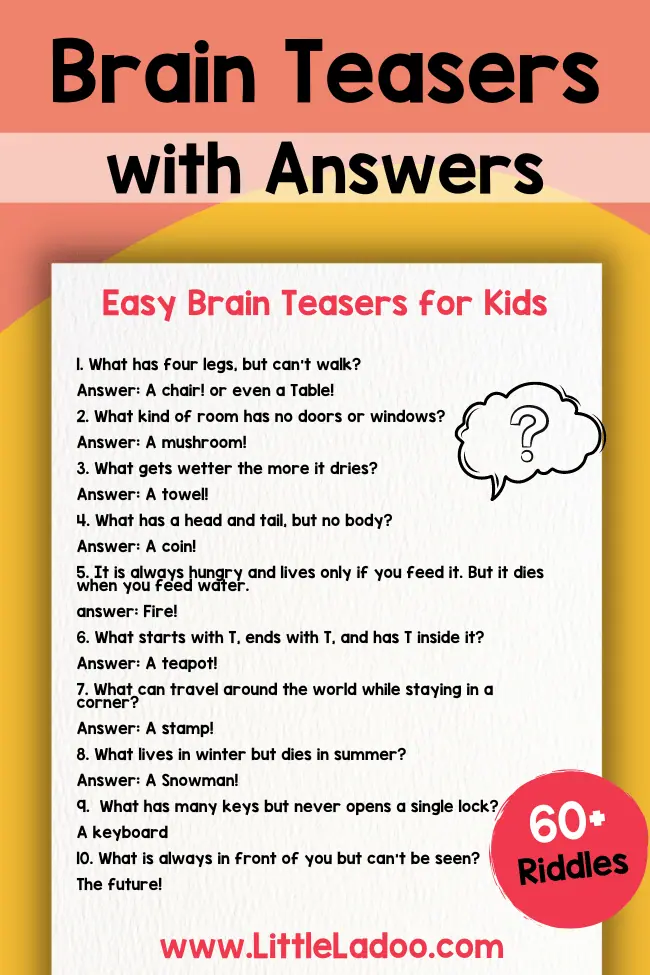
College Bound Students Love These Brain Teasers
Preparing for higher education involves far more than shopping for dorm essentials and memorizing campus maps. The transition from high school to university demands a fundamental shift in how you process information: moving from passive memorization to rigorous, independent deduction. It is no surprise that college bound students love these brain teasers, using them to decompress while sharpening the analytical reasoning required for seminar debates, coding labs, and advanced calculus.

Engaging with high-level logic problems stretches working memory, trains pattern recognition, and curbs cognitive biases. Below are five classic, intellectually rich riddles designed to test your deductive agility, accompanied by step-by-step breakdowns of the logic behind each solution.
Why College Bound Students Love These Brain Teasers
Standardized tests measure speed and rule adherence, but university-level coursework rewards lateral thinking—the ability to approach problems from unexpected angles. Solving logic puzzles yields measurable cognitive benefits:
- Cognitive Flexibility: The capacity to switch between different concepts or unlearn false assumptions when confronted with contradictory evidence.
- Conditional Probability Intuition: Essential for statistics, economics, and data science, where initial assumptions often deceive human intuition.
- Algorithmic Thinking: The ability to formulate step-by-step processes to eliminate variables, a core requirement in computer science and engineering.
- Intellectual Resilience: Learning to enjoy the tension of being temporarily stuck rather than becoming frustrated.
Puzzle 1: The Three Mislabeled Fruit Crates
This riddle tests deductive economy—reaching an absolute conclusion using the minimum number of observations.
The Setup
Imagine you have three closed wooden crates placed before you:
- Crate 1 is labeled Apples.
- Crate 2 is labeled Oranges.
- Crate 3 is labeled Apples and Oranges.
You are informed that every single crate is incorrectly labeled. You cannot see inside the crates, but you may reach in and draw one piece of fruit at a time from any crate. What is the minimum number of draws required to determine the correct label for every crate?
The Solution
You only need one single draw from the crate labeled Apples and Oranges.
Because every label is guaranteed to be wrong, the crate marked "Apples and Oranges" cannot contain both. It must be either purely apples or purely oranges. Reach into that crate and draw one piece of fruit:
- If you pull an apple, that crate must be the true Apples crate.
- This leaves two crates: the one labeled "Apples" and the one labeled "Oranges".
- Because the crate labeled "Oranges" cannot actually be oranges (all labels are false), and you already found the true Apples crate, the crate marked "Oranges" must contain Apples and Oranges.
- By elimination, the crate labeled "Apples" must contain pure Oranges.
If you draw an orange on step 1, the identical symmetrical logic applies.
Puzzle 2: The Burning Rope Timer
This puzzle challenges linear assumptions about measurement and rate constancy.
The Setup
You have two distinct lengths of rope and a lighter. Each rope takes exactly 60 minutes to burn completely from one end to the other. However, both ropes burn irregularly—one half might burn in 10 minutes while the remaining half takes 50 minutes. You have no ruler, stopwatch, or markings on the ropes. How do you measure an exact interval of 45 minutes?
The Solution

You solve this by burning both ropes simultaneously, but with an asymmetrical lighting strategy:
- Light Rope A at both ends simultaneously, and light Rope B at one end.
- Because Rope A is burning from both ends, it will consume itself twice as fast, burning out completely in exactly 30 minutes, regardless of irregularities.
- The moment Rope A burns out, exactly 30 minutes have passed. At that exact instant, light the unlit end of Rope B.
- Rope B had 30 minutes of burn time remaining. By igniting its other end, it will burn inward from both directions, consuming the rest in exactly 15 minutes.
- When Rope B finishes burning, exactly 45 minutes (30 + 15) have elapsed.
Puzzle 3: The Counterfeit Coin Balance
A benchmark problem in algorithmic search trees, this puzzle demonstrates how ternary (base-3) logic outperforms binary (base-2) assumptions.
The Setup
You have nine identical-looking gold coins and a traditional two-pan balance scale. Eight coins weigh exactly the same, but one is counterfeit and noticeably heavier than the others. You have no weights. How do you identify the heavy counterfeit coin using the balance scale only twice?
The Solution
Most people instinctively divide items in half, but a balance scale has three possible states: left pan heavy, right pan heavy, or balanced. Therefore, you should divide the items into thirds:
- Weighing 1: Place 3 coins on the left pan and 3 coins on the right pan, leaving 3 coins on the table.
- If the scale tips to one side, the heavier coin is in that group of 3.
- If the scale balances evenly, the heavier coin is among the 3 coins left on the table.
- Weighing 2: Take the group of 3 containing the heavy coin. Place 1 coin on the left pan and 1 coin on the right pan, leaving the final coin aside.
- If the scale tilts, you have found the heavy coin directly.
- If the scale balances, the unplaced third coin is the counterfeit.
Puzzle 4: The Monty Hall Dilemma
Popularized by the game show Let's Make a Deal, this problem remains a favorite among mathematics and economics majors because it routinely trips up intuition.
The Setup
You are presented with three closed doors. Behind one door is a new car; behind the other two are goats. You pick Door 1. Before opening your chosen door, the host—who knows what is behind every door—opens Door 3, revealing a goat. The host then asks: "Do you want to stick with Door 1, or switch to Door 2?" Does switching increase your odds of winning the car?
The Solution
Yes, you should always switch. Switching doubles your probability of winning from 1/3 to 2/3.
When you made your initial selection, there was a 1/3 chance the car was behind Door 1, and a 2/3 chance it was behind one of the other two doors (Doors 2 and 3 combined). The host's intervention does not change the initial probability of Door 1 (which remains locked at 1/3). However, because the host deliberately filters out a losing door, the entire 2/3 probability of the alternate doors is concentrated entirely into Door 2. Sticking keeps your initial 1/3 odds; switching captures the 2/3 advantage.
How Lateral Thinking Translates to College Success
The mental discipline required to crack these riddles mirrors the exact problem-solving frameworks you will use across university disciplines:
- Writing Persuasive Theses: Just like eliminating incorrect crates, academic writing requires dismantling counterarguments systematically rather than relying on gut feel.
- Experimental Design: The burning rope paradox teaches you to manipulate independent variables simultaneously to measure an outcome when standard instruments are absent.
- Data Analysis: The Monty Hall problem prevents you from falling prey to base-rate neglect and naive probabilistic thinking when interpreting research datasets.
Set these puzzles before your friends, test your roommates during orientation, or return to them whenever you need to break a mental rut. Developing an appetite for complex, counter-intuitive logic is one of the highest-leverage investments you can make before stepping into your first university lecture.