College Students Need This Photosynthesis Aid
Introductory biology is notoriously known as a weed-out course in STEM curricula, and few topics trigger as much anxiety as bioenergetics. When midterms roll around, college students need this photosynthesis aid—an integrated, mechanistic systems framework—to bridge the gap between rote memorization and true biochemical comprehension. Instead of getting buried under textbook diagrams of thylakoid discs and confusing chemical formulas, undergraduate students must approach photosynthesis as an elegant energy-conversion circuit.
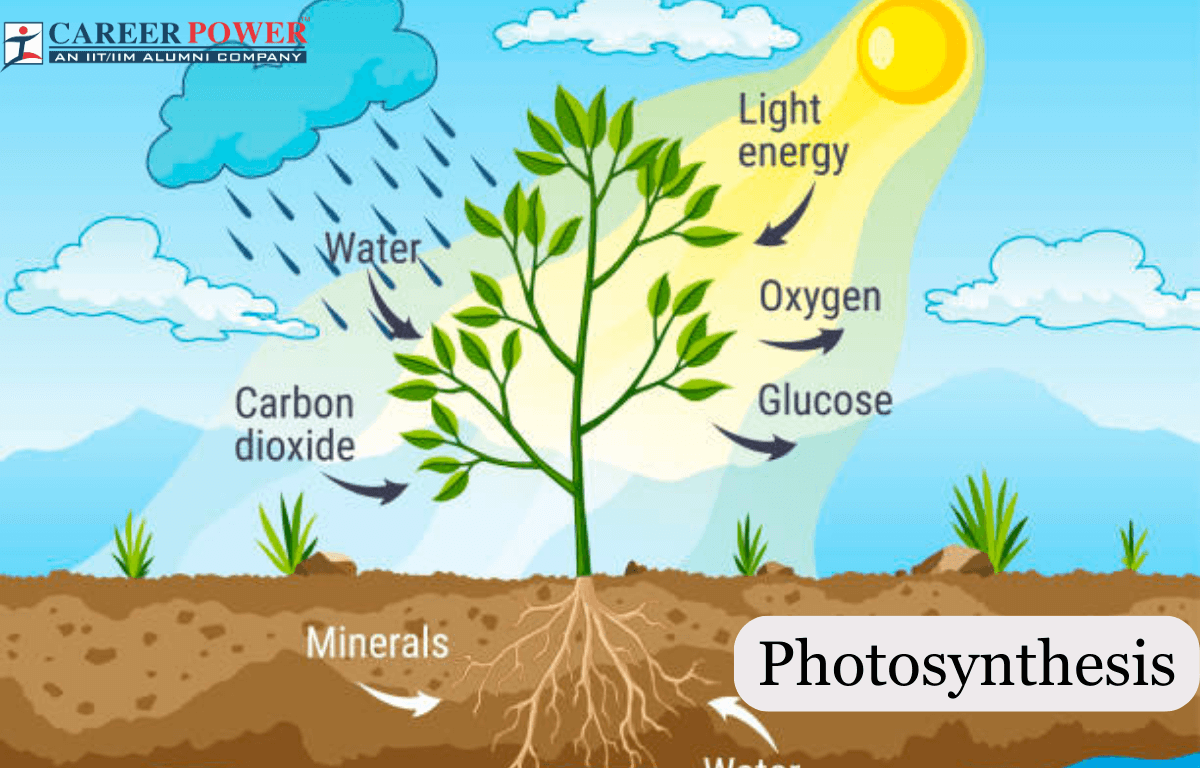
The Biology 101 Hurdle: Why Photosynthesis Breaks GPAs
Photosynthesis is not simply "plants taking in sunlight, carbon dioxide, and water to make sugar and oxygen." At the university level, the topic expands into quantum physics, membrane thermodynamics, and complex enzymatic cycles. Professors expect undergraduates to track proton molarity, trace electron paths across protein complexes, and calculate stoichiometries across cellular compartments.
Students regularly struggle with several core concepts:
- The Spatial Disconnect: Failing to track whether a reaction occurs in the chloroplast stroma, across the thylakoid membrane, or inside the thylakoid lumen.
- Nomenclature Overload: Memorizing acronyms like PQ (plastoquinone), PC (plastocyanin), Fd (ferredoxin), RuBisCO, 3-PGA, and G3P without understanding their functional roles in electron or carbon shuttling.
- Energy Accounting Errors: Losing track of how many ATP and NADPH molecules are consumed per fixed carbon atom during the Calvin cycle.
When students rely solely on flashcards, they miss the systemic logic that ties light absorption to carbohydrate synthesis. This failure of synthesis is precisely why traditional study techniques collapse during multi-tiered exam questions.
Why College Students Need This Photosynthesis Aid
To succeed on rigorous exams, students cannot treat the light reactions and the Calvin cycle as two isolated chapters. This study framework approaches photosynthesis through a four-part mechanistic model: Source, Circuit, Gradient, and Currency.
By mapping every biochemical phase to these four functional pillars, students can reconstruct the entire process from a blank sheet of paper during an exam, diagnosing what happens when an inhibitor is added or an environmental variable changes.
1. The Light Reactions as an Electronic Circuit
Think of the light-dependent reactions not as a sequence of vocabulary words, but as an electrochemical circuit driven by photons. The system requires an electron donor, an energy pump, a delivery chain, and a terminal acceptor:
- The Source: Water photolysis occurs at Photosystem II (P680). When light excites P680, it loses an electron. The resulting oxidized state (P680+) is one of the strongest biological oxidizing agents known, ripping electrons from water ($H_2O \rightarrow 2H^+ + \frac{1}{2}O_2 + 2e^-$).
- The Pump and Wire: The energized electron moves down an electron transport chain: Plastoquinone $\rightarrow$ Cytochrome b6f complex $\rightarrow$ Plastocyanin. The Cytochrome b6f complex acts as a proton pump, using the electron's kinetic energy to pump $H^+$ ions from the stroma into the thylakoid lumen.
- The Booster: The electron arrives at Photosystem I (P700) with depleted energy. Photons strike light-harvesting complexes in PSI, re-exciting the electron so it can reduce ferredoxin.
- The Terminal Acceptor: Ferredoxin-NADP+ reductase (FNR) transfers the electrons to $NADP^+$, forming $NADPH$ in the stroma.
2. The Chemiosmotic Engine
A frequent exam pitfall is confusing the pH of the chloroplast compartments. The light reactions concentrate protons inside the tiny thylakoid lumen through two simultaneous mechanisms: direct water photolysis inside the lumen, and proton translocation across Cytochrome b6f from the stroma.
Video: Photosynthesis (UPDATED)
This creates an electrochemical gradient where the lumen becomes highly acidic (pH ~5) relative to the alkaline stroma (pH ~8). When these protons rush back down their concentration gradient through ATP synthase into the stroma, mechanical rotation drives the phosphorylation of ADP into ATP. Both vital products of the light reactions—ATP and NADPH—now reside directly in the stroma, precisely where the Calvin cycle takes place.

3. The Calvin Cycle as Carbon Currency Accounting
The Calvin cycle is frequently tested through stoichiometric tracking. Students must trace single carbon units to master this phase. To build one net molecule of Glyceraldehyde-3-Phosphate (G3P), the cycle must turn three times:
- Carbon Fixation: The enzyme RuBisCO catalyzes the addition of 3 $CO_2$ molecules (1 carbon each) to 3 molecules of Ribulose-1,5-bisphosphate (RuBP, 5 carbons each). This yields an unstable 6-carbon intermediate that immediately splits into six 3-carbon molecules: 3-Phosphoglycerate (3-PGA).
- Reduction: Phosphorylation via 6 ATP and subsequent reduction via 6 NADPH converts the six 3-PGA molecules into six molecules of Glyceraldehyde-3-phosphate (G3P).
- Product Release: Exactly one G3P molecule exits the cycle to be used for glucose and sucrose synthesis. The remaining five G3P molecules (15 carbons total) stay in the cycle.
- Regeneration: Using 3 additional ATP molecules, those five 3-carbon G3P molecules are rearranged back into three 5-carbon RuBP molecules, resetting the cycle.
Keeping a strict balance sheet (3 $CO_2$ + 9 ATP + 6 NADPH = 1 G3P) eliminates the confusion that typically derails students on calculation-based exam prompts.
Mastering Evolutionary Adaptations: C3, C4, and CAM
Professors love testing variations of photosynthesis under environmental stress. The critical vulnerability of standard C3 plants is RuBisCO's affinity for molecular oxygen ($O_2$), leading to photorespiration—a wasteful pathway that consumes ATP without generating sugars.
The C4 Strategy: Spatial Separation
C4 plants (such as corn and sugarcane) solve this dilemma through spatial separation. Carbon fixation is physically separated between two cell types:
- Mesophyll Cells: Use PEP carboxylase (which has zero affinity for $O_2$) to capture $CO_2$ into a 4-carbon acid (oxaloacetate/malate).
- Bundle-Sheath Cells: Malate is transported into tightly packed bundle-sheath cells, where it is decarboxylated to release high concentrations of $CO_2$ directly to RuBisCO, outcompeting oxygen and suppressing photorespiration.
The CAM Strategy: Temporal Separation
CAM plants (such as pineapples and succulents) use temporal separation to conserve water in arid environments:
- Night: Stomata open to take in $CO_2$ when humidity is higher and water loss is minimal. PEP carboxylase fixes $CO_2$ into malic acid, which is stored inside large central vacuoles.
- Day: Stomata close entirely to prevent transpiration. The stored malic acid leaves the vacuole, releasing $CO_2$ internally to run the Calvin cycle using light energy harvested throughout the day.
How to Put This Study Framework into Practice
To turn this conceptual aid into top exam grades, undergraduates should implement a three-step active recall workflow:
- The Whiteboard Dump: Close your textbook and draw the chloroplast membrane architecture from scratch. Trace the path of an electron from an $H_2O$ molecule all the way to $NADPH$, noting the pH shift across the membrane.
- Run Perturbation Scenarios: Test your understanding by predicting system failures. What happens to ATP synthesis if a protonophore punctures the thylakoid membrane? What happens to the Calvin cycle intermediates if the lights are turned off? (Hint: 3-PGA accumulates while RuBP depletes because reduction requires ATP/NADPH).
- Audit the Stoichiometry: Calculate how many photons, water molecules, and Calvin cycle turns are required to synthesize one 6-carbon glucose molecule (it requires 2 net G3P molecules, meaning 6 turns of the cycle, 18 ATP, and 12 NADPH).
By moving past passive review and using this structured systems approach, college biology students can demystify complex bioenergetic pathways, outscore the curve, and build a foundational framework that serves them through advanced biochemistry and physiology courses.


